Scientists discovered the world’s largest spiderweb, covering 106 m² in a sulfur cave on the Albania-Greece border. Over 111,000 spiders from two normally rival species live together in a unique, self-sustaining ecosystem—a first of its kind.
Title: Scientists Discover World’s Largest Spiderweb—A Rare Cooperative Ecosystem in a Sulfur Cave
Meta Description: Scientists uncovered the largest recorded spiderweb (106 m²) in an Albania-Greece border sulfur cave, where 111,000+ spiders from rival species coexist—a groundbreaking ecological discovery.
The Largest Spiderweb Ever Recorded: A Breakdown of the Discovery
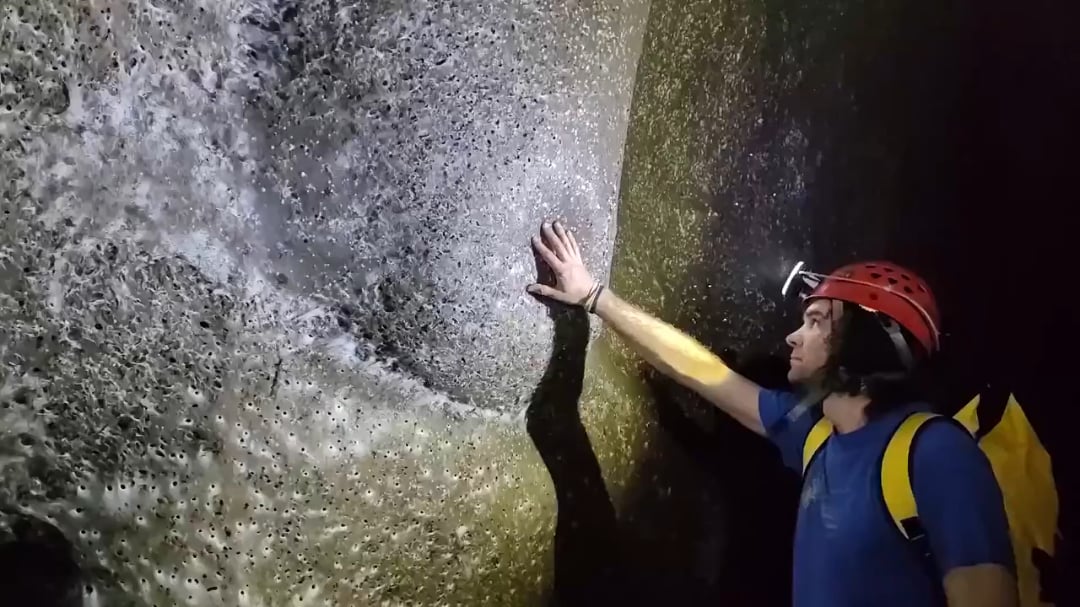
In a groundbreaking discovery, researchers exploring a sulfur-rich cave on the Albania-Greece border stumbled upon the world’s largest spiderweb—spanning a staggering 106 square meters (roughly the size of a small apartment). This sprawling web isn’t just a marvel of size; it’s home to over 111,000 spiders from two typically competitive species thriving together in harmony, creating a first-of-its-kind self-sustaining ecosystem.
This unprecedented find challenges long-held assumptions about spider behavior, cooperation, and survival in extreme environments.
Location: A Harsh Cave Ecosystem
Nestled in a remote, sulfur-heavy cave system, the environment is toxic to most life due to high hydrogen sulfide levels. Remarkably, this seemingly inhospitable space has become a thriving hub for spiders. Sulfur caves are rare globally, making this discovery a unique window into adaptation and resilience.
Rival Species Working Together: A Biological Anomaly
Spiders are famously territorial and cannibalistic—yet here, two unrelated species coexist and collaborate:
- Sheet-web spiders (likely Linyphiidae): Known for building horizontal silk sheets.
- Cobweb spiders (possibly Theridiidae): Typically spin tangled, 3D webs.
In most ecosystems, these species compete for prey and space. But in this cave, they share the mega-web, benefiting from collective prey capture, reduced aggression, and efficient resource use.
How the “Super Web” Ecosystem Functions
The cave’s harsh conditions and isolation forced these spiders to adapt in extraordinary ways:
- Shared Prey: Flying insects drawn to the cave’s warmth become trapped in the vast web, providing ample food.
- Temperature Regulation: Sulfur vents maintain warmth, allowing year-round activity.
- Division of Labor: Different web layers (sheet vs. cobweb) maximize prey capture efficiency.
- Waste Recycling: Dead spiders and organic matter are decomposed by microbes, nourishing fungi and bacteria—which, in turn, attract more insects.
This creates a self-sustaining loop where every organism plays a role, defying traditional predator-prey dynamics.
Why This Discovery Matters
- Cooperation Over Competition: Challenges the notion that spiders are strictly solitary or aggressive.
- Extremophile Adaptations: Offers insights into how life evolves in toxic, resource-scarce environments.
- Climate Resilience: Studying such ecosystems could reveal survival strategies amid environmental change.
- Biomimicry Potential: The web’s structure could inspire durable materials or filtration systems.
Future Research and Conservation
Scientists are now studying:
- The exact species involved and their genetic adaptations.
- How communication minimizes conflict within the colony.
- Whether similar systems exist in other isolated caves.
Conservation is critical—the cave’s fragile ecosystem is vulnerable to human disturbance or climate shifts.
Conclusion: Nature’s Unlikely Habitat of Harmony
This record-breaking spiderweb is more than a curiosity; it’s a testament to life’s ingenuity. In a toxic cave where survival seems improbable, 111,000 spiders rewrote the rules of coexistence. As research continues, this discovery promises to reshape our understanding of ecology, adaptation, and the unexpected power of collaboration—even among nature’s fiercest rivals.
For more on groundbreaking wildlife discoveries, follow our science updates. Share this article to spread awe for nature’s mysteries!
Keywords: largest spiderweb, sulfur cave spiders, Albania-Greece border cave, spider cooperation, self-sustaining ecosystem, extremophile adaptation, world record spiderweb, cobweb and sheet-web spiders, unique cave ecosystem.