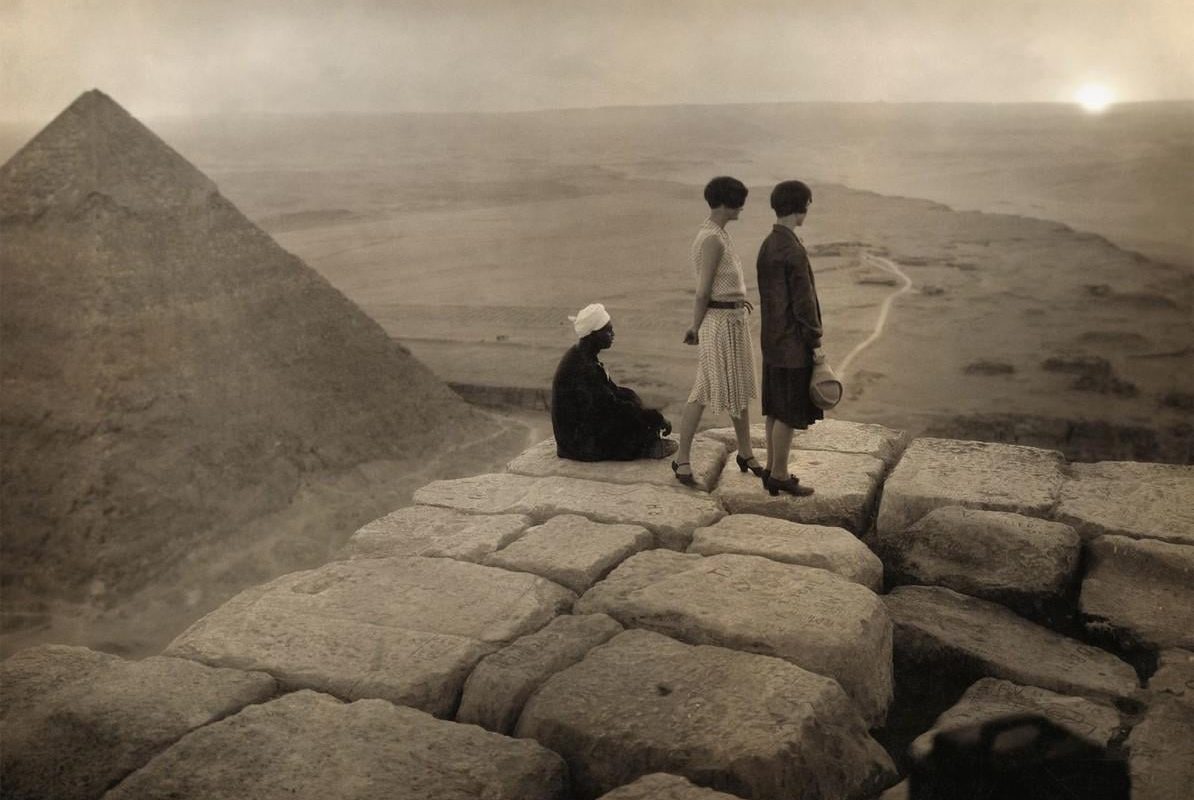
2 Women look to the sun at the top of one of the pyramids in Egypt, besides them their egyptian guide, 1920s.
Title: Gazing at History: Women Travelers & Egyptian Guides in 1920s Pyramid Adventures
Meta Description: Explore the untold story of two adventurous women and their Egyptian guide atop Egypt’s pyramids in the 1920s—a snapshot of colonial-era tourism, cultural exchange, and early travel bravery.
URL Slug: women-egyptian-guide-pyramids-1920s
A Moment Frozen in Time
In the golden haze of a 1920s Egyptian sunrise, a photograph captures an extraordinary scene: two Western women stand atop an ancient pyramid, their faces turned toward the rising sun. Beside them, their Egyptian guide observes quietly—a silent bridge between cultures. This image, rich in symbolism and history, transports us to an era when Egyptomania gripped the world, and intrepid travelers sought the mystique of pharaohs and tombs.
The Dawn of Modern Tourism in Egypt
The 1920s marked Egypt’s emergence as a bucket-list destination. The discovery of Tutankhamun’s tomb in 1922 sparked global fascination, drawing wealthy adventurers, scholars, and photographers to the Nile. For Westerners, Egypt symbolized exoticism and ancient grandeur, accessible via luxurious steamships and organized tours by companies like Thomas Cook & Son.
For women travelers, however, the journey was groundbreaking. At a time when solo female exploration was rare, these women defied societal norms. Their presence on the pyramids—often dressed in impractical but fashionable flapper-era attire—signaled a shift toward gender independence in travel.
The Unseen Hero: The Egyptian Guide
While the women dominate the frame, the Egyptian guide beside them holds untold significance. Local guides were indispensable to early tourists: navigators of treacherous terrain, translators of hieroglyphs, and cultural intermediaries. Many were experts in Egyptology, though their contributions were often overshadowed by colonial narratives.
Guides like him navigated complex dynamics. They facilitated access to sacred sites yet operated within a system that commodified their heritage. This photo subtly captures the power imbalance of colonial tourism—the guide’s stance respectful but detached, while the women claim the vista as their own.
Fashion Meets Function: What the Women Wore
The women’s clothing offers clues to their era and status:
- Cloche hats and knee-length dresses reflect 1920s Western fashion.
- Practical oxford shoes hint at the need for stability on steep pyramid steps.
- Silk scarves flutter in the wind—a romantic but impractical choice for desert heat.
Their style clashed with the practicality of local dress, underscoring the cultural gap. Meanwhile, guides typically wore galabiyas (traditional robes) and turbans, attire suited to the climate and respectful of local customs.
The Controversy Behind the Adventure
The pyramid climb in the 1920s was no light feat. Tourists scrambled up limestone blocks without safety rails, guided by locals who risked their lives for meager wages. Critics argued that such tourism exploited both people and monuments, damaging fragile relics and reinforcing colonial hierarchies.
For Egyptians, these encounters were bittersweet. While tourism brought economic lifelines, it often reduced their civilization to a backdrop for Western fantasies—a tension still felt in heritage sites today.
Legacy of the 1920s Explorer Spirit
The photograph of the women and their guide endures as a testament to:
- The courage of early female travelers who embraced danger for discovery.
- The unsung expertise of Egyptian guides, whose knowledge shaped outsiders’ understanding of ancient Egypt.
- The complex layers of colonialism, where wonder coexisted with exploitation.
Why This Image Resonates Today
- #ThrowbackTravel enthusiasts celebrate it as vintage wanderlust goals.
- Historians analyze it for insights into cross-cultural encounters.
- Modern Egypt advocates use it to highlight the need for ethical tourism.
Conclusion: Beyond the Postcard Perfect
The 1920s pyramid photograph is more than a nostalgic snapshot—it’s a portal to a transformative era. As we admire the women’s daring, we must also honor the guide who made their journey possible. Today, as Egypt’s treasures face new threats from climate change and overcrowding, their story reminds us: true exploration respects both history and humanity.
Keywords for SEO: 1920s Egypt tourism, women explorers Egypt, Egyptian pyramid guides, colonial-era travel, Tutankhamun tourism boom, 1920s fashion in Egypt, women travelers history, ethical heritage tourism, Egyptian cultural exchange, vintage travel photography.