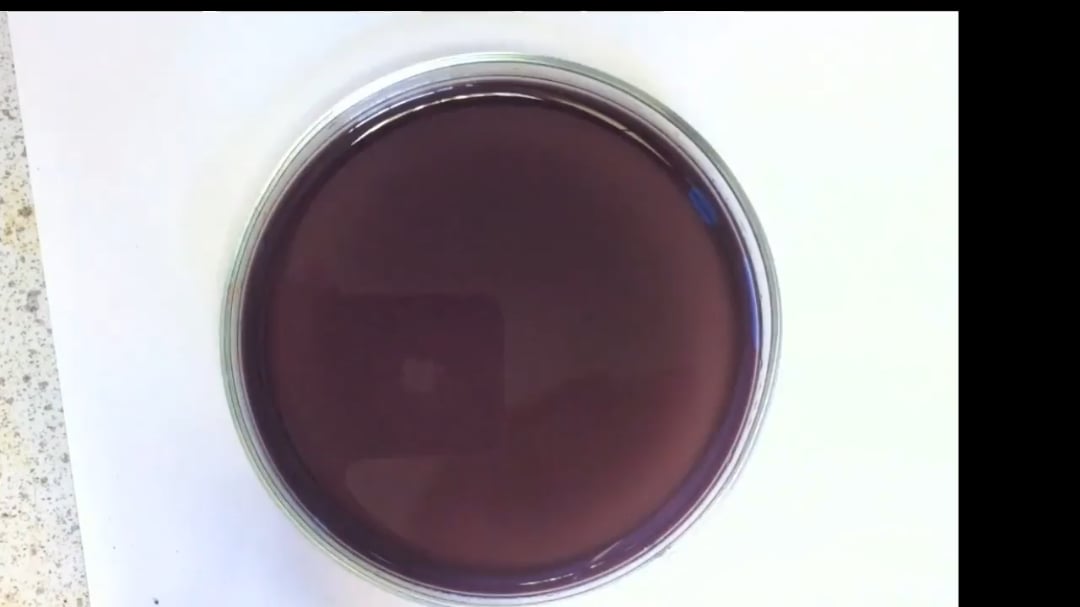
This is called the “Belousov-Zhabotinsky” reaction
The Belousov-Zhabotinsky Reaction: Unveiling the Mesmerizing Dance of Chemical Waves
Meta Description: Discover the Belousov-Zhabotinsky reaction – a stunning chemical oscillator that defies equilibrium, creates hypnotic patterns, and revolutionized non-linear chemistry. Explore its history, science, and significance!
Introduction: When Chemistry Defies Expectations
Picture crimson waves swirling through a turquoise liquid, forming hypnotic spirals and pulsating rings. This is not a digital simulation or alien artwork—it’s the Belousov-Zhabotinsky (BZ) reaction, one of chemistry’s most visually arresting demonstrations of non-equilibrium dynamics. Named after Soviet chemists Boris Belousov and Anatol Zhabotinsky, this oscillating reaction challenges conventional notions of how chemical systems behave, transforming simple ingredients into a breathtaking display of self-organization.
What Is the Belousov-Zhabotinsky Reaction?
The Belousov-Zhabotinsky (BZ) reaction is a chemical oscillator—a complex non-equilibrium reaction where concentrations of reactants periodically shift, causing visible changes in color and pattern. Unlike most reactions that reach a steady end state, the BZ reaction fluctuates between oxidized and reduced states, creating rhythmic waves that resemble living pulse beats.
Key Components:
- Bromate ions (BrO₃⁻): The oxidizing agent.
- Malonic acid (CH₂(COOH)₂): A reducing organic compound.
- Metal catalyst: Cerium (Ce³⁺/Ce⁴⁺), ferroin, or ruthenium complexes.
A Brief History of a Controversial Discovery
The BZ reaction’s story is a testament to scientific perseverance. In the 1950s, Boris Belousov attempted to create an inorganic analog of the Krebs cycle. Instead, he discovered oscillations in a mix of citric acid, bromate, and cerium ions. Skeptical journals rejected his findings, dismissing oscillating reactions as “impossible” under thermodynamic laws.
A decade later, Anatol Zhabotinsky reproduced Belousov’s work, refining the recipe and using ferroin to amplify the dramatic color shifts (red ⇄ blue). By the 1970s, the BZ reaction gained global acclaim, proving that chemical systems could exhibit emergent complexity far from equilibrium.
How Does the BZ Reaction Work? Breaking Down the Oscillations
The magic lies in nonlinear kinetics and autocatalysis, where intermediate products speed up their own production. Here’s a simplified breakdown:
-
Oxidation State (Blue/Red):
Bromate oxidizes the catalyst (e.g., ferroin → red to blue). -
Bromide Threshold:
Bromide ions (Br⁻) act as inhibitors. Their depletion triggers a switch. -
Reduction State (Red/Blue):
Organic acids reduce the catalyst, regenerating bromide and resetting the cycle. -
Wave Propagation:
Localized chemical waves (spirals, concentric rings) spread through the solution via diffusion.
These feedback loops create striking Turing patterns—named after Alan Turing’s work on morphogenesis.
Why the BZ Reaction Matters: Science and Beyond
Beyond its entrancing visuals, the BZ reaction revolutionized our understanding of nonlinear systems, influencing fields like biology, physics, and computer science:
- Biology: Models circadian rhythms, cardiac arrhythmias, and pattern formation in nature (e.g., leopard spots, seashell spirals).
- Mathematics: Inspires chaos theory and reaction-diffusion models.
- Neurology: Simulates electrical oscillations in brain waves.
- Materials Science: Guides research into self-assembling materials.
Witnessing the BZ Reaction: Where to Find It
While too complex for most home labs (safety first!), you can:
- Watch university demonstrations or YouTube recordings (search “BZ reaction video”).
- Explore simulations like the Oregonator model.
- Visit science museums with interactive chemistry exhibits.
Frequently Asked Questions (FAQ)
Q: Is the BZ reaction safe to perform at home?
A: No—it involves hazardous chemicals like bromate and strong acids. Leave it to professionals!
Q: Are there biological oscillators similar to BZ?
A: Yes! Glycolysis, calcium signaling, and even predator-prey populations follow analogous cycles.
Q: How long does the reaction last?
A: Oscillations can persist for minutes to hours, depending on concentrations and temperature.
Conclusion: The Dance of Order and Chaos
The Belousov-Zhabotinsky reaction is far more than a lab curiosity—it’s a window into the universe’s hidden rhythms. From proving self-organization in chemistry to inspiring studies of life itself, this reaction reminds us that beauty often emerges where science challenges expectations. As Zhabotinsky once said: “Chemical waves show us how simple rules can create endless complexity.”
Keywords for SEO:
Belousov-Zhabotinsky reaction, BZ reaction, oscillating chemical reaction, chemical waves, reaction-diffusion patterns, nonlinear dynamics, Turing patterns, autocatalysis, Boris Belousov, Anatol Zhabotinsky.