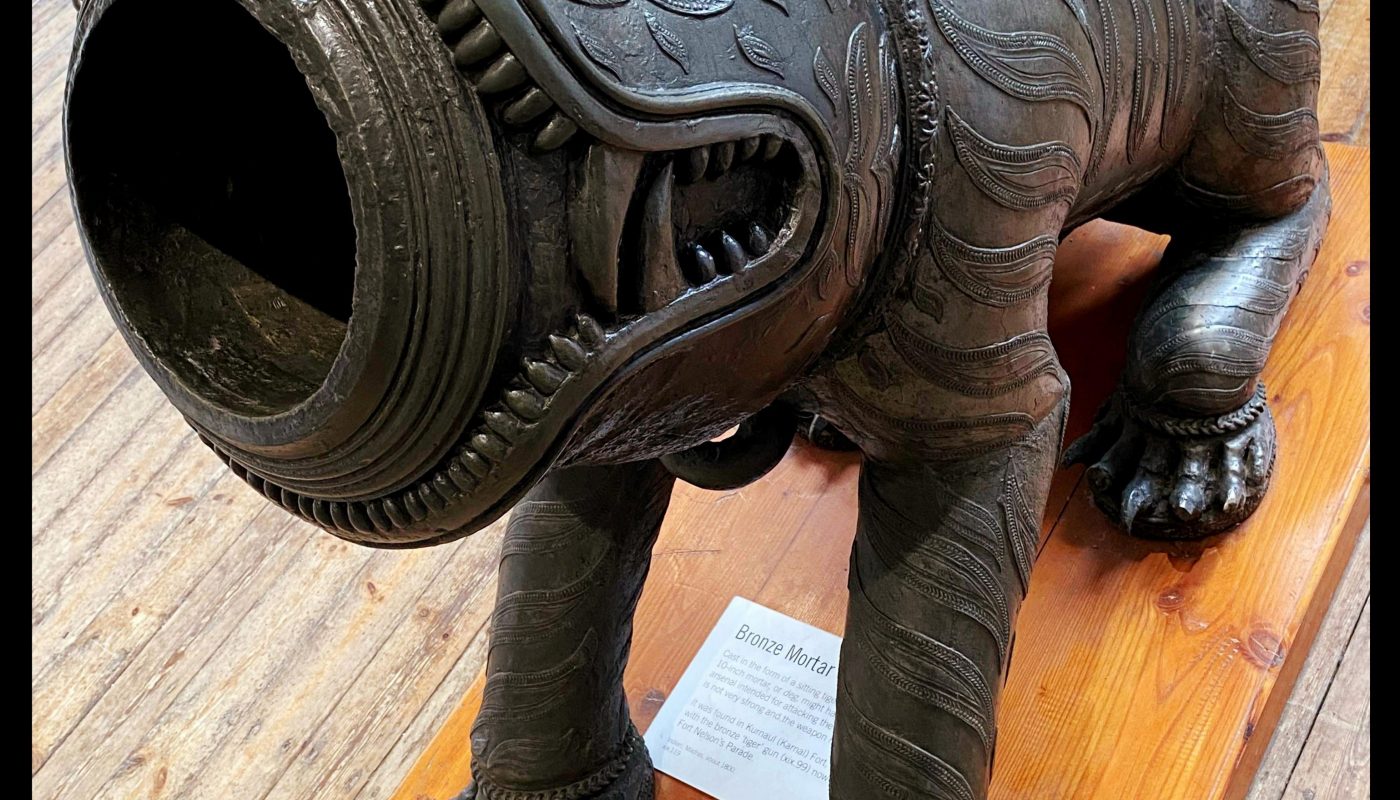
Tiger-Shaped Mortar from India, c.1750-1790 CE: this 239mm (9.4in) caliber mortar is cast in the shape of a tiger with the muzzle of the gun protruding from its jaws
Title: The Tiger-Shaped Mortar of India: A Ferocious Masterpiece of 18th-Century Artillery
Introduction
In the annals of military history, few artifacts blend artistry and firepower as strikingly as the tiger-shaped mortar from India. Cast between 1750–1790 CE, this 239mm (9.4-inch) caliber weapon is a testament to the ingenuity, symbolism, and craftsmanship of Indian artillery during the twilight years of the Mughal Empire and the rise of regional powers. With its muzzle emerging menacingly from the jaws of a roaring tiger, this mortar embodies both cultural grandeur and battlefield pragmatism. In this article, we delve into its history, design, and enduring legacy.
Historical Context: India’s Military Landscape in the 18th Century
The 18th century was a period of upheaval in India. The Mughal Empire, once a dominant force, was fragmenting, giving way to regional powers like the Marathas, Sikhs, Rajputs, and the ascendant British East India Company. Artillery played a pivotal role in these conflicts, with Indian rulers commissioning elaborate cannons and mortars not just as weapons, but as symbols of authority.
The tiger, revered in Indian culture as a symbol of power, strength, and royalty, became a popular motif for military hardware. This mortar, likely commissioned by a princely state or a wealthy noble, was as much a psychological weapon—intimidating enemies—as it was a functional siege engine.
Design and Symbolism: Where Art Meets Warfare
The tiger-shaped mortar is a masterpiece of figurative metal casting, weighing several tons (exact weight varies by source). Key features include:
-
Ferocious Aesthetics:
- The mortar is cast in the likeness of a snarling tiger, its body crouched in a predatory stance.
- The muzzle protrudes from the tiger’s open jaws, symbolizing the deadly “roar” of the cannon upon firing.
- Intricate details, such as textured fur, claws, and facial expressions, highlight the artisans’ skill.
-
Technical Specifications:
- Caliber: 239mm (9.4 inches), capable of firing heavy stone or iron projectiles.
- Range: Mortars of this era typically had a range of 1–2 kilometers, ideal for sieges or defensive positions.
- Material: Likely cast in bronze or iron, common materials for Indian artillery.
-
Cultural Significance:
- Tigers were associated with Hindu goddesses like Durga and regional deities, linking the weapon to divine protection.
- In Hindu mythology, tigers represent shakti (power) and command respect, making them a fitting emblem for rulers asserting dominance.
Purpose and Function: More Than Just a Showpiece
Mortars are short-barreled artillery pieces designed for high-angle, indirect fire, making them ideal for:
- Siege Warfare: Destroying fortifications or lobbing explosives into entrenched positions.
- Ceremonial Use: Displayed during parades or diplomatic events to project royal authority.
- Psychological Warfare: The tiger’s fearsome visage was meant to demoralize enemies before a single shot was fired.
While elaborate in design, this mortar was fully functional. Historical accounts suggest similar zoomorphic cannons were used in battles across India, though their effectiveness depended on the skill of gunners and the quality of powder.
Legacy and Preservation
Today, this tiger-shaped mortar is part of the Royal Armouries collection (UK) and has been exhibited globally as a symbol of India’s military-artistic heritage. Its existence challenges stereotypes of pre-colonial Indian technology, showcasing the sophistication of local craftsmanship and metallurgy.
Similar zoomorphic cannons survive across India, such as the famed “Tipu Sultan’s Tiger” (a mechanical organ depicting a tiger mauling a European soldier), underscoring the enduring cultural fusion of art and warfare in South Asia.
Conclusion: A Roaring Reminder of History
The tiger-shaped mortar from 18th-century India is more than a weapon—it is a bridge between martial necessity and artistic expression. Its design reflects a time when rulers wielded symbolism as deftly as swords, and when even instruments of war could be transformed into works of awe-inspiring beauty. For historians, militarists, and art lovers alike, this mortar remains a captivating relic of a bygone era, roaring its story across the centuries.
Explore Further: Visit the Royal Armouries Museum or India’s National Museum to witness similar artifacts that celebrate the subcontinent’s rich martial legacy.
SEO Keywords: Tiger-shaped mortar India, Mughal artillery, 18th-century Indian weapons, historical cannons, military artifacts, Indian zoological cannons, artillery symbolism, Royal Armouries collection.
Meta Description: Discover India’s 18th-century tiger-shaped mortar, a 239mm caliber masterpiece blending artistry and firepower. Learn its history, symbolism, and role in warfare!