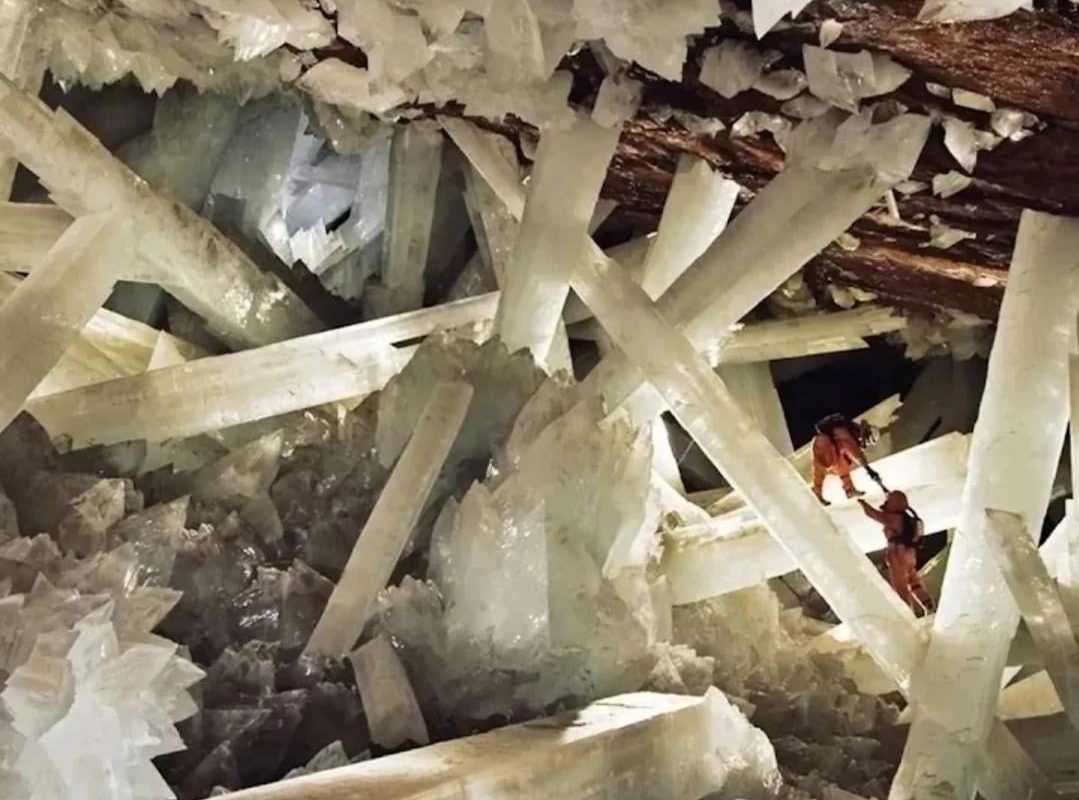
In 2000, while working in the Naica mine in Mexico, about 300 meters underground, two miners accidentally discovered an astonishing chamber unlike any other. This cave is unlike any other; it contains the largest natural crystals ever found on Earth.
Title: The Jaw-Dropping Discovery of Naica’s Giant Crystal Cave: Earth’s Subterranean Wonder
Introduction
Deep beneath the arid landscapes of Naica, Mexico, lies one of the most surreal geological marvels ever uncovered: the Cave of the Crystals. In 2000, miners drilling 300 meters (1,000 feet) underground in the Naica Mine stumbled upon a chamber that defied imagination—a cavern studded with shimmering, gargantuan crystals unlike anything seen before. This accidental revelation unveiled a hidden world of extreme beauty, scientific enigma, and otherworldly wonder.
The Accidental Discovery: A Miner’s “Eureka” Moment
In April 2000, miners Juan Sánchez and Eloy Delgado were excavating a new tunnel in the Naica silver and lead mine, part of the Sierra de Naica mountain range in Chihuahua, Mexico. As they drilled deeper into the earth, they broke through a rocky wall—and gasped. Behind it lay a cavern bathed in ethereal light, packed with luminous, sword-like crystals so immense they resembled something from a sci-fi movie. The largest of these selenite crystals measured up to 12 meters (39 feet) in length and weighed an astonishing 55 tons—earning the cave its nickname: The Cueva de los Cristales (Cave of the Crystals).
A Geological Masterpiece: How Earth Forged the Crystals
The Naica crystals are made of selenite, a transparent form of gypsum. Their extraordinary size resulted from a rare cocktail of environmental conditions over 500,000 years:
- Heat and Volcanic Activity: The cave sits above an underground magma chamber, which heated groundwater rich in minerals to just below boiling (around 50°C/122°F).
- Mineral-Rich Fluids: Hydrothermal fluids saturated with calcium sulfate seeped into the cave, allowing gypsum crystals to grow slowly in the submerged chamber.
- Stability: A consistent temperature and mineral concentration persisted for millennia—until mining operations drained the cave, halting crystal growth but exposing them to humanity.
A Deadly Beauty: Surviving the Cave of Giants
Entering the Cave of the Crystals is no simple feat. The environment is lethally inhospitable:
- Extreme Heat: Temperatures soar to 58°C (136°F)—sustained for only 10 minutes without protective gear.
- 100% Humidity: Air so saturated with moisture that lung function is impaired, risking fluid buildup.
Scientists and explorers must wear ice-cooled suits and respirators to endure short visits, making research a logistical challenge.
Extremophiles and Scientific Marvels
The cave isn’t just visually stunning—it’s a goldmine for science. Studies revealed ancient microbes trapped inside the crystals, surviving in extreme conditions. These “extremophiles” offer clues about:
- Life’s adaptability in hostile environments (e.g., subsurface Mars).
- Novel enzymes for medical or industrial use.
- Earth’s Pleistocene-era geology and climate history.
Preservation vs. Curiosity: The Cave’s Precarious Fate
After its discovery, the cave faced threats from humidity loss, contamination, and structural instability. Despite global interest, the Naica Mine closed in 2015. As mining pumps stopped, groundwater began refilling the chamber, submerging the crystals again. While this protects them from human interference, it also means the cave may remain inaccessible indefinitely—a fleeting glimpse into Earth’s hidden artistry.
Why Naica Still Captivates the World
The Cave of the Crystals highlights nature’s capacity to create the unimaginable. Images of its translucent beams—some thicker than tree trunks—have inspired documentaries, academic papers, and even comparisons to Superman’s Fortress of Solitude. Though few can visit this alien cathedral, its discovery reminds us of the undiscovered wonders lying beneath our feet.
Conclusion
The Naica crystal cave stands as a testament to Earth’s patient, invisible craftsmanship—a subterranean Sistine Chapel that took millennia to sculpt. While its doors may now be closed, its legacy endures as a symbol of nature’s grandeur and humanity’s relentless curiosity. For adventurers and scientists alike, it’s a stark reminder: there are still marvels hidden in the dark, waiting to be found.
SEO Keywords: Naica crystal cave, giant selenite crystals, largest crystals on Earth, Cave of the Crystals Mexico, Naica mine discovery, underground geological wonders, extreme environments, extremophiles, selenite gypsum crystals, hydrothermal crystal growth.
Meta Description: In 2000, miners in Mexico’s Naica mine uncovered the Cave of the Crystals—home to Earth’s largest natural crystals. Explore how these 12-meter giants formed, the deadly beauty of their home, and why they’re a scientific treasure.