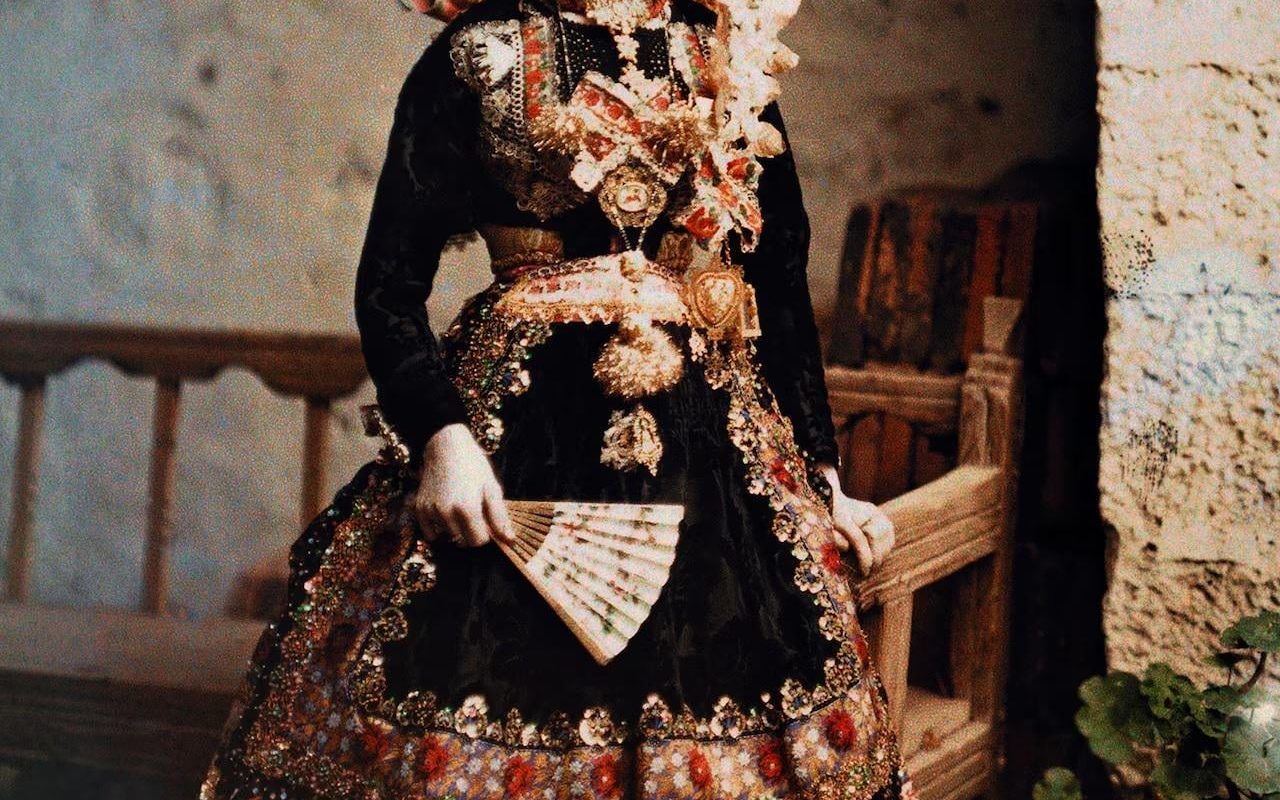
Autochrome shot of a spanish woman in traditional clothes, 1914.
Capturing History in Color: The Allure of a 1914 Autochrome Portrait of a Spanish Woman in Traditional Dress
In the realm of historical photography, few artifacts are as mesmerizing as the autochrome—a pioneering color process that brought the past to life in vibrant hues long before modern digital imaging. Among these treasures is a 1914 autochrome photograph of a Spanish woman dressed in traditional attire, a striking visual portal to the cultural richness of early 20th-century Spain. This article explores the significance of this image, the autochrome technique, and the enduring legacy of Spain’s sartorial heritage.
The Magic of Autochrome: Painting with Light
Invented by French brothers Auguste and Louis Lumière in 1903, autochrome photography was the first commercially viable color process. Unlike black-and-white images dominating the era, autochromes captured scenes using microscopic grains of potato starch dyed red, green, and blue, layered over a glass plate. When developed, the result was a luminous, almost painterly image with soft tones and subtle textures—a revolutionary achievement for its time.
The 1914 autochrome of a Spanish woman is a testament to this artistry. Shot during photography’s experimental golden age, the image preserves not just details of clothing, but also the interplay of light and pigment—a feat rarely seen in historical records of non-elite subjects.
A Portrait of Tradition: Decoding the Spanish Attire
The woman in the photograph embodies Spain’s regional identity through her clothing, likely reflecting the style of Andalusia or Castile, regions famed for intricate traditional dress. Key elements include:
- The Mantilla: A lace veil often worn over a decorative comb (peineta), symbolizing elegance and modesty.
- Embroidered Shawl (Manton): Richly adorned with floral patterns, showcasing skilled craftsmanship.
- Flowing Skirt (Falda): Voluminous and layered, sometimes with ruffles, dyed in deep reds, blacks, or blues.
- Accessories: A handheld fan (abanico) and jewelry, such as filigree earrings or a brooch, signifying cultural pride.
This attire wasn’t merely fashion—it was a statement of heritage, social status, and resistance to modernization sweeping Europe in the pre-WWI era.
1914 Spain: A Nation at a Crossroads
The photograph’s historical context adds depth to its beauty. In 1914, Spain grappled with political turmoil, regional tensions, and the lingering influence of the Generation of ’98—a cultural movement mourning Spain’s decline after losing its colonies. Traditional clothing became a symbol of resilience, especially in rural areas untouched by industrialization.
Yet this period also marked photography’s democratization. Autochromes, though expensive and complex, allowed photographers to document ordinary lives with newfound intimacy. The anonymous Spanish woman immortalized in this image represents countless others whose stories went unrecorded in texts but survived through visual art.
Preserving the Autochrome Legacy
Autochromes faded into obscurity by the 1930s, replaced by cheaper color film. Today, fewer than 150,000 original autochromes survive, housed in archives like France’s Albert-Kahn Museum or the U.S. Library of Congress. Conservationists work meticulously to stabilize these fragile plates, ensuring their hues endure for future generations.
The 1914 portrait is more than a photograph; it’s a bridge between past and present. For historians, it offers insights into early color photography and Spanish ethnography. For modern audiences, it humanizes history, reminding us that the faces of the past were as vivid and complex as our own.
Conclusion: A Timeless Snapshot of Culture and Innovation
The autochrome of a Spanish woman in traditional dress is a masterpiece of technical ingenuity and cultural storytelling. It captures a fleeting moment where Spain’s soul converged with photography’s evolution—a harmonious blend of art and history. As we study this image, we’re reminded that every thread of her clothing, every hue in the autochrome, whispers a story worth preserving.
Keywords for SEO: Autochrome photography 1914, Spanish traditional clothing, early color photography, historical Spanish portraits, Lumière brothers autochrome, 20th-century Spain culture, Andalusian traditional dress, vintage photography techniques, Albert-Kahn Museum collection, 1914 historical fashion.