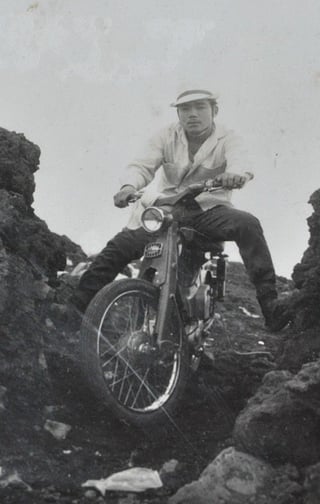
On August 4th, 1963, 22-year-old Japanese climber/biker Susumu Nabeta attempted to climb Mount Fuji by riding a motorcycle. After traveling a total distance of 40 kilometers in 12 hours with a modified Honda C100 Super Cub, he successfully rode up to the summit
Title: The Audacious 1963 Motorcycle Ascent of Mount Fuji: Susumu Nabeta’s Honda Super Cub Triumph
Meta Description: Discover how 22-year-old Susumu Nabeta made history by riding a modified Honda C100 Super Cub motorcycle to the summit of Mount Fuji on August 4, 1963—a daring feat blending engineering grit and adventure.
Introduction: A Daring Ride into History
On August 4, 1963, a 22-year-old Japanese climber and motorcyclist named Susumu Nabeta stunned the world by accomplishing what seemed impossible: riding a motorcycle to the summit of Mount Fuji. Armed with a modified Honda C100 Super Cub and unwavering determination, Nabeta traversed 40 kilometers of treacherous volcanic terrain in just 12 hours, etching his name into the annals of extreme sports and Japanese cultural lore.
This article explores the remarkable story of Nabeta’s climb, the engineering ingenuity behind his bike, and why this audacious feat remains a symbol of human tenacity over six decades later.
Who Was Susumu Nabeta?
Susumu Nabeta was no ordinary thrill-seeker. A skilled mountaineer and motorcyclist, he embodied Japan’s post-war spirit of innovation and adventure. At 22, Nabeta envisioned blending his passions to conquer Japan’s most iconic natural landmark—Mount Fuji (3,776 meters)—on two wheels, defying skeptics who deemed the volcano’s jagged slopes “unrideable.”
The Challenge: Why Mount Fuji on a Motorcycle?
Mount Fuji has long been a spiritual and physical benchmark in Japan. Climbers typically hike its trails between July and September, but Nabeta’s goal was unprecedented: to scale it via motorcycle. This meant battling:
- Rugged terrain: Loose rocks, steep gradients (up to 40°), and abrasive volcanic ash.
- Altitude challenges: Thinning air affecting engine performance.
- No established paths: Nabeta had to forge his own route.
The endeavor wasn’t just a personal test—it was a homage to Honda’s emerging engineering legacy and a testament to human creativity.
The Machine: Modifying the Honda Super Cub
Nabeta chose Honda’s C100 Super Cub—a lightweight, reliable commuter bike famous for its “You meet the nicest people on a Honda” campaign. But to tackle Fuji, drastic modifications were essential:
- Reinforced Frame: Strengthened to endure violent vibrations.
- Specialized Tires: Knobby, high-traction tires for loose terrain.
- Engine Tweaks: Adjusted carburetor settings for oxygen-depleted high altitudes.
- Weight Reduction: Stripped of non-essential parts to improve agility.
The result was a rugged hybrid of a trail bike and a mountaineering tool.
The Climb: 12 Hours of Grit and Ingenuity
Nabeta began his ascent at dawn on August 4, 1963. Here’s how the historic ride unfolded:
- Base to 5th Station (2,300m): Navigating forest trails and early crowds of hikers.
- 5th Station to 8th Station (3,200m): Battling steep, rocky slopes; frequent dismounts to push the bike.
- Summit Push (3,776m): Thin air tested both man and machine. The Super Cub’s engine sputtered but persevered.
After 12 grueling hours, Nabeta reached the summit at sunset, becoming the first—and possibly only—person to motorcycle up Mount Fuji.
Legacy & Impact: Why Nabeta’s Feat Matters Today
Nabeta’s climb was more than a stunt; it symbolized the boundless potential of engineering and human will. Honda later celebrated the Super Cub’s durability in marketing, while adventurers drew inspiration from Nabeta’s refusal to accept limits.
Key Takeaways for Modern Audiences:
- Innovation Thrives on Constraints: Limited technology? Nabeta modified what he had.
- Brand Storytelling Gold: Honda’s association with this feat boosted its reputation for reliability.
- Adventure Redefined: Nabeta proved that exploration isn’t limited by traditional tools.
Could It Be Replicated Today?
Modern motorcycles and GPS technology make a repeat theoretically easier, but Mount Fuji’s status as a UNESCO World Heritage site now prohibits motorized ascents. Nabeta’s 1963 triumph remains a singular, iconic moment—a snapshot of an era when creativity trumped regulation.
Conclusion: The Spirit of Defying Gravity
Susumu Nabeta’s motorcycle ascent of Mount Fuji is a timeless story of audacity and ingenuity. For brands, adventurers, and history buffs, it’s a reminder that limits exist only to be challenged—one rocky slope at a time.
Whether you’re a rider, climber, or innovator, let Nabeta’s 12-hour journey inspire your next uphill battle.
Target Keywords:
- Motorcycle climb Mount Fuji
- Susumu Nabeta Honda Super Cub
- Extreme motorcycle challenge 1963
- Modified Honda C100
- Mount Fuji motorcycle ascent
Image Alt Text Suggestion:
“Susumu Nabeta riding modified Honda Super Cub on Mount Fuji slopes, 1963.”
Leverage this blend of history and adventure to engage audiences searching for unique stories of human achievement. Nabeta’s ride is SEO gold—proof that even the steepest odds can’t outpace determination.🚵♂️🗻