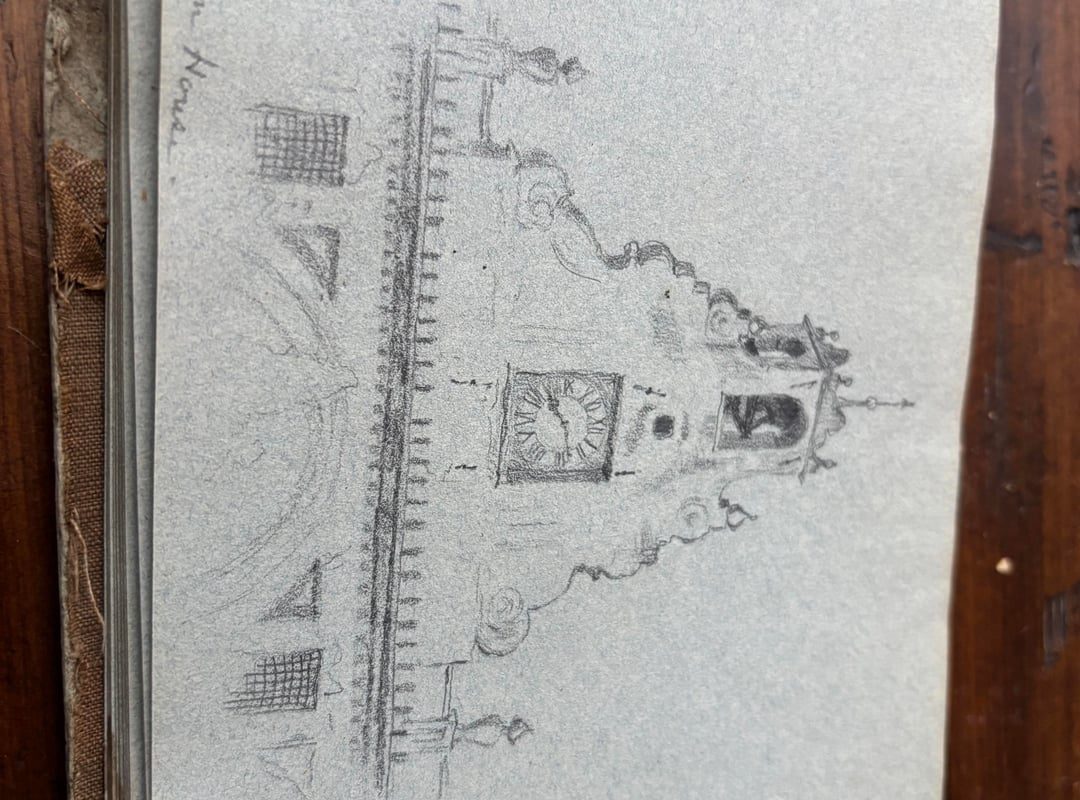
Sketchbook from 1859 travel across Europe and some US
Title: Journey Through Time: The 1859 Sketchbook That Captured Europe and America in an Era of Transformation
Meta Description: Step into the past with an extraordinary 1859 sketchbook chronicling travels across Europe and the United States. Discover its historical, artistic, and cultural significance in this deep dive.
Introduction: A Window to the 19th Century
In 1859, the world stood on the cusp of monumental change—Europe grappled with industrialization and political upheaval, while the United States neared its devastating Civil War. Amid this turbulence, an unnamed artist (or perhaps a curious traveler) embarked on a cross-continental journey, documenting sights, people, and landscapes in a timeworn sketchbook. Today, this artifact offers a rare glimpse into a world long vanished, bridging continents and cultures through delicate pencil strokes and vibrant watercolors.
The 1859 Sketchbook: A Traveler’s Untold Story
While the creator’s identity remains a mystery, the sketchbook’s pages reveal meticulous care and skilled observation. Bound in leather and filled with heavyweight paper, it survived wars, ocean voyages, and generations of neglect. Its journey likely began in Europe, where cities like Paris, Vienna, and Rome were captured in their pre-modern glory—before Haussmann’s renovation of Paris or Italy’s unification. Later, the sketchbook crossed the Atlantic, turning its focus to budding American cities like New York, Boston, and rural landscapes of the antebellum South.
Europe Through the Artist’s Eyes: Ruins, Royals, and Revolution
The European section of the sketchbook reads like a Grand Tour diary, a rite of passage for 19th-century elites. Key highlights include:
- Architectural Marvels: Detailed sketches of Cologne Cathedral, the Roman Forum, and the Doge’s Palace in Venice, showcasing Gothic, Renaissance, and Classical influences.
- Daily Life: Street vendors in London, fishermen along the Rhine, and farmers in the French countryside—snapshots of pre-industrial Europe.
- Political Undercurrents: Subtle symbols hint at the era’s tensions, like Austrian soldiers in Italy or unfinished barricades in Berlin, foreshadowing nationalism and revolution.
Across the Atlantic: America’s Untamed Landscapes and Urban Boom
By late 1859, the sketchbook arrives in the United States, capturing a nation divided but dynamically expanding:
- Industrial Cities: Rapidly growing hubs like New York, where steamships crowded harbors and gaslights illuminated Broadway.
- Rural Traditions: Quaint New England villages, plantation estates in Virginia, and frontier settlements, contrasting sharply with Europe’s ancient sophistication.
- Pre-War Tensions: Though not overtly political, sketches of Southern ports and Northern factories subtly frame the economic divides fueling the Civil War.
Artistic Techniques: Blending Romanticism and Realism
The sketchbook’s style reflects 19th-century artistic trends:
- Romantic Flourishes: Dramatic skies over Alpine passes and moonlit Venetian canals echo J.M.W. Turner’s influence.
- Ethnographic Detail: Precise renderings of traditional clothing, tools, and local architecture suggest a scholarly or anthropological intent.
- Medium Mastery: The artist used graphite for outlines, ink washes for depth, and sparing watercolor to highlight landscapes or textiles—a pragmatic choice for travel.
Why This Sketchbook Matters Today
- Cultural Preservation: It visually preserves landmarks lost to time—such as the original Notre-Dame spire or pre-skyscraper Manhattan.
- Historical Context: Highlights how travel sparked cross-cultural exchange long before globalization.
- Artistic Legacy: Serves as a bridge between Romanticism’s idealism and Realism’s grit, predating Impressionism’s rise.
The Mystery of the Artist: Clues and Theories
Who wielded this sketchbook? Speculations abound:
- A wealthy tourist on a Grand Tour, blending leisure with documentation.
- An academic or scientist compiling visual notes for research.
- A female traveler, as Victorian women increasingly documented journeys privately.
Without signatures or inscriptions, the sketchbook’s power lies in its anonymity—inviting viewers to project their own narratives onto its pages.
Preserving the Past: The Sketchbook’s Modern-Day Journey
Today, the sketchbook resides in a private collection or museum archive (if publicly identified, link to the institution). Conservationists employ climate-controlled storage and digital scanning to protect its fragile pages. For historians, it’s a primary source; for artists, a masterclass in plein-air sketching; and for travelers, inspiration to document their own journeys.
Final Thoughts: Lessons from a 165-Year-Old Sketchbook
In an age of smartphones and instant photography, this 1859 sketchbook reminds us of the value of slow observation. Each stroke was a decision; each page, a meditation on place and identity. As it awaits rediscovery in a digital archive or exhibition, its legacy endures: a testament to wanderlust, artistry, and the timeless urge to capture the world before it vanishes.
Keywords: 19th-century sketchbook, European Grand Tour 1859, antique travel art, pre-Civil War America sketches, Victorian-era drawings, historical sketchbook preservation, transatlantic journey 1800s, Romanticism art, ethnographic sketches 19th century.
Call to Action:
Inspired? Share your own travel sketches or research historic archives to uncover forgotten artists. The past is waiting in the margins—pick up a pencil and explore!