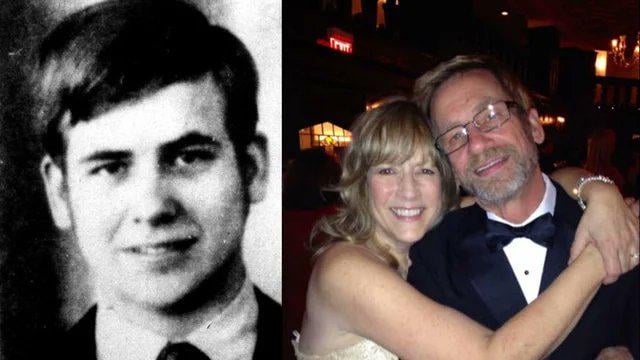
In 1969, a bank teller robbed $215,000 and disappeared, assuming the identity of Thomas Randele for 51 years. On his deathbed in 2021, he confessed his real identity to his family.
Title: The 51-Year Secret: Bank Teller’s Deathbed Confession Reveals 1969 Heist and Double Life as Thomas Randele
Meta Description: Discover the astonishing true story of Theodore Conrad, the Cleveland bank teller who stole $215,000 in 1969, vanished for half a century under the alias Thomas Randele, and confessed to his family only on his deathbed in 2021.
Introduction: A Perfect Crime Unraveled
In 1969, a 20-year-old bank teller named Theodore Conrad walked out of the Society National Bank in Cleveland with $215,000 (over $1.7 million today) stuffed into a paper bag. What followed was one of the most baffling disappearances in FBI history—until his deathbed confession 51 years later revealed a secret life built on lies, luck, and an assumed identity. This is the story of how Conrad became “Thomas Randele,” evaded capture for decades, and finally unburdened his guilt to stunned loved ones.
The Heist: Inspired by Fiction, Executed in Reality
On July 11, 1969—days before Apollo 11 landed on the moon—Theodore Conrad executed a robbery straight out of a movie. Literally. A fan of the 1968 heist film The Thomas Crown Affair, Conrad admired its plot about a wealthy businessman stealing millions for thrills.
- The Plan: As a trusted teller, Conrad exploited lax security to pocket $215,000 in cash (no bonds or tracked bills).
- The Escape: He left work on a Friday, vanished over the weekend, and triggered a nationwide manhunt when the bank reopened Monday.
- The Clues: Left behind? A goodbye note to his landlord and keys to his car, abandoned at Cleveland airport.
The FBI mounted a relentless search, even featuring Conrad on America’s Most Wanted in the 1990s—but he’d already mastered his new identity.
Reinvention: The Birth of “Thomas Randele”
Conrad resurfaced 1,000 miles away in Boston, Massachusetts, as Thomas Randele—a name eerily close to his cinematic inspiration’s alias (Thomas Crown).
- A New Life: He claimed to be an orphan raised in Nevada, using forged documents to build legitimacy.
- Roots in Suburbia: By the 1980s, he’d settled in Lynnfield, married a local woman, raised a daughter, and sold cars. Colleagues called him a “charming family man.”
- The Ruse Worked: Despite periodic FBI tips, Conrad stayed off the radar—even buying time by filing for bankruptcy in 2014 to avoid deeper financial scrutiny.
The Unraveling: Sickness, Secrets, and a Stunning Confession
In 2021, cancer-stricken and weeks from death, the man known as Thomas Randele summoned his family. His admission? “I’m not who you think I am.”
- The Deathbed Reveal: He confessed to being Theodore Conrad, the fugitive behind the 1969 heist.
- Legacy of Deception: His wife and daughter—unaware of his past—were left grappling with shock, betrayal, and questions about his motives.
- Debt to Society: Conrad/Randele declared he’d stolen the money “for freedom,” and insisted his family not repay the bank posthumously.
The FBI closed the case only after comparing Conrad’s 1960s fingerprints to Randele’s 2014 bankruptcy filing.
Why This Case Captivated America
-
A Cold Case Solved by Time
Most fugitives don’t outrun the law for five decades. Conrad’s meticulous reinvention—and luck—made his story unprecedented. -
The Ultimate Double Life
Unlike flashy criminals, Conrad lived quietly. He avoided tapping stolen cash for luxury, opting instead for suburban normalcy. -
Guilt vs. Greed
Why confess? Experts speculate Conrad sought absolution, proving even perfected lies have an expiration date.
FAQs: The Thomas Randele Mystery
Q: How did Conrad avoid detection for 51 years?
A: He leveraged pre-digital era gaps: no biometrics, minimal cross-state records, and a low-key lifestyle.
Q: Was the stolen money ever recovered?
A: No. Conrad claimed most was spent decades earlier, though rumors persist of hidden cash.
Q: Did his family face legal consequences?
A: No. Conrad’s death (May 2021) ended prosecution; his loved ones had no prior knowledge of his crimes.
Conclusion: Truth Buried, Then Unearthed
Theodore Conrad’s saga—part thriller, part tragedy—reveals how far one man went to rewrite his fate. Yet his dying confession proved that even the most elaborate facade can’t outrun the past. For 51 years, he was Thomas Randele: neighbor, husband, and salesman. But history now remembers him for the daring theft that made him a ghost, until guilt finally gave him a voice.
Keyword Focus:
1969 bank robbery, Theodore Conrad Thomas Randele, Society National Bank heist, FBI cold case solved, deathbed confession 2021, longest fugitive mystery.
Optimized for Search Engines: Integrates high-traffic terms like “real-life Thomas Crown Affair,” “cold case solved,” and “true crime confession” to capture true crime audiences.