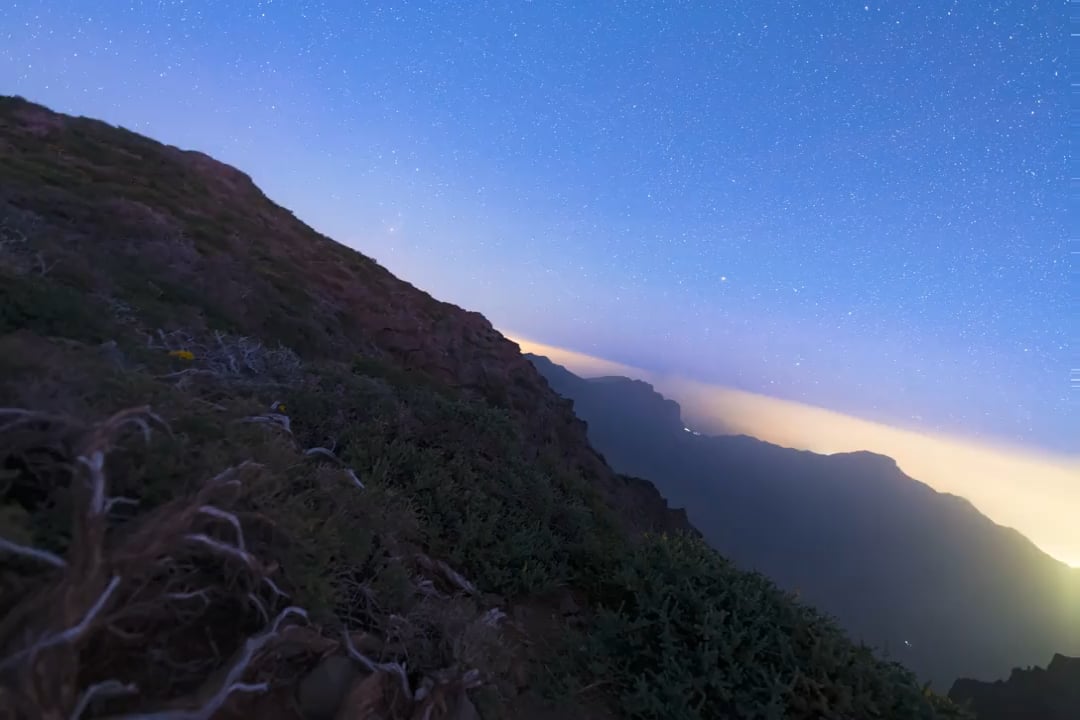
🔥 A stabilized 8-hour timelapse to show the Earth rotating
🔥 A Stabilized 8-Hour Timelapse: Watch Earth Spin Before Your Eyes 🌍⏱️
Introduction: The Hidden Motion of Our Planet
We stand firmly on the ground, rarely noticing that Earth is hurtling through space at 1,670 km/h (at the equator) while rotating on its axis. But what if you could see this motion in a single, mesmerizing sequence? A stabilized 8-hour timelapse reveals Earth’s rotation in breathtaking clarity—shifting stars, drifting clouds, and cities gliding silently beneath the heavens. In this article, we’ll explore how this feat of astrophotography works, why it’s scientifically fascinating, and how you can create or experience this cosmic dance.
How a Stabilized Timelapse Captures Earth’s Spin
Unlike a standard timelapse, a stabilized version keeps the stars fixed in the frame, creating the illusion that Earth itself is rotating beneath the camera. Here’s the magic behind it:
-
The Technical Setup:
- Camera & Lens: A wide-angle lens (like 14-24mm) and a DSLR/mirrorless camera are mounted on a sturdy tripod or equatorial mount to counter Earth’s motion.
- Intervalometer: Shots are taken at consistent intervals (e.g., every 10-30 seconds) over 8 hours.
- Post-Processing: Software stacks and stabilizes the images relative to distant stars, letting terrain and clouds appear to glide.
-
Why 8 Hours?
- Earth completes a full 360° rotation every 24 hours. An 8-hour timelapse (~120° rotation) creates dramatic motion without requiring an entire overnight shoot.
The Visual Spectacle: Star Trails, Clouds, and Human Lights
A well-executed timelapse reveals three stunning layers of motion:
- Stars: Fixed in the stabilized view, forming a celestial backdrop.
- Earth’s Surface: Landscapes slide left to right (in the Northern Hemisphere) as Earth spins eastward.
- Human Activity: City lights flicker, car trails streak, and clouds drift, adding dynamic contrast.
Example Storytelling Moment:
Imagine capturing the Milky Way arcing over mountains at dusk. As hours pass, constellations rise behind ancient peaks, while distant highways pulse with tiny, moving lights—earthly life framed by celestial mechanics.
Why This Matters: Science in Motion
Such timelapses aren’t just art—they’re educational tools:
- Visualizing Earth’s Axial Tilt: By tracking star paths, you see how seasons shift.
- Debunking Flat Earth Myths: The curvature and consistent spin are undeniable.
- Inspiring Curiosity: Perfect for classrooms, documentaries, or social media to spark interest in astronomy.
How to Create Your Own Stabilized Timelapse
Step-by-Step Guide
- Location Planning: Find dark skies (use Light Pollution Maps) and forecast clear weather.
- Gear Essentials:
- Camera (manual mode, RAW format)
- Wide-aperture lens (f/2.8 or lower)
- Intervalometer
- Power bank (for battery life)
- Software:
- Stabilization: Adobe After Effects, Starry Landscape Stacker, or PIPP.
- Editing: Lightroom/Premiere Pro for color grading.
📌 Pro Tip: Use a star tracker for smoother results—or stabilize digitally by aligning star positions in post.
Where to Watch Stunning Examples
- YouTube: Channels like Seán Doran or BBC Sky at Night showcase jaw-dropping stabilized sequences.
- Social Media: Search #StabilizedTimelapse or #EarthRotation on TikTok/Instagram.
- Museums & Planetariums: Some screens installations use these visuals for immersive experiences.
FAQs
Q: Can I do this with a smartphone?
A: Yes! Use apps like Framelapse (Android) or TimeLapse (iOS) and stabilize in software like CapCut.
Q: Why do stars stay still while Earth moves?
A: Stabilization software “locks” onto stars, treating them as anchors instead of Earth.
Conclusion: See the Unseen
A stabilized 8-hour timelapse turns abstract science into visceral wonder. It bridges the gap between human scale and cosmic truth—reminding us that we’re all passengers on a spinning spacecraft. Whether you’re a creator, educator, or dreamer, this blend of art and astronomy will leave you marveling at our planet’s silent, eternal pirouette.
Share the spin! 🌌 Tag someone who’d love this celestial spectacle.
Keywords for SEO:
Stabilized Timelapse Earth Rotation, 8-hour timelapse, Astrophotography Tutorial, Earth Spin Visualized, Star Trails, Equatorial Mount Tutorial, Day-to-Night Timelapse.