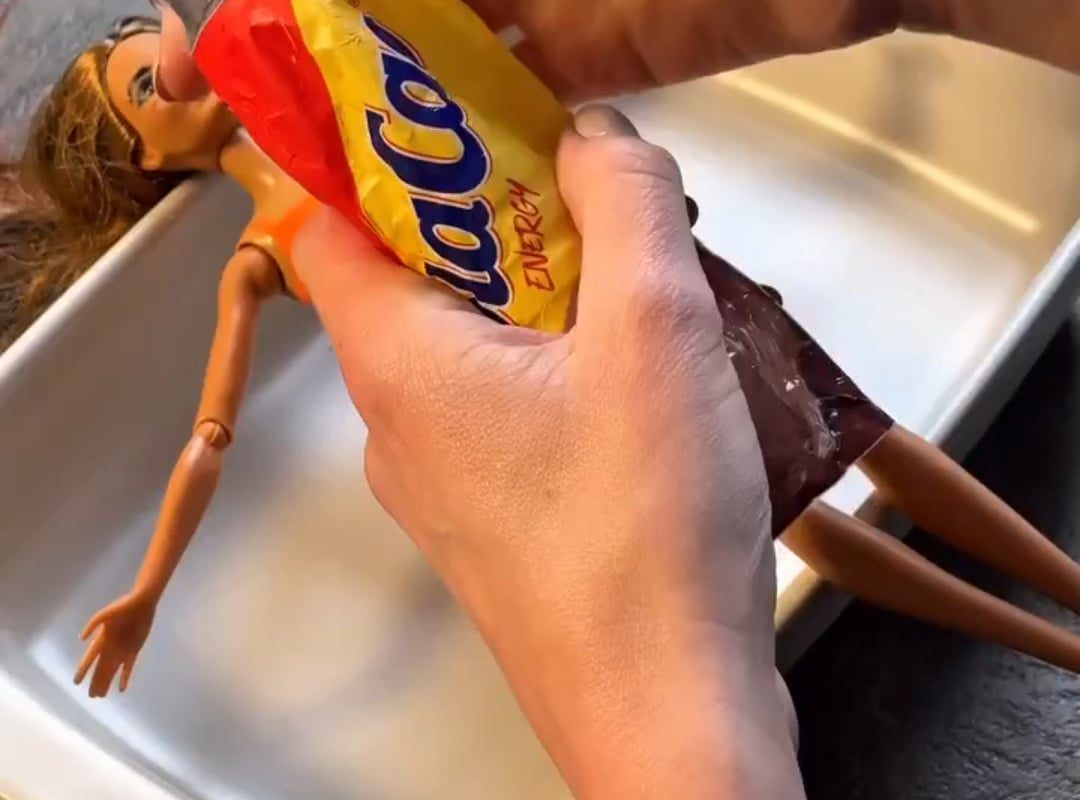
Dressing Barbie with physics.
Dressing Barbie with Physics: The Unexpected Science Behind Fashion & Play
Barbie isn’t just a fashion icon—she’s also an unlikely physics teacher! While styling her looks, experimenting with fabrics, or even watching her rock a parachute dress in Barbie 3: Adventure in Space, we’re subconsciously engaging with core concepts of physics. From friction to gravity, the act of “dressing Barbie” reveals fascinating scientific principles at play. Let’s dive into the hidden physics of Barbie’s wardrobe and how it transforms playtime into STEM learning.
The Physics of Fabric: Friction, Gravity & Tiny Forces
Every time you squeeze Barbie into a sequined gown or wrestle skinny jeans onto her plastic legs, you’re battling (and using!) physics:
1. Friction: The Silent Styling Struggle
- Static vs. kinetic friction: That frustrating moment when Barbie’s sleeve gets stuck? Static friction holds it in place until you apply enough force to overcome it (kinetic friction takes over). Stretchy fabrics like spandex have lower coefficients of friction than stiff materials like denim—hence why some outfits slide on easier.
- Solutions: Talcum powder (a lubricant) reduces friction for tricky outfits, while textured fabrics (velvet, lace) grip better thanks to higher friction.
2. Gravity’s Role in Drape & Flow
Barbie’s gowns don’t just “fall” naturally—gravity pulls fabric downward, creating folds and tension. Miniaturized clothing exaggerates this:
- Thin fabrics (satin, chiffon) conform closely to Barbie’s shape under gravity.
- Heavy materials (brocade, faux fur) resist gravity, requiring clever tailoring to avoid bulk.
3. Elasticity: Stretch Fabrics & Hooke’s Law
Snug outfits use elastic materials that obey Hooke’s Law (force applied = spring constant × stretch distance). Overstretch Barbie’s neon leggings? You exceed their elastic limit—permanent deformation (or a fashion disaster!) occurs.
Aerodynamics & Barbie’s Jet-Setting Looks
Barbie’s wardrobe isn’t just runway-ready—it’s wind-tunnel tested (in theory!):
- Streamlined Styles: Sleek evening gowns minimize drag (air resistance), especially key for Barbie Airplane Pilot or Race Car Driver.
- Flowy Dramatics: Ballgowns with wide skirts act like parachutes, increasing air resistance—great for a “floating” effect, bad for speed.
Pro Tip: Test aerodynamics by dropping dressed Barbies (safely!) from a height. Which outfit falls fastest?
Centripetal Force & Twirly Dresses
What makes Barbie’s skirt flare during a spin? Centripetal force:
- As Barbie twirls, her dress’s fabric resists the inward force, accelerating outward (hello, twirl radius!).
- Stiffer skirts (tulle) maintain shape; softer fabrics (chiffon) collapse without enough centripetal acceleration.
The Engineering Challenge: Design vs. Physics
Barbie’s micro-outfits demand real-world problem-solving:
- Zippers & Buttons: Tiny clasps require precision force application (torque and leverage).
- Balance & Stability: High heels shift Barbie’s center of mass. Too much torso weight? She’ll topple—unless you widen her stance!
Why “Physics Barbie” Matters: STEM in Disguise
Dressing Barbie isn’t frivolous—it’s stealth learning:
- Problem-Solving: Trial-and-error with outfits teaches material properties and force management.
- Creative Engineering: Kids intuitively grasp tension, compression, and friction while styling.
- Normalizing Science: Linking physics to creativity erases the “STEM is scary” barrier, especially for girls.
Experiment: Build a Physics-Optimized Barbie Outfit!
Turn play into a lab session with these DIY challenges:
- Friction Test: Time how long it takes to dress Barbie in slippery vs. grippy fabrics.
- Parachute Dress: Craft a skirt from a coffee filter and test its air resistance by dropping it.
- Twirl-o-Meter: Count how many spins Barbie can do before her dress stops flaring.
Beyond Play: The Rise of STEM Barbies
Mattel leans into physics-inspired play with STEM-centric roles like Robotics Engineer Barbie and Astronaut Barbie, complete with outfits designed for functionality (e.g., space suits with “zero-gravity” fabric science).
Conclusion: Fashion Meets Force
Dressing Barbie is more than play—it’s a masterclass in microphysics. By embracing the science behind her wardrobe, parents and educators can spark curiosity about forces, materials, and engineering. So next time you snap that glittery boot onto Barbie’s foot, remember: you’ve just overcome friction, leveraged Newton’s laws, and engineered a tiny triumph!
Ready to level up? Share your #PhysicsBarbie experiments online or explore STEM Barbie kits for hands-on learning. The universe of play is full of science—no lab coat required!
Keywords for SEO: Barbie physics, STEM toys for girls, physics of fashion, friction experiments, gravity and clothing, educational play, science behind Barbie, teaching physics to kids, Barbie STEM activities.