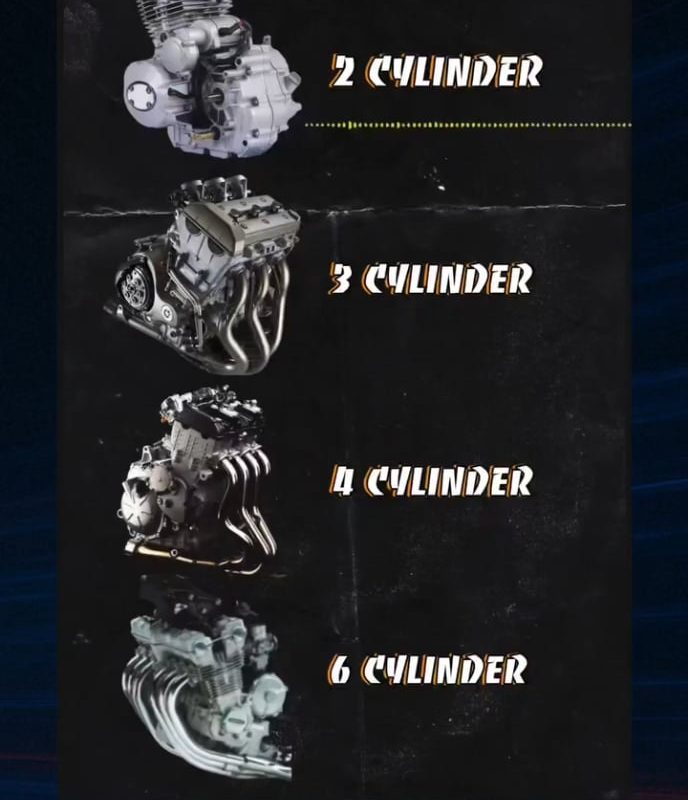
Sounds of different engine cylinders.
The Symphony of Speed: How Engine Cylinder Count Shapes Sound
From the deep, rumbling growl of a muscle car to the high-pitched scream of a supercar, the sound of an engine is its signature—a visceral cue that stirs emotion in car lovers. But what creates these distinct auditory personalities? The number of engine cylinders plays a pivotal role in defining an engine’s voice. In this guide, we’ll decode how different cylinder configurations create unique acoustic profiles and why your dream car’s soundtrack matters as much as its specs.
The Science Behind Engine Sound
Every engine sound originates from miniature explosions—combustion events inside each cylinder. Air and fuel ignite, pushing pistons downward and creating pressure waves that travel through the exhaust system. The firing order (the sequence cylinders ignite) and cylinder configuration (inline, V-shaped, boxer, etc.) amplify or muffle these pulses, shaping the engine’s tone.
Key factors shaping engine sound:
- Cylinder Count: More cylinders mean smoother operation but also more complex acoustics.
- Firing Intervals: Time gaps between combustions affect rhythm.
- Exhaust Design: Pipes, resonators, and mufflers modify raw sound.
- RPM Range: Higher revs pitch the sound upward.
The Sound of Cylinders: From Hum to Howl
1. Single-Cylinder: The Thumper
- Sound: A loud, uneven “POP-POP-POP” akin to a dirt bike or lawnmower.
- Why: With only one piston firing per cycle, vibrations and gaps between combustions create a raw, punchy rhythm.
- Example: Classic small motorcycles, utility engines.
2. Inline-2 & Twin-Cylinder: The Drummer
- Sound: Choppy, rhythmic thumping. Audibly unbalanced but nostalgic (e.g., vintage bikes).
- Example: Royal Enfield motorcycles, older microcars.
3. Inline-3: The Energetic Trio
- Sound: Raspy and lively with a hint of vibration. At high RPMs, it buzzes like an angry bee.
- Why: Odd cylinder counts create inherent imbalance, leading to a characterful warble.
- Example: 2023 Ford EcoBoost (1.0L), Yamaha MT-09 motorcycle.
4. Inline-4: The Balanced Workhorse
- Sound: Smooth, even hum at low RPM; metallic snarl at high revs.
- Why: Even firing intervals (every 180° in a 4-stroke) create consistency. Turbocharged I4s add whistles.
- Example: Honda Civic Type R, Toyota Camry.
5. Inline-5: The Uncommon Baritone
- Sound: Distinctive warble or growl, blending I4 smoothness with a V6-like rumble.
- Why: Uneven firing order (typically 1-2-4-5-3) generates a quirky, offbeat rhythm.
- Example: Audi Quattro (historic rally legend), Volvo T5.
6. Inline-6 (Straight-Six): The Silk Smooth
- Sound: Buttery-smooth purr, transitioning to a resonant howl. Often called “symphonic.”
- Why: Perfect primary and secondary balance minimizes vibration. Overlapping power strokes create seamless power.
- Example: BMW M240i, Toyota Supra (B58 engine).
7. V6: The Agile Growler
- Sound: Deeper than an I4, grittier than an I6—think aggressive growl under load.
- Why: Two banks of cylinders firing alternately add complexity; exhaust tuning affects harshness.
- Example: Nissan GT-R, Ford F-150 EcoBoost.
8. V8: The American Anthem
- Sound: Low-end rumble building to a thunderous roar. The “burble” on deceleration is iconic.
- Why: Cross-plane crankshafts create uneven firing pulses for that muscle-car attitude.
- Example: Chevrolet Corvette, Ford Mustang GT.
9. V10: The Exotic Scream
- Sound: Sharper than a V8, with a metallic, F1-like shriek at high RPM.
- Why: Higher firing frequency (10 pulses per rotation) and shorter exhaust paths amplify pitch.
- Example: Lamborghini Huracán, Dodge Viper.
10. V12: The Operatic Masterpiece
- Sound: Effortless, vibration-free wail—like a turbine with a bass undertone.
- Why: Perfect balance from evenly spaced power strokes across two banks.
- Example: Ferrari 812 Superfast, Aston Martin DBS.
Boxer Engines (Flat-4/Flat-6): The Subaru Rumble
- Sound: Throaty, uneven “blat” due to unequal-length headers (in Subarus) or balanced purr (Porsche).
- Why: Horizontally opposed pistons cancel vibrations but create unique exhaust pulses.
- Example: Subaru WRX STI, Porsche 911.
Rotary (Wankel) Engine: The Banshee’s Wail
- Sound: High-revving, buzzing whine with almost no low-end rumble.
- Why: Spinning rotors replace pistons, generating rapid, continuous power pulses.
- Example: Mazda RX-7.
Beyond Cylinders: What Else Alters Engine Sound?
- Exhaust Tuning: Smaller pipes amplify high notes; larger diameters deepen tone.
- Forced Induction: Turbos muffle exhaust noise; superchargers add whine.
- Materials: Titanium exhausts brighten sound; steel dampens it.
Why Sound Matters: More Than Just Noise
Engine acoustics influence brand identity and driver emotion. Porsche meticulously tunes its flat-6 exhausts for an acoustic “signature,” while Harley-Davidson famously patented its V-twin rumble. Electric cars now use speakers to replicate these sounds—proof that the soul of driving is often heard, not just seen or felt.
FAQ: Engine Sounds Decoded
- Q: Why do V8s burble on deceleration?
A: Unburned fuel igniting in the hot exhaust pipes creates small explosions. - Q: Are electric cars silent?
A: Yes, but many add synthetic engine sounds for safety and driver engagement. - Q: Can exhausts change sound drastically?
A: Absolutely! A straight-pipe V6 will roar, while a muffled one hums politely.
Final Note: The Soundtrack of Driving
Whether it’s the raw bark of a V8 muscle car or the refined purr of a luxury V12, cylinder count crafts an engine’s voice—and that voice becomes part of a car’s legend. Next time you hear a performance car accelerate, close your eyes and listen. You might just identify its heart by sound alone.
Optimize your site’s SEO: Embed high-quality audio clips of engines (e.g., V8 vs. I4) and use keywords like “engine exhaust notes,” “cylinder sound comparison,” and “V12 vs V8 sound”. Pair with visuals of engine bays to boost engagement!