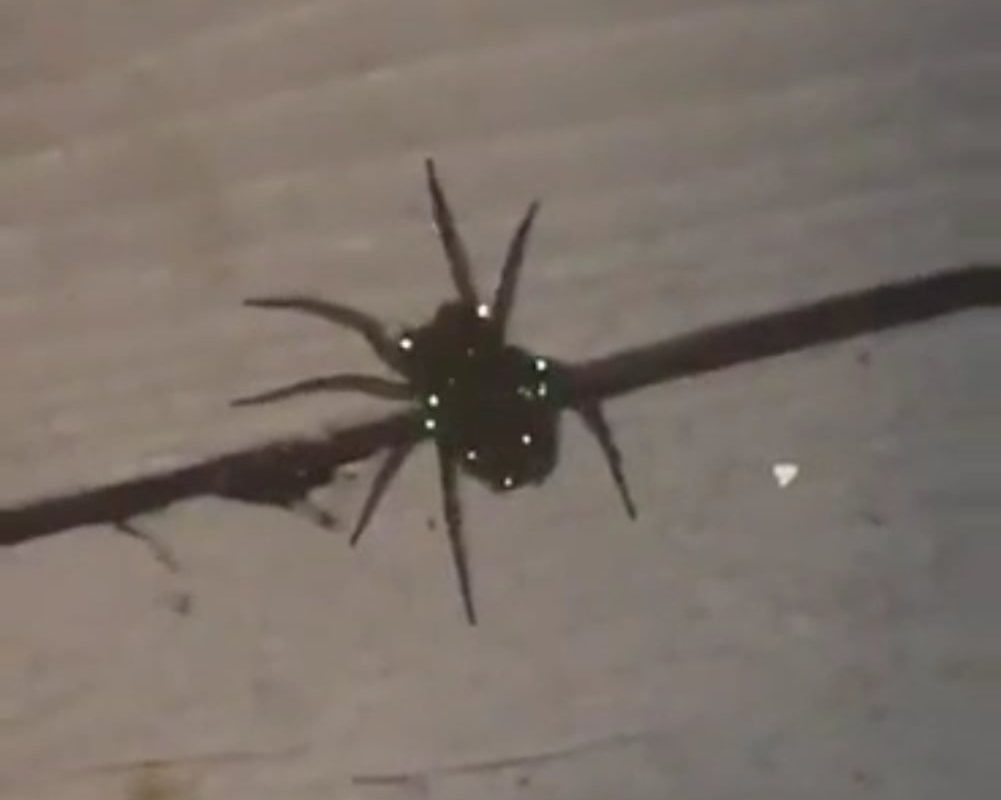
The wolf spider carries its babies on its back, those tiny reflections are the spiderlings eyes catching the light.
The Wolf Spider’s Hidden Glow: Why Spiderlings Ride on Mom’s Back (& What Those Shiny Eyes Mean)
Few sights in nature are as mesmerizing—or as misunderstood—as a wolf spider mother scurrying across the forest floor with hundreds of tiny spiderlings clinging to her back. But what’s truly captivating? Those pinpricks of light reflecting off her babies’ eyes in the dark, creating an eerie, almost celestial glow. Let’s unravel the science behind this incredible survival strategy and discover why wolf spiders are nature’s ultimate multitasking parents.
Mama Wolf Spider: A Backpack Full of Babies
Wolf spiders (Lycosidae) defy the stereotypical “deadly loner” spider trope. Unlike web-building spiders, these ground-dwelling hunters rely on speed, keen eyesight, and surprising maternal devotion. Here’s how their unique parenting works:
- From Egg Sac to Piggyback Ride: After laying her eggs, the female wolf spider carries the pearlescent egg sac attached to her spinnerets (silk-producing organs). She guards it fiercely until the spiderlings hatch.
- The Great Climb: Once hatched, the spiderlings—sometimes numbering over 100—swarm onto their mother’s abdomen. Using specialized gripping hairs, they cling tightly as she hunts and evades predators.
- A Week-Long Taxi Service: For up to 10 days, the mother carries her young until they’re large enough to hunt independently. During this time, she sacrifices agility for their safety—a rare act of parental care in the arachnid world.
Why Do Spiderlings’ Eyes Shine in the Dark?
The wolf spider’s nighttime adventures reveal a hidden spectacle: hundreds of tiny, glowing dots on her back. These aren’t magical fairy lights—they’re the result of biology meeting physics:
- Tapetum Lucidum: Like cats and owls, wolf spiders (and their young) possess a reflective layer behind their retinas called the tapetum lucidum. This layer bounces light back through the eye, maximizing night vision.
- Eyes Adapted for Hunting: Wolf spiders have eight eyes arranged in three rows. The two large central eyes provide sharp vision, while the tapetum enhances sensitivity to movement in low light.
- The “Eye Shine” Effect: When light (e.g., from a flashlight or moonlight) hits the spiderlings’ eyes, the tapetum reflects it, creating that signature greenish or silvery glint.
This adaptation isn’t just beautiful—it’s critical for the spiderlings’ survival. As they ride along, their eyes gather information about their environment, preparing them for life as solo hunters.
Wolf Spiders: Guardians of the Ecosystem
Beyond their fascinating childcare, wolf spiders play a vital ecological role:
- Natural Pest Control: They actively hunt insects like mosquitoes, flies, and crop-damaging pests, reducing the need for pesticides.
- Prey for Larger Animals: Birds, reptiles, and small mammals rely on wolf spiders as a food source.
- Soil Health: As ground dwellers, their burrowing aids soil aeration.
Myth Busting:
- “Wolf spiders are deadly!” → False. Their bite is non-venomous to humans, causing only mild, localized pain.
- “They’re aggressive.” → They flee rather than fight—unless defending their young.
Spotting a Wolf Spider Family
Want to witness this nocturnal marvel? Here’s how:
- Timing: Look at dusk or night with a flashlight in grassy or wooded areas.
- The Glow Test: Shine a light near the ground—if you see clusters of shimmering dots moving swiftly, you’ve found a mama wolf spider.
- Respect Their Space: Observe from a distance; disrupting them can cause spiderlings to scatter prematurely.
Final Thoughts: Nature’s Nightlight
The wolf spider’s glowing backpack of babies is a testament to evolution’s creativity. It combines cutting-edge optics for survival with a surprisingly tender side of arachnid parenthood. Next time you see those shimmering eyes in the dark, remember: you’re witnessing a mother’s tireless effort to give her young the safest start in life—one tiny, light-catching eye at a time.
Did You Know?
- Wolf spiders don’t spin webs—they sprint after prey like wolves (hence their name).
- Some species can live up to 2 years, longer than most spiders.
- Their excellent vision helps them detect prey up to 12 inches away!
Note: While wolf spiders are harmless, avoid handling them. Observe nature’s wonders responsibly.