Re-railing a de-railed train car
Title: Re-Railing a Derailed Train Car: Procedures, Equipment, and Safety Measures
Meta Description: Discover the step-by-step process, essential equipment, and critical safety protocols involved in re-railing a derailed train car. Learn how experts restore rail operations after accidents.
Introduction: What Causes Train Derailments?
Train derailments, though relatively rare, can disrupt rail networks, cause delays, and pose safety risks. Common causes include track defects (e.g., broken rails), excessive speed, equipment failure, human error, or environmental factors like landslides or floods. When a car leaves the tracks, specialized teams must act swiftly to re-rail it and restore safe operations. This guide breaks down the complex process of re-railing a train car, emphasizing safety, precision, and industry best practices.
Step-by-Step Re-Railing Process
1. Immediate Response and Scene Securing
- Safety First: The first priority is to secure the accident site. Workers isolate the area, cut power to overhead lines to prevent electrocution, and set up warnings to protect nearby personnel. Hazmat teams may intervene if hazardous materials are involved.
- Assessment: Engineers inspect the derailed car, track damage, and surrounding terrain to determine the safest strategy for re-railing. They check for structural damage to wheels, axles, or the undercarriage that could complicate recovery.
2. Stabilizing the Derailed Car
- Ballast Adjustment: Loose or displaced ballast (the stones beneath tracks) is leveled to create a stable base for lifting equipment.
- Bracing: Timber blocks, rail clamps, or steel plates may be used to prevent the car from shifting during re-railing.
3. Installing Lifting Equipment
Specialized tools are deployed to carefully reposition the car:
- Hydraulic Jacks: These are placed under the car’s frame or bolster to lift it slowly and evenly.
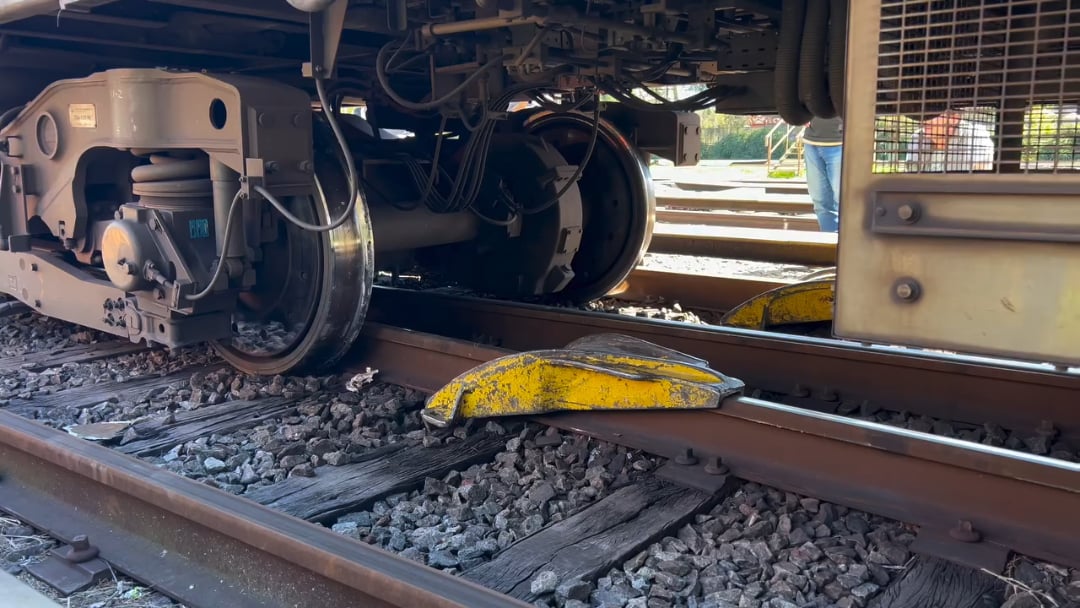
- Rerailers (Frog Ramps): Portable steel ramps are clamped to the rails, allowing wheels to slide back onto the track as the car is pulled or pushed.
- Dollies or Bridge Plates: For severely misaligned cars, temporary tracks or wheel-mounted platforms are used to guide the car back.
4. Gradual Lifting and Alignment
- Controlled hydraulic pressure lifts the car just enough to clear the rail height.
- Teams adjust the car’s lateral position using winches, chains, or pry bars. Laser alignment tools may ensure precision.
5. Pulling or Rolling the Car Onto the Track
Once aligned, locomotives or winches gently pull the car onto the rails. Crews monitor wheel placement to avoid secondary derailments.
6. Post-Re-Railing Inspection
After successful re-railing, the car undergoes rigorous checks:
- Wheel and axle integrity.
- Brake system functionality.
- Structural damage assessment.
- The track is inspected for misalignment or debris before reopening.
Essential Equipment for Train Re-Railing
Re-railing requires heavy-duty, specialized tools:
- Hydraulic Rescue Tools: High-capacity jacks capable of lifting multiple tons.
- Rail Clamps and Chains: Secure equipment to the tracks.
- Portable Rerailers: Durable ramps for wheel guidance.
- Undercarriages (Dollies): Support damaged cars during recovery.
- Track Geometry Vehicles: Assess track stability post-accident.
Safety Protocols for Re-Railing Operations
Safety is paramount in derailment responses:
- Personal Protective Equipment (PPE): Hard hats, gloves, steel-toe boots, and high-visibility clothing.
- Team Coordination: Clear communication via radios to avoid mishaps.
- Environmental Controls: Mitigation of fuel spills or chemical leaks.
- Weather Monitoring: Operations may pause during lightning or high winds.
Challenges in Re-Railing
- Terrain Issues: Uneven ground, swamps, or bridges complicate stabilization.
- Weight Distribution: Heavy freight cars risk tipping if improperly lifted.
- Time Constraints: Prolonged recoveries delay railway traffic and incur costs.
Preventing Derailments: Proactive Measures
While re-railing is vital, prevention is better than cure:
- Track Maintenance: Regular ultrasonic testing for cracks and joint defects.
- Speed Restrictions: Enforced in high-risk zones (curves or aging infrastructure).
- Technology: AI-powered sensors detect track anomalies in real-time.
- Training: Crews practice derailment simulations for rapid response.
FAQs About Re-Railing
Q: How long does re-railing take?
A: Simple cases take 4–12 hours; complex recoveries can last days, depending on damage and terrain.
Q: Are derailed cars scrapped afterward?
A: Not always. Minor incidents may allow reuse after repairs, but severe damage can result in retirement.
Q: Who handles re-railing?
A: Railroad companies deploy dedicated derailment teams, often assisted by contractors or emergency services.
Conclusion
Re-railing a derailed train car demands technical expertise, robust equipment, and unwavering safety focus. By following structured protocols and investing in preventive maintenance, rail operators minimize disruptions and protect lives. As railways evolve, innovations in recovery technology and predictive analytics will further enhance this critical process.
Keywords for SEO:
Train derailment recovery, re-railing process, railroad safety protocols, hydraulic jacks for trains, derailment prevention, railway accident response, re-railing equipment.