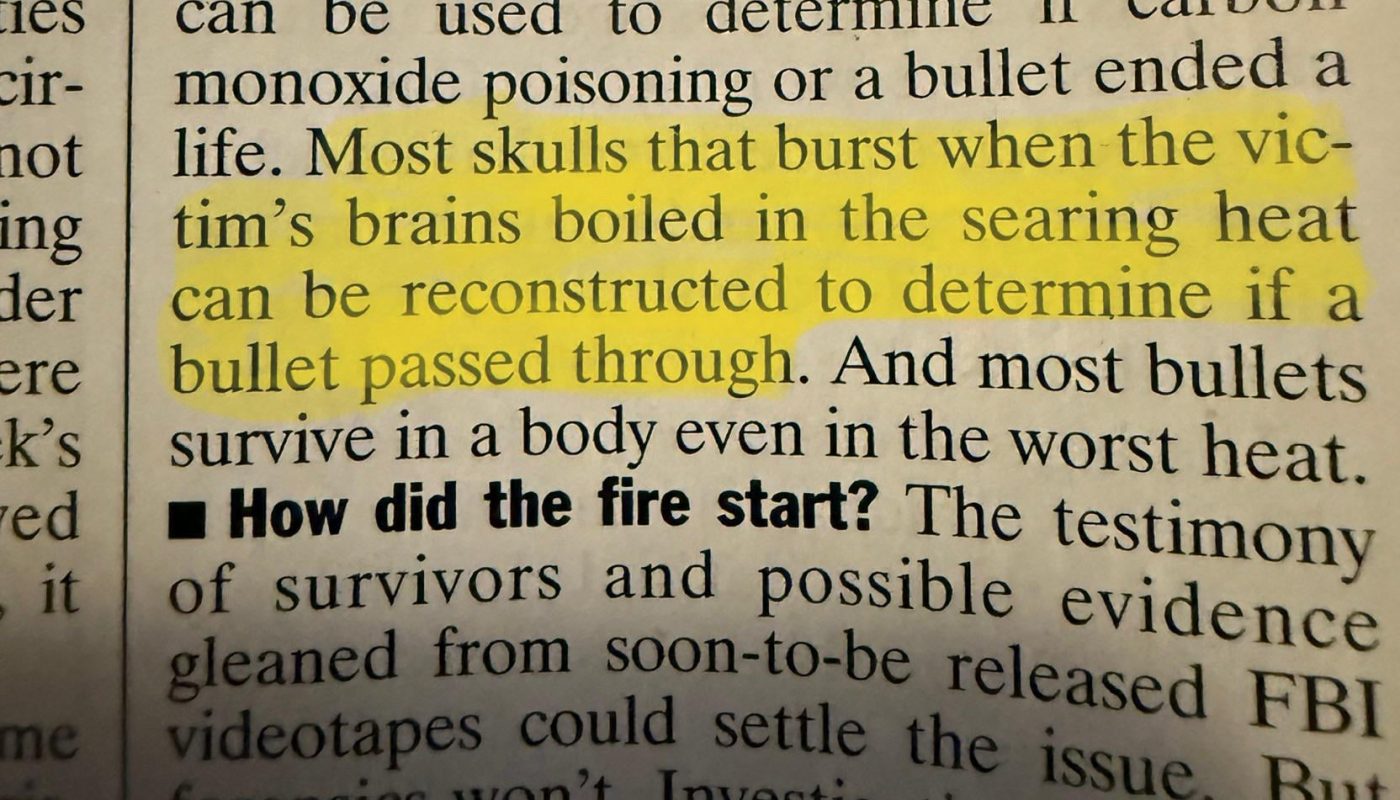
I was reading an old Time magazine from the 90’s about the Waco Siege and I thought this part was interesting
Title: Rediscovering History: Unpacking the Waco Siege Through a 1990s TIME Magazine Lens
Introduction
While flipping through the faded pages of a 1990s TIME Magazine, I stumbled upon a gripping account of one of the darkest chapters in modern American history: the 51-day Waco Siege between the FBI and the Branch Davidians. The article, a product of its time, offered a raw, unfiltered glimpse into the chaos and controversies surrounding the 1993 standoff. Decades later, revisiting this coverage raises critical questions about media narratives, government accountability, and the lasting scars of Waco. Let’s unpack what made this event so unforgettable—and why its legacy still resonates today.
The Waco Siege: A Quick Recap
For those unfamiliar, the Waco Siege began on February 28, 1993, when the Bureau of Alcohol, Tobacco, and Firearms (BATF) raided the Branch Davidian compound in Mount Carmel, Texas. Led by self-proclaimed prophet David Koresh, the religious group was suspected of stockpiling illegal weapons. The raid escalated into a deadly firefight, killing four federal agents and six Davidians. What followed was a 51-day standoff with the FBI, ending in a catastrophic fire on April 19 that claimed 76 lives, including 25 children and two pregnant women.
The TIME Magazine Perspective: Media in the Moment
The 1990s TIME coverage I read captured the siege as it unfolded—a messy, visceral story filtered through the lens of pre-digital journalism. Here’s what stood out:
-
The “Cult” Narrative
TIME’s language reflected the era’s tendency to label fringe groups as “cults,” painting Koresh as a manipulative leader and the Davidians as brainwashed followers. Little nuance existed around the group’s apocalyptic theology or the social isolation that fueled their defiance. -
Questions About Federal Force
Even then, TIME raised concerns about the FBI’s tactical aggression. Critics argued that prolonged psychological tactics (e.g., blaring loud music, cutting power) and the final tear gas assault may have escalated tensions unnecessarily. -
The Gatekeepers of Information
With no social media or live streams, journalists relied on official briefings. TIME’s writers noted gaps in transparency, with the government controlling most of the narrative until after the compound burned.
The Waco Siege: Lessons Reexamined in 2024
Three decades later, historians and journalists reassess Waco with deeper context:
-
Conspiracy Theories & Anti-Government Movements
Waco became a rallying cry for extremists like Timothy McVeigh, who cited the siege as motivation for the 1995 Oklahoma City bombing. Modern conspiracy circles still invoke it to distrust federal authority. -
Tactical Evolution
The tragedy led to reforms in how U.S. law enforcement handles standoffs, prioritizing negotiation over militarized force. Yet, debates continue after cases like the 2016 Oregon militia standoff. -
The Human Cost of “Othering”
Contemporary analysis emphasizes the dangers of dehumanizing groups (as “cults” or “fanatics”)—a practice that can justify extreme measures against marginalized communities.
Why the Waco Siege Still Matters
The siege wasn’t just a 90s news blip—it shaped America’s cultural and political landscape in lasting ways:
- Erosion of Trust: It intensified skepticism toward law enforcement and federal agencies.
- Media’s Role: Pre-internet coverage reminds us how easily narratives can be skewed without diverse sources.
- Religious Freedom vs. Safety: Waco underscores the tension between protecting citizens and respecting unconventional beliefs.
Conclusion: History’s Unanswered Questions
Reading TIME’s original coverage felt like opening a time capsule—one that reveals as much about 1990s America as it does about the siege itself. While we’ll never know if the fire was an accident, a mass suicide, or caused by federal actions, Waco remains a cautionary tale about the dangers of polarization and rash escalation. For historians, true crime enthusiasts, or anyone examining authority and dissent, the Waco Siege offers endless lessons—and warnings—for the modern age.
SEO Keywords: Waco Siege, Branch Davidians, David Koresh, 1990s media coverage, FBI standoff, TIME Magazine 1990s, government accountability, cult stereotypes, federal law enforcement history.
CTA: Want to dive deeper? Explore documentaries like Waco: The Rules of Engagement (1997) or the Paramount+ series Waco (2018) for expanded perspectives.