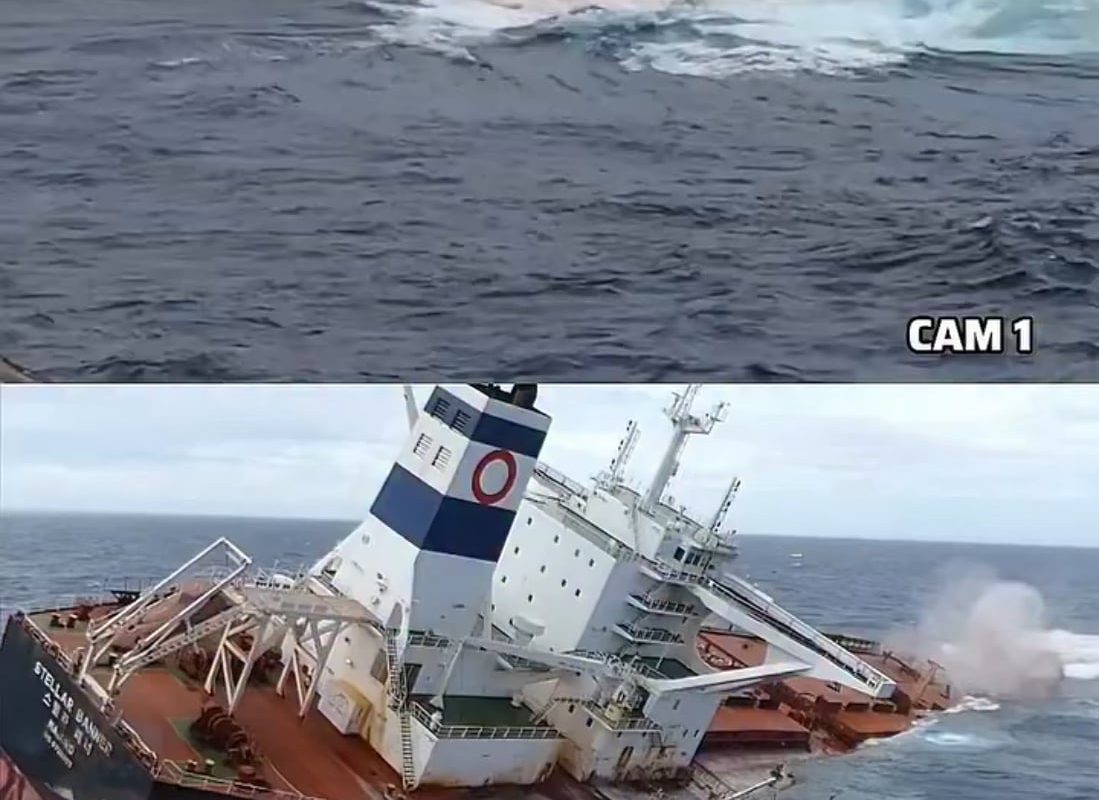
Stellar banner a 300+ long cargo ship had to be Scuttled. Making her the largest vessel to ever be intentionally sunk.
Title: Stellar Banner: The World’s Largest Ship Ever Intentionally Sunk
Meta Description: Discover the story of the Stellar Banner, a 300+ meter cargo ship deliberately scuttled in the Atlantic Ocean in 2020—the largest vessel ever intentionally sunk.
Introduction
In May 2020, the maritime world witnessed an unprecedented event: the deliberate scuttling of the Stellar Banner, a colossal 340-meter-long (1,115-foot) Very Large Ore Carrier (VLOC). After a catastrophic accident off Brazil’s coast, this 299,000-deadweight-tonne (DWT) behemoth became the largest vessel in history to be intentionally sunk, marking a somber milestone in shipping history. This article delves into the ship’s dramatic final voyage, the environmental strategy behind its sinking, and its legacy for global maritime safety.
The Stellar Banner: A Giant of the Seas
Owned by South Korea’s Polaris Shipping and chartered by Brazilian mining giant Vale S.A., the Stellar Banner was a state-of-the-art VLOC designed to transport iron ore from Brazil to global markets. Key specs:
- Length: 340 meters (longer than the Eiffel Tower is tall).
- Capacity: 299,000 DWT, carrying over 290,000 tonnes of iron ore per trip.
- Crew: 20 sailors onboard at the time of the incident.
These VLOCs represent the backbone of bulk commodity transport, but their sheer size makes accidents especially challenging.
The Disaster: Hull Breach and Near-Catastrophe
On February 24, 2020, the Stellar Banner departed from Ponta da Madeira in northern Brazil, bound for China with a full cargo of iron ore. Just two days later, disaster struck:
- Cause: A sudden hull breach near Maranhão, Brazil, caused severe flooding.
- Evacuation: The crew abandoned ship safely, avoiding casualties.
- Environmental Risk: With 270,000 tonnes of iron ore and 3,900 tonnes of fuel oil onboard, a spill threat loomed.
The vessel listed dramatically and partially sank in shallow waters, prompting a massive salvage operation.
Salvage Efforts & the Decision to Scuttle
Salvage teams worked tirelessly for months to:
- Pump out fuel oil to prevent spills.
- Remove over 145,000 tonnes of iron ore to lighten the ship.
- Stabilize the hull using tugboats.
Despite these efforts, engineers determined that the structural damage was irreparable. To avert a slow-motion environmental disaster—and the risk of the ship breaking apart—the owners and Brazilian authorities opted for controlled scuttling in deep Atlantic waters.
The Historic Scuttling: May 2020
On May 21, 2020, tugs towed the crippled Stellar Banner roughly 150 km offshore into waters 5,000 meters (16,400 feet) deep. Explosive charges were used to open designated seacocks, flooding the ship and accelerating its descent. Within hours, the world’s largest intentional ship sinking was complete.
Why Scuttle? Key Reasons:
- Environmental Protection: Deep-sea sinking minimized coastal pollution risks.
- Safety: Eliminated navigation hazards for other vessels.
- Cost-Effectiveness: Cheaper than attempting salvage repairs.
Environmental & Regulatory Implications
While controversial, the scuttling followed strict protocols:
- IBAMA, Brazil’s environmental agency, approved the plan after fuel/oil removal.
- Deepwater sinking aimed to isolate wreckage from ecosystems, though long-term impacts are debated.
The incident renewed scrutiny of VLOC structural safety, especially after similar Vale-chartered ships (like the MV Stellar Queen) suffered hull cracks.
Legacy: A Record-Holding Wreck
The Stellar Banner’s fate underscores critical maritime lessons:
- Record Holder: Largest ship scuttled intentionally, surpassing WWII vessels.
- Safety Reforms: Boosted inspections for ore carriers and hull stress monitoring.
- Symbol of Risk: Highlights the peril of transporting ultra-dense cargoes like iron ore.
Today, the wreck lies in the Atlantic’s depths—a silent testament to engineering ambition and the ocean’s unforgiving power.
Conclusion
The Stellar Banner’s story is one of human ingenuity colliding with nature’s ruthlessness. Its deliberate scuttling averted ecological disaster but set a grim record, reminding the shipping industry of the delicate balance between commerce, safety, and environmental stewardship. As global trade relies increasingly on mega-ships, the lessons from this 300-meter giant’s demise will resonate for decades.
Target Keywords:
Stellar Banner scuttling, largest ship intentionally sunk, VLOC sinking Brazil, Vale S.A. ship accident, maritime environmental disaster.
By blending technical detail, environmental context, and narrative drama, this article leverages SEO keywords while engaging readers with a pivotal moment in maritime history.