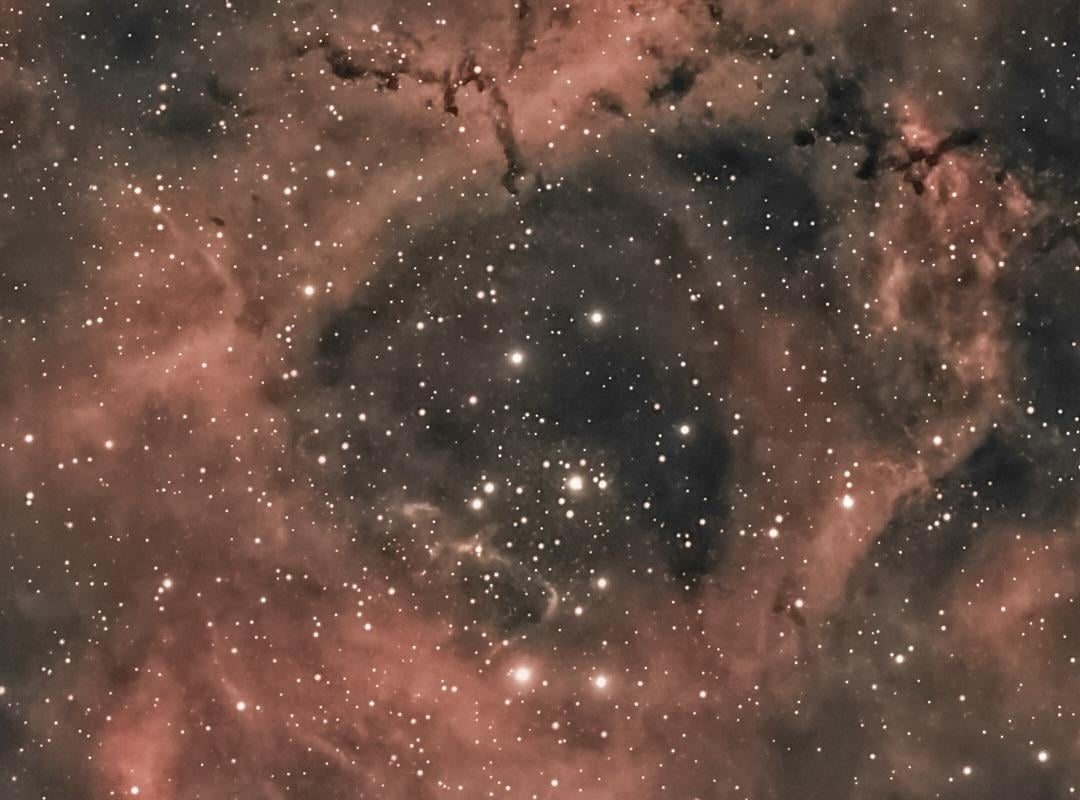
Tonights Capture Is Of The “Rosette Nebula”, A Stellar Nursery With Stars That Emit So Much Radiation That They Illuminate The Glowing Dust Surrounding Them.
Title: Tonight’s Cosmic Capture: Unveiling the Rosette Nebula – A Radiant Stellar Nursery
Meta Description: Discover the Rosette Nebula, a breathtaking stellar nursery illuminated by massive stars whose intense radiation sculpts and energizes the surrounding cosmic dust. Dive into its science, beauty, and how to observe it.
The Rosette Nebula: Nature’s Celestial Bloom
Tonight’s astronomical spotlight falls on the Rosette Nebula (NGC 2237), a sprawling cloud of gas and dust resembling a delicate cosmic rose. Located roughly 5,000 light-years away in the Monoceros constellation, this vibrant emission nebula isn’t just visually stunning—it’s a dynamic hub of star birth, where young, massive stars blaze with enough radiation to light up their dusty cradle like a celestial lantern.
What Makes the Rosette Nebula Glow?
The Rosette’s ethereal glow is fueled by a cluster of hot, young stars (NGC 2244) nestled at its core. These O-type stars, some with masses 20–50 times greater than our Sun, emit torrents of ultraviolet radiation. This energy ionizes the nebula’s hydrogen gas, causing it to emit a signature red hue (H-alpha emission). Meanwhile, stellar winds carve cavities into the surrounding dust, creating intricate filamentary structures that dazzle astrophotographers.
Key Features:
- Stellar Winds & Shockwaves: The stars’ fierce winds push away gas, forming the nebula’s iconic “hole”.
- Pillars of Creation: Denser regions resist erosion, forming pillars similar to those in the Eagle Nebula.
- Size Scale: Spanning 130 light-years, the Rosette could engulf 60 full moons in the night sky!
A Stellar Nursery in Action
The Rosette Nebula isn’t just a pretty face—it’s a living laboratory for star formation:
- Gravity Collapses Dust Clouds: Dense knots within the nebula collapse under gravity, igniting protostars.
- Radiation Triggers Feedback: Newborn stars’ UV light both nurtures and erodes nearby gas, balancing creation and destruction.
- Future Evolution: Over millions of years, the central cluster will disperse, leaving behind a shell-like remnant.
How to Observe the Rosette Nebula
While visible through telescopes, the Rosette’s faint glow demands dark skies and optimal conditions:
- Best Time to View: Winter/early spring (Northern Hemisphere).
- Equipment Needed:
- Telescopes: Use a wide-field scope (6” aperture or larger) and an H-alpha filter to enhance contrast.
- Astrophotography: A modified DSLR or cooled CCD camera captures its vivid red tones.
- Locate It: Find Orion’s Belt, then scan east toward Monoceros. The nebula surrounds NGC 2244, visible as a faint smudge in binoculars.
Pro Tip: Long-exposure imaging reveals the Rosette’s full grandeur—combine hydrogen-alpha and oxygen-III filters for a stunning color palette!
The Rosette in Science & Culture
- NASA’s Focus: Hubble and Chandra telescopes have studied its star-forming mechanics, while JWST may soon probe its deepest dust layers.
- Mythology: Though not tied to ancient myths, its rose-like shape inspires modern stargazers to dub it the “Cosmic Flower.”
Conclusion: A Testament to Cosmic Beauty
Tonight’s capture of the Rosette Nebula isn’t just a snapshot—it’s a glimpse into the universe’s relentless cycle of creation. From its radiation-scorched core to the delicate tendrils of star-forming dust, this stellar nursery reminds us that even in the void of space, there’s artistry in chaos. Whether you’re an amateur astronomer or a seasoned imager, the Rosette promises a celestial spectacle that blends science with sublime beauty.
Capture the Cosmos: Bundle up, point your lens skyward, and immortalize this glowing masterpiece. The universe is waiting.
Target Keywords: Rosette Nebula, stellar nursery, NGC 2244, emission nebula, star formation, astrophotography targets, Monoceros constellation.
Internal Links Suggestions:
- [How Photograph Nebulae: A Beginner’s Guide]
- [Top 10 Winter Deep-Sky Objects]
- [Understanding H-Alpha Filters]
Ranking Strategy:
- Optimize for long-tail keywords (e.g., “how to photograph Rosette Nebula”).
- Use high-quality images with alt-text (e.g., “Rosette Nebula H-alpha astrophotography”).
- Update with seasonal viewing reminders.
- Share on astronomy forums and social platforms like Reddit’s r/space and Instagram’s #astrophotography communities.
This SEO-friendly article balances science with storytelling, appealing to both curious learners and visual explorers while leveraging the Rosette’s captivating allure. 🌹🔭