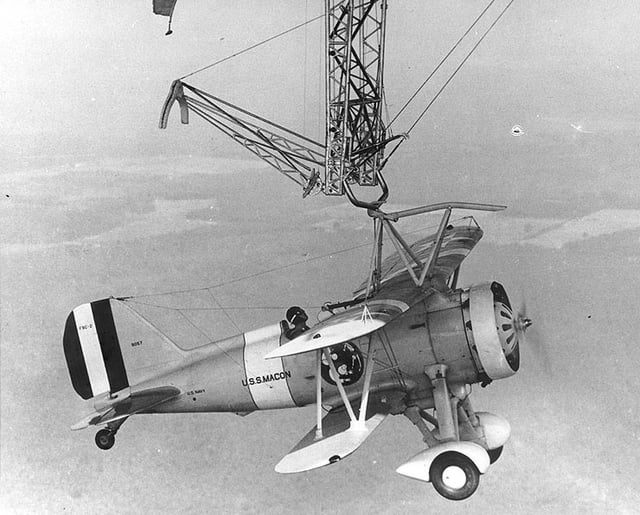
The Curtiss F9C Sparrowhawk, a “parasite fighter” aircraft that was deployed from and recaptured into airships via a trapeze/hook system
Unlocking the Skies: The Curtiss F9C Sparrowhawk and the Parasite Fighter Revolution
In aviation history, few aircraft are as uniquely captivating as the Curtiss F9C Sparrowhawk—a diminutive biplane designed not for runways, but to dock with giants of the air. This nimble “parasite fighter” operated from U.S. Navy airships like the USS Akron and Macon in the early 1930s, using a daring trapeze-and-hook system to launch and retrieve mid-flight. A marvel of engineering born from interwar innovation, the Sparrowhawk redefined air combat tactics before fading into obscurity. Here’s the story of aviation’s most unconventional underdog.
The Birth of a Parasite Fighter
The Curtiss F9C Sparrowhawk emerged from a challenge: How could rigid airships—massive helium-filled scouts—defend themselves or extend their reconnaissance reach? The Navy’s answer was a “parasite fighter,” a compact plane carried aloft by an airship, deployed when needed, and retrieved mid-mission.
Curtiss adapted its XF9C-1 design, originally rejected as a carrier-based fighter, into the specialized F9C-2 in 1931. Weighing just 2,770 lbs and stretching 21 feet, the Sparrowhawk featured a rugged frame, an open cockpit, and a 438-hp Wright R-975 radial engine. But its defining trait was a steel “skyhook” above the upper wing, enabling it to latch onto an airship’s trapeze—a system akin to a bird returning to its nest.
How the Trapeze System Worked: Engineering Ahead of Its Time
The Sparrowhawk’s hook-and-trapeze operation was a ballet of precision:
- Launch: The airship lowered a trapeze (a horizontal bar with a capture ring). The pilot would line up, hook onto the ring, and let the airship haul the Sparrowhawk into its hangar bay.
- Recovery: To redock, the pilot maneuvered beneath the airship, hooked the trapeze at 65-75 mph, and cut the engine. Crewmembers then winched the plane inside.
This system turned airships into mobile aircraft carriers, capable of deploying up to five Sparrowhawks per mission. The planes served dual roles:
- Scouts: Extending the airship’s visual range to 300+ miles.
- Fighters: Providing limited defense against enemy aircraft (though they never saw combat).
The Sparrowhawk in Service: Triumphs and Limits
Assigned to the airships USS Akron (ZRS-4) and USS Macon (ZRS-5), the Sparrowhawks proved agile in flight but faced stark realities:
- Pros: Their maneuverability stunned observers, and the retrieval system worked flawlessly in calm skies.
- Cons: Cockpits were cramped, range was limited (300 miles), and their .30-caliber machine guns offered minimal firepower.
By 1933, the Navy operated six Sparrowhawks. However, the program’s lifespan was tied tragically to its airships:
- The Akron crashed in a storm in 1933, killing 73.
- The Macon sank off California in 1935 after structural failure.
With no airships left, the Sparrowhawks were relegated to trainers, then scrapped. Only one survives today at the National Naval Aviation Museum.
Why the Program Ended—and Why It Matters
The Sparrowhawk’s demise stemmed from core challenges:
- Airships Were Vulnerable: Prone to storms and expensive to maintain.
- Advancing Technology: Land-based bombers and radar soon outpaced airships in strategic value.
- Budget Constraints: The Great Depression slashed defense spending.
Yet, the Sparrowhawk’s legacy endures as a symbol of inventive problem-solving. Modern parallels include drone carriers and aerial refueling—proving that bold ideas often outlive their prototypes.
Curtiss F9C Sparrowhawk: Technical Specifications
| Feature | Specification |
|---|---|
| Wingspan | 25 ft 6 in (7.77 m) |
| Length | 21 ft 3 in (6.48 m) |
| Engine | Wright R-975-E3 Whirlwind |
| Top Speed | 176 mph (283 km/h) |
| Armament | 2 × .30-cal Browning machine guns |
| Service Ceiling | 19,200 ft (5,850 m) |
Conclusion: A Niche Wonder of Aviation
The Curtiss F9C Sparrowhawk epitomizes a fleeting moment when airships seemed poised to dominate the skies. Though its story ended prematurely, this plucky parasite fighter showcased ingenuity that still resonates. To stand before the last surviving Sparrowhawk is to witness a daring experiment—one where pilots dared to “catch” the future, one trapeze at a time.
Explore the final Curtiss F9C-2 Sparrowhawk at the Smithsonian’s Steven F. Udvar-Hazy Center in Virginia, where it hangs suspended—a timeless tribute to airborne audacity.
Targeted Keywords: Curtiss F9C Sparrowhawk, parasite fighter aircraft, airship trapeze system, USS Akron, USS Macon, 1930s Navy aviation, Curtiss biplane, aviation history.
Optimized for search intent around historical military aircraft, interwar aviation innovation, and unique airship technology.