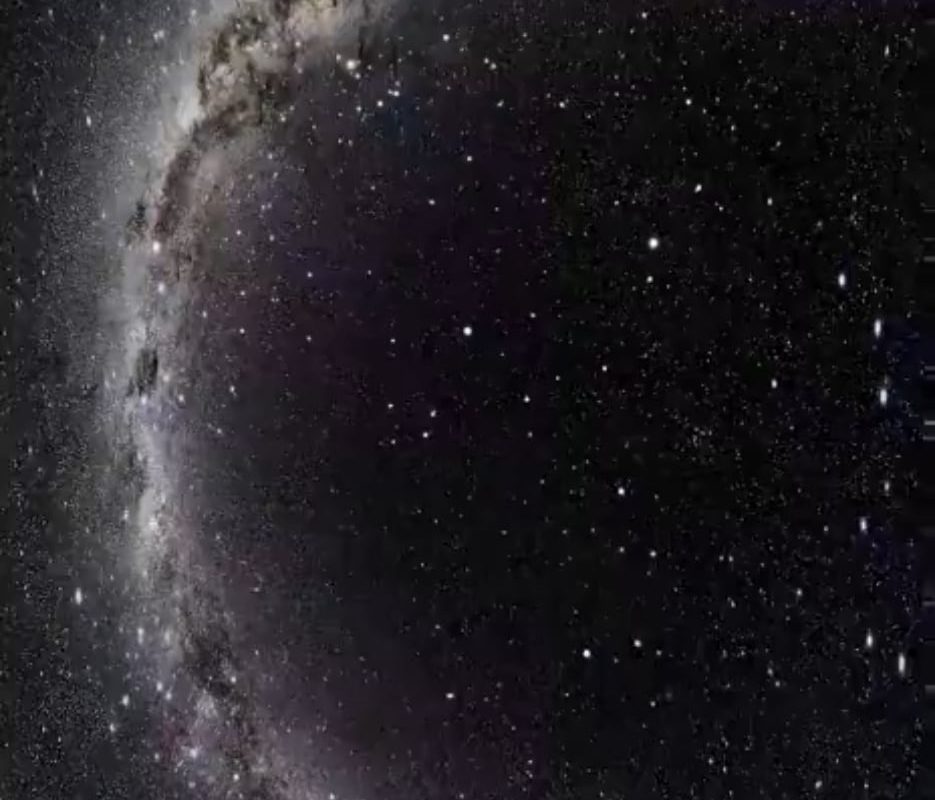
A zoom to the Sombrero galaxy
Title: Zooming Into the Sombrero Galaxy: A Cosmic Marvel of Dust, Stars, and Mystery
Meta Description: Discover the stunning Sombrero Galaxy (M104): its structure, history, observation tips, and why this edge-on spiral galaxy captivates astronomers and stargazers alike.
Introduction
The Sombrero Galaxy (also known as Messier 104 or M104) is one of the most iconic and photogenic galaxies visible from Earth. Resembling a wide-brimmed Mexican hat, this cosmic wonder lies 28 million light-years away in the constellation Virgo. In this deep dive, we’ll explore its unique features, scientific significance, and how you can glimpse it yourself—no Hubble Telescope required!
What Makes the Sombrero Galaxy Special?
A Galactic Silhouette
The Sombrero Galaxy is a spiral galaxy viewed almost perfectly edge-on from Earth. This orientation unveils its striking features:
- A bright central bulge packed with older, yellow stars.
- A razor-thin dust lane encircling the galaxy like a dark brim.
- A glowing halo of stars and globular clusters (over 2,000 observed!).
Size & Scale
- Diameter: 50,000 light-years (half the size of the Milky Way).
- Mass: Roughly 800 billion suns, with a suspected supermassive black hole at its core weighing 1 billion solar masses.
Scientific Significance
- Infrared Observations: The Spitzer Space Telescope revealed that M104 is actually two galaxies in one—a spiral inside a giant elliptical galaxy.
- Dark Matter Clues: Its rapid rotation suggests an invisible halo of dark matter anchoring the galaxy.
How to Spot the Sombrero Galaxy
Best Time to Observe
- Season: Spring (March–May) in the Northern Hemisphere, when Virgo is high in the sky.
- Location: Constellation Virgo, near the border with Corvus.
Equipment Needed
- Binoculars: A large pair (10×50 or higher) may reveal a fuzzy smudge.
- Telescopes: A 6-inch aperture or larger shows the dust lane. For details, an 8–12 inch scope is ideal.
- Apps & Tools: Use star maps (Stellarium, SkySafari) to locate coordinates: RA 12h 39m 59.4s, Dec -11° 37′ 23″.
Zooming In: Hubble’s Iconic View
The Hubble Space Telescope’s legendary 2003 image of M104 remains one of its most popular. The high-res snapshot unveiled:
- Star-forming regions in the dust ring.
- Globular clusters sparkling like diamonds around the halo.
- Color contrasts: Blue young stars vs. red old stars in the bulge.
Fun Fact: The Sombrero Galaxy was actually not part of Messier’s original catalog. It was added retroactively in the 20th century.
M104 vs. Other Famous Galaxies
| Feature | Sombrero Galaxy (M104) | Andromeda (M31) | Whirlpool (M51) |
|---|---|---|---|
| Type | Spiral (Edge-On) | Spiral (Face-On) | Interacting Spiral |
| Distance | 28 million ly | 2.5 million ly | 23 million ly |
| Unique Trait | Dust lane “brim” | Largest neighbor | Colliding galaxy |
Why Astronomers Love the Sombrero Galaxy
- Testing Ground for Theories: Its structure helps scientists model galaxy formation and dark matter distribution.
- Black Hole Research: M104’s supermassive black hole is among the most massive known, offering insights into galactic nuclei.
- Cosmic Archaeology: The ancient stars in its bulge reveal clues about the early universe.
Conclusion: A Hat Worth Tip(a Zoom) To
The Sombrero Galaxy bridges art and science—a celestial masterpiece reminding us of the universe’s grandeur. Whether you’re an amateur astrophotographer or a curious skywatcher, M104 is a bucket-list target that never disappoints. Ready to explore? Grab your telescope, look south toward Virgo, and let your cosmic journey begin.
FAQs
Q1: Why is it called the Sombrero Galaxy?
A: Its resemblance to a broad-rimmed Mexican hat earned it the nickname in the 1920s.
Q2: Can I see the Sombrero Galaxy without a telescope?
A: No—it requires binoculars or a telescope due to its apparent magnitude of +8.
Q3: How old is the Sombrero Galaxy?
A: Estimates suggest it’s roughly 13 billion years old, forming shortly after the Big Bang.
Q4: Are there planets in the Sombrero Galaxy?
A: While none confirmed yet, statistically, its 100+ billion stars likely host countless exoplanets.
Ready for more space wonders? Explore our guides to [Andromeda Galaxy] or [Hubble’s Greatest Hits] next!
Keywords for SEO: Sombrero Galaxy, Messier 104, M104 galaxy, how to see Sombrero Galaxy, Virgo constellation, edge-on galaxy, Hubble Sombrero Galaxy, black hole in M104.