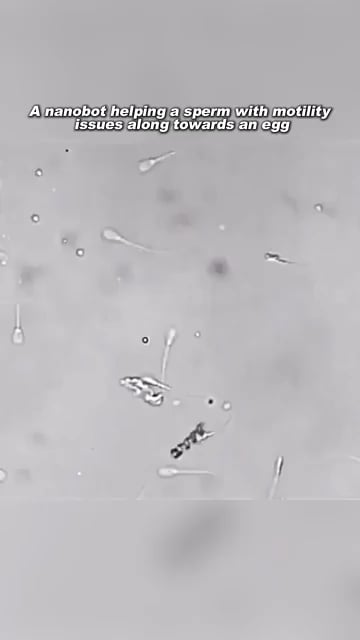
A microscopic nanobot that guiding a single sperm cell toward an egg
Title: Futuristic Fertility: How Microscopic Nanobots Are Revolutionizing Conception by Guiding Sperm to Egg
Meta Description: Discover the groundbreaking fusion of nanotechnology and reproductive science—where nanobots guide sperm cells to eggs, offering hope for infertility treatments. Explore the science, benefits, and future of this innovation.
Introduction: A New Era in Reproductive Medicine
Infertility affects millions of couples worldwide, with male factors like low sperm motility or abnormal morphology accounting for nearly 40-50% of cases. Traditional solutions like IVF and ICSI (intracytoplasmic sperm injection) have transformed lives, but they’re invasive, costly, and sometimes ineffective. Enter nanobots—microscopic robotic devices engineered to navigate the female reproductive tract and guide sluggish or disoriented sperm cells directly to the egg. This sci-fi-sounding technology isn’t just theoretical; it’s poised to redefine the future of fertility treatments.
In this article, we’ll unpack how nanobots are being designed to assist sperm, the science behind this innovation, and its potential to revolutionize assisted reproductive technology (ART).
How Do Nanobot “Sperm Guides” Work?
Nanobots designed for sperm guidance combine robotics, nanotechnology, and biomedicine. Here’s a step-by-step breakdown:
1. Targeting the Sperm
- Attachment: Tiny magnetic or polymer-based nanobots are coated with biocompatible materials that allow them to bind gently to the sperm cell’s tail or head without damaging it.
- Selection: Advanced AI systems can identify healthy sperm cells (e.g., those with intact DNA) for targeting, ensuring only viable candidates are propelled forward.
2. Navigation & Propulsion
- Micro-Steering: Using external control mechanisms like magnetic fields or ultrasound waves, clinicians steer the nanobot-sperm hybrid through the cervix, uterus, and fallopian tubes.
- Avoiding Obstacles: Sensors on the nanobot detect pH changes, temperature gradients, or chemical signals (e.g., progesterone from the egg) to navigate the complex terrain.
3. Release & Fertilization
- Once near the egg, the nanobot detaches and retreats, allowing the sperm to complete its natural journey.
- This mimics natural fertilization more closely than IVF, which bypasses the sperm’s biological interaction with the egg’s environment.
The Science Behind the Innovation
Researchers from the Institute for Integrative Nanosciences in Germany first demonstrated this concept in 2016. They created tiny metal helix-shaped microbots (as small as 1/100th the width of a human hair) that could corral individual sperm cells in lab settings. These bots used rotational motion to push sperm forward at speeds up to 5x their natural swimming rate.
Key technological breakthroughs enabling this include:
- Microbubbles & Ultrasound: Particles that generate thrust when exposed to sound waves.
- Biodegradable Materials: Nanobots made from magnesium or zinc that dissolve harmlessly post-mission.
- AI-Powered Imaging: Real-time tracking via MRI or ultrasound to monitor the nanobot’s path.
Potential Benefits of Nanobot-Assisted Fertilization
-
Increased IVF Success Rates
By delivering healthy sperm directly to the egg, nanobots could drastically reduce IVF failure rates caused by poor sperm motility. -
Non-Invasive & Low-Risk
Unlike ICSI—which involves injecting sperm into the egg—nanobot guidance is gentler and avoids physical manipulation of gametes. -
Treating Severe Male Infertility
Men with conditions like asthenozoospermia (very low motility) or oligospermia (low sperm count) could benefit immensely. -
Reduced Costs
Simplified procedures might make fertility treatments more accessible globally.
Challenges & Ethical Considerations
While promising, this technology isn’t without hurdles:
- Safety Concerns: Long-term effects of nanobot residues in the body are still being studied.
- Ethical Debates: Could this lead to “designer babies” if paired with genetic screening tech?
- Regulatory Approval: Strict FDA/EMA guidelines will require exhaustive clinical trials.
The Future of Fertility: What’s Next?
Researchers aim to make this technology clinically available within the next decade. Upcoming innovations include:
- Autonomous Nanobots: Bots that self-navigate using onboard sensors, eliminating external controls.
- Multipurpose Bots: Devices that deliver drugs, clear fallopian blockages, or screen sperm for genetic defects en route.
- Personalized Medicine: Customized nanobots tailored to individual reproductive anatomy.
Conclusion: A Leap Toward Hope
Nanobot-guided sperm represents a seismic shift in fertility science, blending cutting-edge robotics with the delicate biology of conception. While challenges remain, this technology holds immense promise for couples struggling with infertility—offering a minimally invasive, efficient, and natural alternative to conventional methods.
As research advances, we may soon see a world where microscopic robots work hand-in-hand with nature to create life, turning the dream of parenthood into reality for millions.
Ready to Explore More?
- Learn how CRISPR is editing the future of genetic disorders.
- IVF vs. IUI: Which fertility treatment is right for you?
- The role of AI in modern reproductive healthcare.
Stay informed about the latest breakthroughs by subscribing to our newsletter!
Keywords for SEO:
Nanobot sperm guidance, fertility nanotechnology, sperm motility treatment, IVF innovation, nanobots in reproduction, assisted reproductive technology, future of fertility, male infertility solutions.