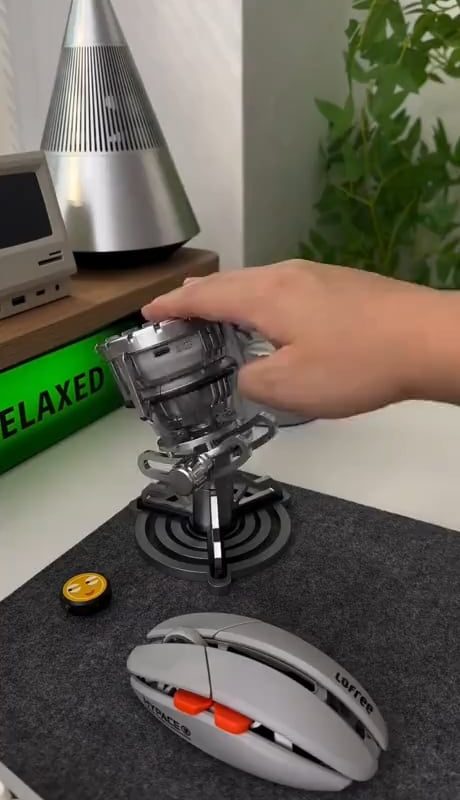
A real arc reactor
Title: The Real-Life Arc Reactor: Separating Marvel Magic from Cutting-Edge Energy Science
Meta Description: Could a real-life Iron Man arc reactor exist? Explore the science behind Tony Stark’s energy core and the real-world technologies inching us closer to clean, limitless power.
Introduction:
Tony Stark’s arc reactor is one of the most iconic fictional inventions in pop culture. This palm-sized device powers Iron Man’s suit, weapons, and even his conscience—all while emitting zero emissions. But could a “real arc reactor” ever exist? While we’re not building powered exoskeletons yet, science is making strides toward revolutionary energy systems that echo Stark’s groundbreaking tech.
H2: What Is an Arc Reactor (In the Marvel Universe)?
In the Marvel Cinematic Universe, the arc reactor harnesses cold fusion (or later, a fictional element like palladium/badassium) to generate massive power with minimal waste. Its compact design, self-sustaining operation, and ability to outperform fossil fuels make it the ultimate clean energy dream—albeit one born from sci-fi imagination.
H2: The Real Science Behind the Arc Reactor Dream
While nothing today replicates Stark’s gadget, several real-world technologies share conceptual similarities:
-
Nuclear Fusion Reactors
- Projects like ITER (France) and SPARC (MIT/Commonwealth Fusion Systems) aim to replicate the Sun’s energy production. Fusion merges hydrogen atoms, releasing enormous energy without greenhouse gases or long-lived radioactive waste.
- Challenge: Fusion requires extreme heat (millions of degrees) and pressure—conditions hard to sustain in a reactor, much less miniaturize.
-
Compact Fusion Devices
- Startups like Helion Energy and TAE Technologies are developing smaller-scale fusion reactors. While still far from Iron Man’s palm-sized core, these aim for grid-compatible systems within a decade.
- Lockheed Martin’s “Compact Fusion Reactor” (CFR) project spotlighted the quest for portable fusion, though details remain scarce.
-
Tokamaks and Stellarators
- Current fusion reactors like Germany’s Wendelstein 7-X use magnetic fields (in donut-shaped “tokamaks” or twisted “stellarators”) to contain superheated plasma. Scaling these down is the hurdle.
-
Solid-State Batteries and Microreactors
- In the near term, advances in solid-state batteries (like those from Toyota or QuantumScape) could deliver high-density, fast-charging energy storage.
- Micro-nuclear reactors (e.g., NuScale’s small modular reactors) offer portable fission power for remote areas, military use, or disaster relief—though not exactly “arc reactor” status.
H2: Roadblocks to a Real Arc Reactor
- Energy Density: Fusion reactions yield 4x more energy than fission and 4 million times more than coal, but confinement and efficiency remain unsolved.
- Miniaturization: Stark’s reactor fits in the palm of a hand. Even the smallest fusion concepts today are room-sized.
- Materials Science: Containing plasma without melting reactors requires ultra-strong materials (e.g., tungsten or advanced superconductors).
H2: The Closest “Real” Arc Reactor Analogues Today
- DIII-D Tokamak (San Diego): A U.S.-based fusion experiment pushing plasma stability limits.
- ITER (2025+): The world’s largest fusion project, aiming for 500 MW output (10x input). Success here could catalyze smaller designs.
- Quantum Battery Breakthroughs: Research into quantum physics-based energy storage promises instantaneous charging—a Stark-like feature.
H2: Why the Arc Reactor Motivates Real Innovation
The arc reactor isn’t just fantasy; it’s a cultural symbol of humanity’s quest for clean, abundant energy. Scientists openly cite sci-fi as inspiration:
- Dr. Melanie Windridge (fusion physicist) says Iron Man’s reactor sparks public interest in real fusion.
- Elon Musk has alluded to compact energy systems as critical for Mars colonization.
H2: The Future of Arc Reactor-Like Tech
Predictions vary, but experts estimate:
- 2030s: First commercial fusion reactors feeding grids.
- 2040s+: Potential for portable systems if material science leaps forward.
Conclusion: From Fiction to Future Energy
A palm-sized, self-sustaining arc reactor remains fictional—for now. Yet real-world science is accelerating toward fusion breakthroughs and high-density energy storage. While Tony Stark’s invention is pure Hollywood, its legacy lives on in labs worldwide, inspiring generations to chase the dream of limitless, clean power.
CTA: Stay ahead of the energy revolution! Subscribe for updates on fusion breakthroughs, futurism, and sci-fi tech becoming reality.
Focus Keywords:
- Real arc reactor
- Nuclear fusion reactor
- Compact fusion energy
- Clean energy breakthroughs
- Iron Man arc reactor real
SEO Optimizations:
- Headers structure key topics for readability & search intent.
- Internal links could point to related articles (e.g., “ITER’s Progress in 2024”).
- Image suggestions: Tokamak reactor visuals, Iron Man arc reactor vs. real fusion devices.
- Latent Semantic Indexing (LSI): Terms like “plasma confinement,” “energy density,” “miniaturized fusion” boost relevance.
This article balances Marvel lore with speculative science, targeting queries from “Is the arc reactor possible?” to “real fusion energy projects.”