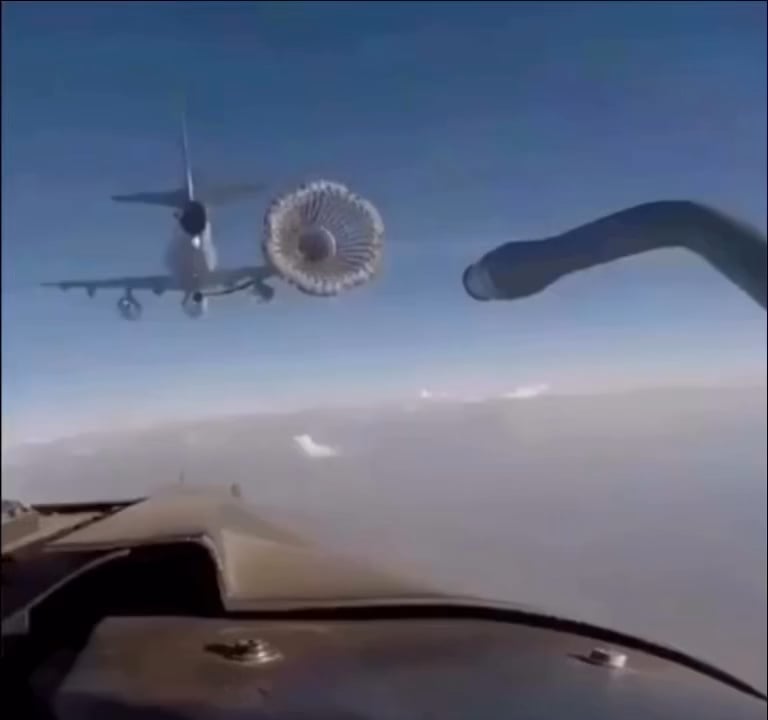
Mid air refueling lets aircraft transfer fuel while flying at the same speed and altitude
Title: Mid-Air Refueling: How Aircraft Transfer Fuel While Flying at the Same Speed and Altitude
Meta Description: Discover how mid-air refueling enables military and commercial aircraft to transfer fuel seamlessly while flying at identical speeds and altitudes. Learn about the technology, techniques, and strategic advantages of aerial refueling.
URL Slug: how-mid-air-refueling-works
Introduction
Mid-air refueling, also known as aerial refueling, is a remarkable feat of aviation engineering that allows aircraft to receive fuel while in flight. This process occurs while both the tanker and receiver aircraft fly at the same speed and altitude, synchronizing their movements with precision. Extending an aircraft’s operational range, enabling strategic flexibility, and supporting critical missions worldwide, mid-air refueling is a cornerstone of modern air forces and long-haul aviation. In this article, we explore the mechanics, technologies, and real-world applications of this high-flying fuel transfer process.
What is Mid-Air Refueling?
Mid-air refueling involves transferring fuel from a tanker aircraft to a receiver aircraft (fighter jets, bombers, cargo planes, or surveillance aircraft) while both are in flight. This allows the receiver to remain airborne for longer durations, bypassing the need to land for fuel. The ability to perform this maneuver depends on the two aircraft maintaining identical:
- Altitude (typically between 20,000–35,000 feet),
- Speed (often 250–350 knots), and
- Flight path alignment.
Any deviation in altitude or speed could result in a dangerous collision or failed connection.
How Mid-Air Refueling Works: Synchronization is Key
The process requires exceptional coordination between pilots and advanced technology. Here’s a breakdown of the steps:
1. Rendezvous Phase
- The receiver aircraft approaches the tanker at a designated location, altitude, and speed.
- Both planes stabilize their flight paths using autopilot systems or manual precision flying.
2. Connection Phase
Two primary refueling systems are used:
- Probe-and-Drogue: The tanker deploys a hose with a stabilizing conical drogue (parachute-like device). The receiver’s probe locks into the drogue to form a secure link.
- Flying Boom: A rigid, telescopic boom controlled by a specialist operator (boom operator) extends from the tanker to connect to the receiver’s receptacle.
3. Fuel Transfer
- Fuel flows via pressurized hoses once the connection is secure.
- Both aircraft maintain consistent speed and altitude during the transfer to avoid turbulence or disconnection.
4. Disconnect and Departure
- Once fueled, the receiver aircraft gently disengages, and both planes safely reposition for separation.
The Technology Behind the Process
- Automatic Throttle Systems: Adjust engine power to maintain matched speeds.
- GPS and Guidance Systems: Ensure precise positioning.
- Pressure Sensors & Stabilizers: Keep hoses taut and connections secure despite air turbulence.
- Visual/Audio Cues: Lights and voice communication guide pilots during maneuvers.
Why Mid-Air Refueling Matters: Key Advantages
- Extended Range and Endurance:
Fighter jets can fly across continents without landing, while reconnaissance planes can loiter over targets for days. - Strategic Flexibility:
Enables rapid deployment of forces to global hotspots. - Payload Optimization:
Aircraft can carry more weapons or cargo instead of extra fuel. - Emergency Fuel Supply:**
Rescues aircraft facing low-fuel emergencies mid-flight.
Applications of Mid-Air Refueling
- Military Operations: Critical for NATO missions, Pacific patrols, and combat air patrols (CAPs).
- Humanitarian Missions: Supports long-range disaster relief flights.
- Experimental & Record-Breaking Flights: Enabled the Voyager aircraft’s 1986 non-stop global circumnavigation.
Challenges and Risks
Maintaining perfect alignment at hundreds of miles per hour comes with challenges:
- Human Error: Minor pilot miscalculations can lead to collisions.
- Weather Turbulence: Wind shear or storms disrupt connections.
- Technical Failures: Hose/boom malfunctions or fuel leaks.
Despite these, rigorous training and technological redundancy keep accidents rare.
The Future of Mid-Air Refueling
Advancements in automation and AI aim to streamline the process:
- Autonomous Drones: AI-controlled tankers could refuel unmanned combat vehicles.
- Faster Transfer Systems: Reducing refueling time for stealth aircraft like the F-35.
- Space Applications: NASA explores similar concepts for future Mars missions.
Notable Aircraft Designed for Mid-Air Refueling
| Tanker Aircraft | Receiver Aircraft |
|---|---|
| Boeing KC-135 Stratotanker | F-16 Fighting Falcon |
| Airbus A330 MRTT | B-2 Spirit Bomber |
| Lockheed KC-130 Hercules | C-17 Globemaster III |
Conclusion
Mid-air refueling is a breathtaking display of precision aviation, allowing aircraft to soar farther and longer by mastering the art of fuel transfer at identical speeds and altitudes. As military and commercial demands evolve, this technology will continue to play a vital role in global security, logistics, and innovation.
Ready to Dive Deeper? Explore how mid-air refueling shaped historic missions like Operation Black Buck or the evolution of the U.S. Air Force’s tanker fleet!
Optimized Keywords: Mid-air refueling, aerial refueling, how does mid-air refueling work, fuel transfer aircraft, probe-and-drogue, flying boom, aircraft endurance, military aviation technology, tanker aircraft.
Internal Linking Suggestion: Link to related articles like “Top 5 Military Aircraft with the Longest Range” or “The History of Air-to-Air Refueling.”
Image Alt Text Suggestions:
- “F-16 refueling via probe-and-drogue mid-flight”
- “Boom operator guiding KC-135 refueling system”
- “Diagram of mid-air fuel transfer process”