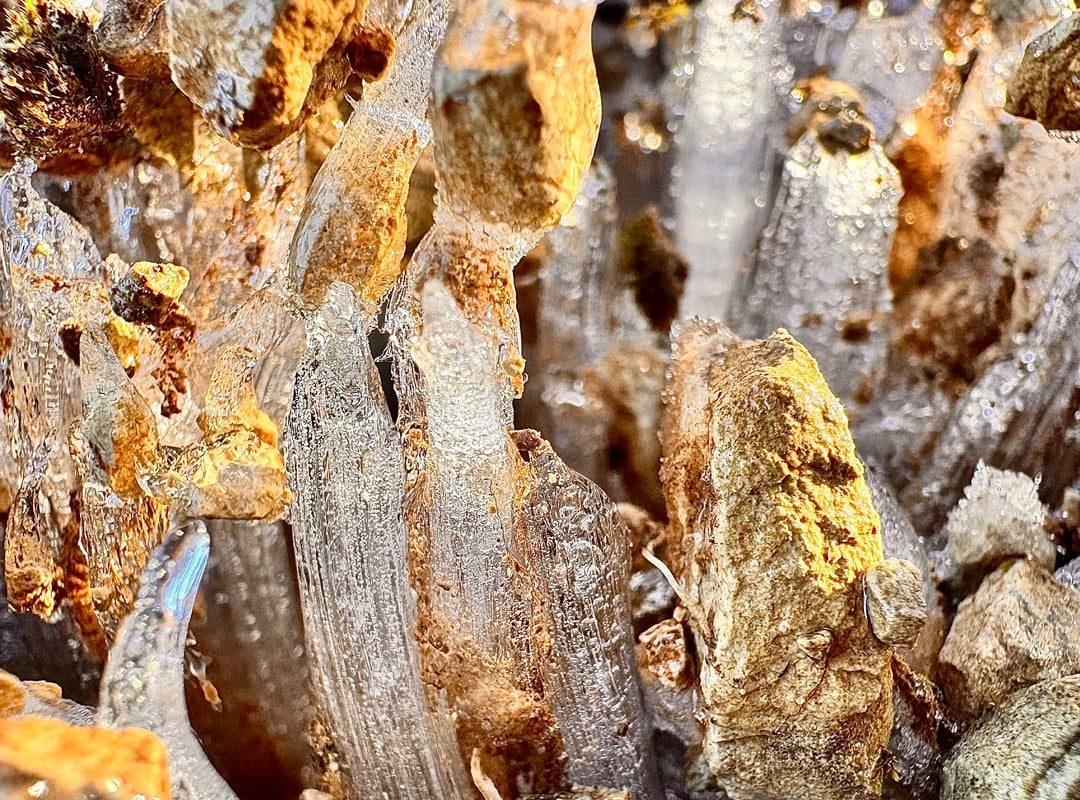
The way morning frost creates ice pillars that push the soil and stones up
Title: Nature’s Tiny Jackhammers: How Morning Frost Creates Ground-Lifting Ice Pillars
Meta Description: Discover the fascinating science behind needle ice—delicate frost pillars that push soil, stones, and plants upward overnight. Learn how temperature, moisture, and capillary action collide to create this winter spectacle.
Introduction: The Silent Power of Winter’s Artistry
Morning frost doesn’t just paint landscapes in sparkling white—it can also sculpt the ground itself. In a delicate yet forceful display known as “needle ice” or “frost pillars,” overnight freezing conditions lift soil, stones, and even small plants upward like nature’s miniature hydraulic jacks. This phenomenon transforms quiet winter mornings into a stage for geology in action.
What Are Ice Pillars?
Ice pillars (or pipkrake in Swedish) are fragile, hair-like columns of ice that form vertically beneath the soil surface. Ranging from millimeters to several centimeters tall, these ephemeral structures emerge when specific conditions align:
- Wet soil with high moisture content.
- Temperatures hovering just below freezing (0°C/32°F).
- Rapid cooling of the ground surface overnight.
The result? A field of shimmering ice hairs that vanish by midday but leave behind a visible imprint on the terrain.
The Science: How Frost Heaves the Ground
The process relies on the physics of water capillary action and freezing expansion:
-
Moisture Migration:
As the soil surface cools overnight, liquid water in deeper, warmer soil layers is drawn upward through tiny pores via capillary action. -
Ice Segregation:
When this water reaches the freezing zone near the surface, it crystallizes into ice. Crucially, water expands by 9% when it freezes, creating pressure. -
Pillar Formation:
Expanding ice pushes soil particles apart, growing vertically as new water is drawn upward and freezes at the base of each pillar. Gradually, these ice needles lift anything atop them—pebbles, roots, or soil clumps. -
Morning Meltdown:
Sunlight melts the ice, causing the lifted debris to collapse. Repeated cycles of freezing and thawing can permanently displace rocks or damage plant roots.
Where and When Do Ice Pillars Form?
Needle ice thrives under precise environmental conditions:
- Climate: Common in temperate regions with humid winters (e.g., Japan, Pacific Northwest, Scandinavia).
- Soil Type: Loose, porous soils like silt or loam allow better water movement than clay or sand.
- Season: Most frequent in autumn or early spring, when nights dip below freezing but days stay above.
Fun Fact: In Japan, needle ice (shimobashira) is celebrated as a seasonal marvel, often photographed in forests at dawn.
The Impact on Landscapes and Ecosystems
Though fleeting, ice pillars leave a lasting mark:
- Soil Erosion: Repeated lifting and settling can degrade soil structure, exposing it to wind and rain.
- Plant Stress: Seedlings and shallow-rooted plants are vulnerable to frost upheaval.
- Rock Migration: Over years, small stones “creep” downhill as ice pillars shift them incrementally—a process called frost creep.
Gardeners and farmers in frost-prone areas sometimes use mulch to insulate soil and limit capillary action.
Observing Frost Pillars Yourself
To witness this phenomenon:
- Timing: Check damp, bare soil on clear, cold mornings before sunrise.
- Locations: Disturbed ground—trail edges, gardens, or freshly tilled fields—works best.
- Handle Gently: Ice needles collapse at the slightest touch! Photograph them with backlighting for dramatic effect.
Conclusion: A Testament to Nature’s Subtle Force
Morning frost is more than a temporary decoration—it’s a geological sculptor wielding ice as its chisel. By understanding how ice pillars lift stones and soil, we gain insight into the tireless processes shaping our world, one fragile column at a time. Next time you spot frost glittering at dawn, look closely: you might catch Earth rearranging itself in real time.
Keywords for SEO:
morning frost soil uplift, needle ice formation, frost heave phenomenon, ice pillars geology, pipkrake science, frost creep, winter ground freezing, capillary action in soil, shimobashira, frost pillars lifting rocks.
Image Alt Text Suggestions:
- “Delicate needle ice columns lifting pebbles from damp soil at dawn.”
- “Macro photography of frost pillars (pipkrake) emerging from forest ground.”
By blending science with wonder, this frost-driven spectacle reminds us that even the smallest forces can reshape the world—if only we take the time to look. ❄️