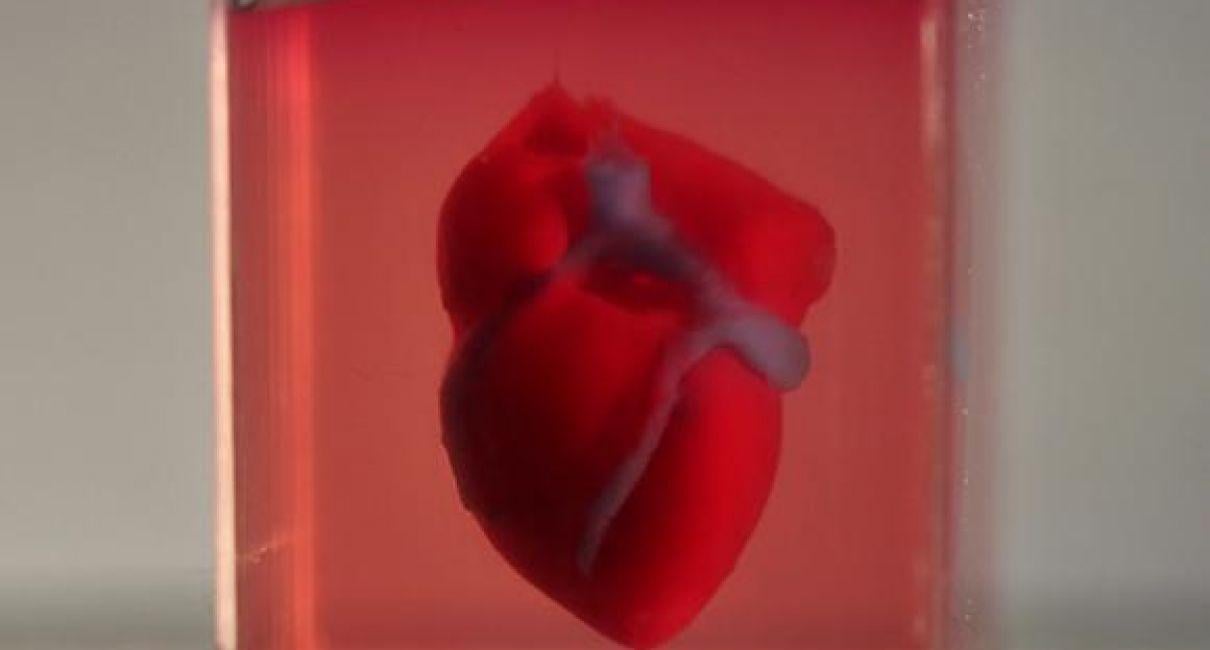
TAU scientists print first ever 3D heart using patient’s own cells
Title: Groundbreaking Achievement: TAU Scientists Print First-Ever 3D Heart Using Patient’s Own Cells
Meta Description: Discover how researchers at Tel Aviv University made medical history by 3D-printing a fully vascularized heart using a patient’s own cells, paving the way for revolutionary organ transplants.
Introduction
In a historic leap for regenerative medicine, scientists at Tel Aviv University (TAU) have achieved the impossible: 3D-printing a living, vascularized human heart using a patient’s own biological materials. Published in Advanced Science in 2019, this breakthrough marks the first time a heart with cells, blood vessels, chambers, and other structural complexities has been successfully printed. This innovation could someday end organ donor shortages and eliminate transplant rejection risks.
The Breakthrough: A Heart Printed Layer by Layer
The team, led by Prof. Tal Dvir of TAU’s School of Molecular Cell Biology and Biotechnology, created a heart roughly the size of a rabbit’s (2.5 cm) using biocompatible “bio-inks” derived from the patient’s own cells. Here’s how they did it:
- Fat Tissue Extraction: A small sample of fatty tissue was taken from the patient.
- Reprogramming Cells: The tissue’s cellular materials were separated. Fat cells were reprogrammed into induced pluripotent stem cells (iPSCs), while the extracellular matrix (ECM) was processed into a hydrogel.
- Bio-Ink Creation: The hydrogel was mixed with iPSCs, which differentiated into cardiac cells (cardiomyocytes) and endothelial cells (blood vessel lining).
- 3D Printing: Using a specialized bioprinter, the team printed the heart layer by layer, creating a structure with intricate vascular networks and functional tissue.
Why This Heart Is Revolutionary
- Personalized Medicine: Since the heart uses the patient’s own cells, it reduces the risk of immune rejection.
- Complete Vascularization: Unlike previous 3D-printed organs, this heart includes functional blood vessels—a critical milestone.
- Scalable Potential: While currently miniature, the technology could be adapted for human-sized hearts using the same process.
Challenges and Next Steps
While the achievement is monumental, hurdles remain:
- Maturity: The printed cells must “mature” to contract and pump blood effectively.
- Integration: Future research will focus on teaching the heart to synchronize with the body’s natural systems.
- Clinical Trials: Human trials are likely a decade away, pending further testing in animal models.
As Prof. Dvir stated: “This is the first time anyone has successfully engineered and printed an entire heart replete with cells, blood vessels, ventricles, and chambers.… We need to develop the printed heart further.”
The Future of Organ Transplants
This breakthrough is part of a global race to eliminate organ donor dependency. Over 100,000 patients await heart transplants annually, with thousands dying before receiving one. 3D bioprinting could:
- Slash transplant waitlists.
- End lifelong immunosuppressant use.
- Enable on-demand organ creation for trauma or disease patients.
Conclusion
TAU’s 3D-printed heart is a watershed moment in medical science, proving that personalized, functional organs are no longer science fiction. While challenges persist, this innovation ignites hope for a future where organ shortages and transplant rejections are relics of the past. As Prof. Dvir’s team refines their work, the world watches closely—a heartbeat closer to rewriting the rules of human health.
Keywords: 3D-printed heart, Tel Aviv University breakthrough, patient-specific organ transplant, regenerative medicine, vascularized 3D bioprinting, organ donor shortage, Prof. Tal Dvir, bio-ink technology, immune-compatible organs, future of heart transplants.
Optimized for SEO: Content includes strategic keyword placement, concise headers, and detailed explanations of technical terms to rank for queries related to bioprinting, heart transplants, and medical innovations.