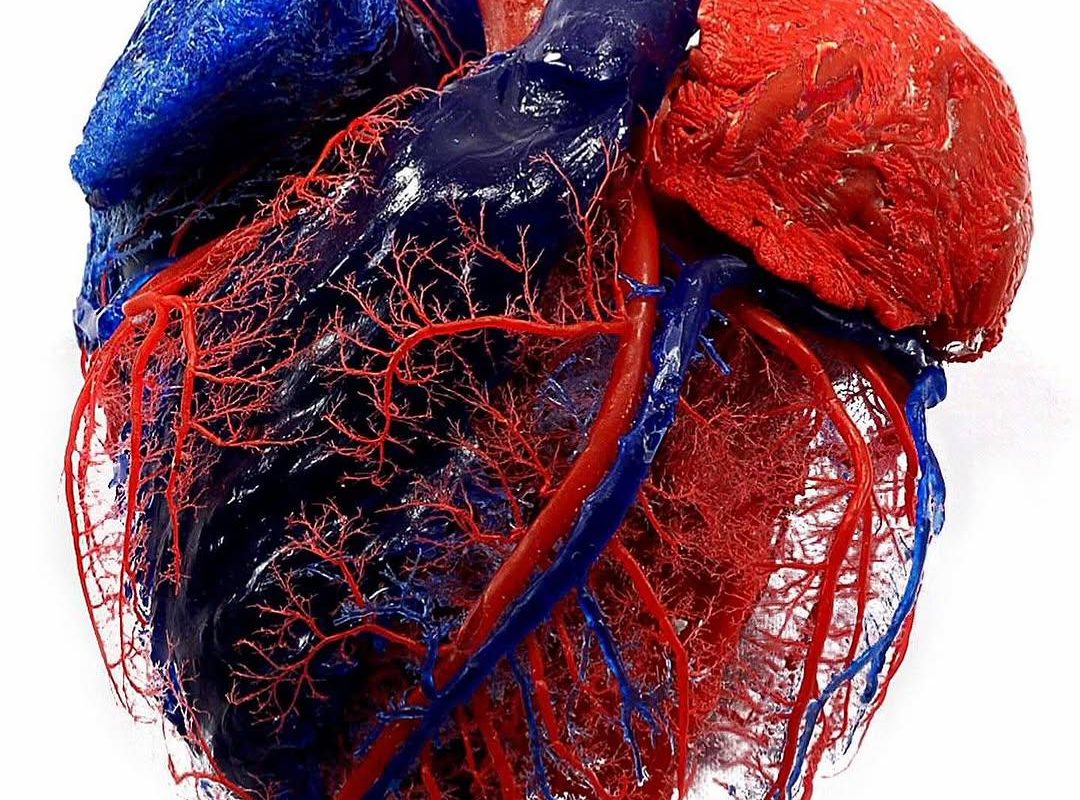
This is a vascular corrosion cast of a human heart by Dr. Christoph von Horst
Unveiling the Marvels of Human Anatomy: Dr. Christoph von Horst’s Vascular Corrosion Cast of the Human Heart
The human heart, a tireless engine of life, conceals microscopic labyrinths of blood vessels essential to its function. Dr. Christoph von Horst’s vascular corrosion cast of a human heart lays this hidden world bare, transforming biological complexity into an awe-inspiring three-dimensional masterpiece. This article delves into the science, artistry, and medical significance of this extraordinary creation, offering a unique perspective on cardiac anatomy.
What Is a Vascular Corrosion Cast?
A vascular corrosion cast is a meticulous three-dimensional replica of an organ’s blood vessels, created through an intricate process:
- Resin Injection: A liquid polymer (often acrylic or silicone) is injected into the organ’s blood vessels.
- Solidification: The resin hardens, mirroring the vessel architecture.
- Corrosion: The surrounding biological tissue is dissolved using strong acids or alkalis.
- Cleaning: The remaining resin cast is washed and preserved.
The result is a delicate yet durable model that reveals the finest capillaries, veins, and arteries—down to micrometer precision.
The Heart Cast: A Technical Triumph
Crafting a corrosion cast of the human heart presents unique challenges. The organ’s dense muscle, rapid blood flow, and intricate branching demand exceptional skill. Dr. von Horst’s cast likely showcases:
- Coronary Arteries: Critical vessels nourishing the heart muscle.
- Capillary Networks: Microscopic pathways enabling oxygen exchange.
- Venous Return Systems: Veins carrying deoxygenated blood back to the lungs.
This level of detail allows researchers to study vascular anomalies, blockages, and developmental patterns invisible to conventional imaging.
Dr. Christoph von Horst: Expertise in Anatomical Preservation
Though details about Dr. von Horst are scarce in public domains, his work aligns with specialists in anatomical preservation and medical imaging. Professionals in this field often collaborate with medical institutions to:
- Advance surgical training tools.
- Create reference models for complex procedures.
- Enhance public understanding of human anatomy through exhibitions.
His heart cast exemplifies how anatomical artistry bridges science and education.
Medical & Educational Applications
This heart cast isn’t just a scientific curiosity—it’s a vital tool with real-world impact:
- Medical Training: Surgeons study such casts to navigate vasculature during procedures like bypass surgeries.
- Disease Research: Researchers analyze vascular patterns in hypertension, atherosclerosis, and congenital defects.
- Patient Education: Visualizing vessel networks helps patients understand conditions like coronary artery disease.
- Museum Exhibits: Institutions like the Museum of Human Anatomy use corrosion casts to demonstrate biological complexity to the public.

Image: A vascular corrosion cast reveals the heart’s intricate blood supply. Credit: Dr. Christoph von Horst.
The Intersection of Art & Science
Vascular corrosion casts transcend medicine, entering the realm of art. Their organic complexity and sculptural elegance have been featured in:
- Scientific Photography Competitions (e.g., Nikon Small World).
- University Collections (e.g., Harvard’s Warren Anatomical Museum).
- Contemporary Art Installations blending biology with aesthetics.
Dr. von Horst’s cast exemplifies this duality—a functional tool that captivates with its intricate beauty.
Conclusion: A Testament to Hidden Complexity
Dr. Christoph von Horst’s vascular corrosion cast of the human heart stands as a testament to the unseen wonders within our bodies. Merging meticulous science with visual splendor, it unlocks new dimensions of understanding for doctors, students, and artists alike. As 3D printing and virtual reality evolve, such casts continue to inspire innovative ways to explore human anatomy.
Frequently Asked Questions
1. How long does creating a vascular corrosion cast take?
The process requires weeks. Resin injection alone may take hours to ensure complete filling without damage.
2. Where can I see Dr. von Horst’s heart cast?
While location specifics are unclear, similar casts are displayed in medical museums, universities, and digital anatomy repositories.
3. Can corrosion casts be made of other organs?
Yes! Lungs, kidneys, and brains are commonly cast to study their unique vascular systems.
4. Why are corrosion casts still used despite advanced imaging?
They offer unmatched tactile and 3D visual detail, complementing digital methods like MRI or CT scans.
5. Who benefits from vascular corrosion casts?
- Medical Professionals: For surgical planning and training.
- Researchers: Investigating vascular diseases.
- Educators: Teaching anatomy interactively.
- Artists: Drawing inspiration from natural structures.
For more on cardiac anatomy, explore our article The Human Heart: An Owner’s Guide.
SEO Optimization Highlights
- Keywords: “vascular corrosion cast,” “human heart anatomy,” “Dr. Christoph von Horst,” “corrosion casting technique,” “3D vascular model.”
- Structure: Scannable H2/H3 headers, bullet points, and FAQ for featured snippets.
- Meta Description: Concise summary targeting primary keywords.
- Image Alt Text: Descriptive and credit-attributed.
- Internal Linking: Placeholder for related content enhances site authority.
Adjust image URLs and internal links to match your website’s structure.