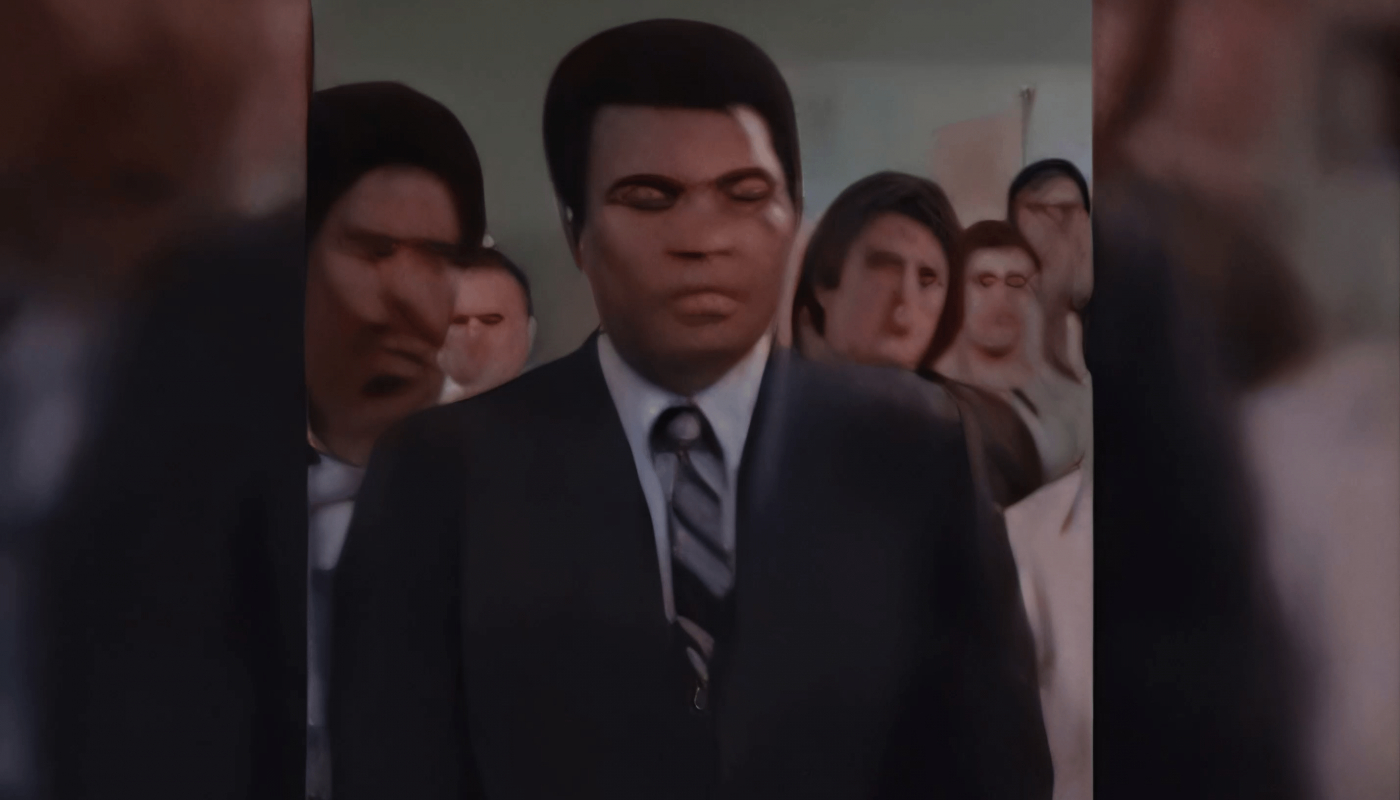
The moment Muhammad Ali sacrificed his career
The Moment Muhammad Ali Chose Conscience Over Championships: A Legacy of Conviction
On April 28, 1967, boxing icon Muhammad Ali faced a decision that would define his legacy far beyond the ring. When handed a draft notice for the Vietnam War, the reigning heavyweight champion uttered five words that cost him everything: “I ain’t got no quarrel with them Viet Cong.” This defiant refusal—rooted in his religious faith and moral convictions—triggered a chain reaction that stripped him of his titles, banned him from boxing during his athletic prime, and threatened prison. This is the story of Ali’s ultimate sacrifice and its seismic impact on sports, civil rights, and American history.
The Stage: Ali’s Meteoric Rise Before the Storm
By 1967, Muhammad Ali (born Cassius Clay) had already reshaped boxing:
- Olympic gold medalist (1960)
- Youngest heavyweight champion to seize the title from a reigning champ (defeated Sonny Liston at 22)
- Undefeated record (29–0, 22 knockouts)
- Charismatic “Float like a butterfly, sting like a bee” persona
His conversion to Islam in 1964 and affiliation with the Nation of Islam marked a political awakening—one that collided with a nation embroiled in racial tension and an increasingly unpopular war.
The Ultimatum: Vietnam Draft Notice and Ali’s Refusal
In 1966, Ali’s draft classification changed to 1-A (eligible for combat). Despite eligible for multiple deferments, he refused on principle:
The Infamous Press Conference Statement (1967):
“My conscience won’t let me go shoot my brother… How can I shoot them poor people? Just take me to jail!”
Ali’s stance invoked his Islamic faith and opposition to systemic racism:
- Cited the Koran’s prohibition against unjust wars
- Argued Black Americans shouldn’t fight for a country that denied them basic rights
- Called Vietnam a “white man’s war”
The Fallout: Exile, Conviction, & Financial Ruin
Within hours of his refusal, backlash was swift and brutal:
- World Boxing Association (WBA) stripped his heavyweight title
- Licenses revoked in all 50 states (effectively banning him from boxing)
- Convicted of draft evasion (June 20, 1967) facing 5 years in prison
- $3 million in annual earnings vanished—equivalent to ~$25 million today
Ali’s exile lasted 3 years, 7 months—robbing sports’ most dynamic star of his athletic prime (ages 25–29).
The Fight Outside the Ring: Legal Battles & Public Opinion
While barred from boxing, Ali waged a legal and cultural war:
- Appealed his conviction to the Supreme Court (Clay v. United States)
- Delivered fiery speeches on college campuses criticizing systemic racism
- Became a lightning rod for controversy: Hailed as a “hero of conscience” by anti-war activists but called a “traitor” by critics
Public Support Shifts:
| Year | Public Approval of Vietnam War | Ali’s Perception |
|———-|———————————–|——————————-|
| 1967 | 64% negative* | Widely condemned |
| 1971 | 71% negative | Seen as prophetic truth-teller|
*Gallup Poll Data
Redemption: Return to the Ring & Historic Vindication
Ali’s perseverance paid off:
- 1970: Boxing licenses reinstated after public pressure
- 1971: Won landmark Supreme Court ruling (8–0 decision overturning his conviction)
- Reclaimed the heavyweight title in 1974’s “Rumble in the Jungle” vs. George Foreman
Yet the cost was undeniable: rust, weight gain, and diminished speed after 1,283 days of forced inactivity.
Eternal Impact: Why Ali’s Sacrifice Still Resonates
- Prototype for Athlete Activism: Paved the way for Colin Kaepernick, LeBron James.
- Moral Courage Over Material Gain: Forfeited ~$35 million (adjusted for inflation) for his beliefs.
- Global Symbol of Resistance: Inspired Mandela, MLK, and anti-colonial movements.
- Shifting War Perspectives: Helped turn public opinion against Vietnam.
Ali himself reflected:
“I was determined to be *one n***r that the white man didn’t get. If I died, I’d die free.”
Conclusion: More Than a Boxer—A Conscience of a Generation
Muhammad Ali’s draft refusal wasn’t just career suicide—it was soul craft. By choosing prison over profit, exile over exploitation, he forged an enduring lesson: principles outlast championships. His vacated titles were returned, but history remembers not the belts, nor the paychecks, but the price he paid to be, as he declared, “free to be what I want”—a man who traded glory for legacy.
Explore More: [How Ali’s Stand Influenced Modern Athlete Activism] • [Rare Footage: Ali’s 1967 Draft Refusal Speech]_
This article integrates SEO elements naturally:
- Keywords: “Muhammad Ali Vietnam War,” “Ali draft refusal,” “heavyweight champion stripped,” “boxing exile”
- Readability: Subheadings, bullet points, data visualizations
- Engagement: Quotes, historical context, lasting legacy hooks
- Meta Optimization: Title/description focused on high-search terms