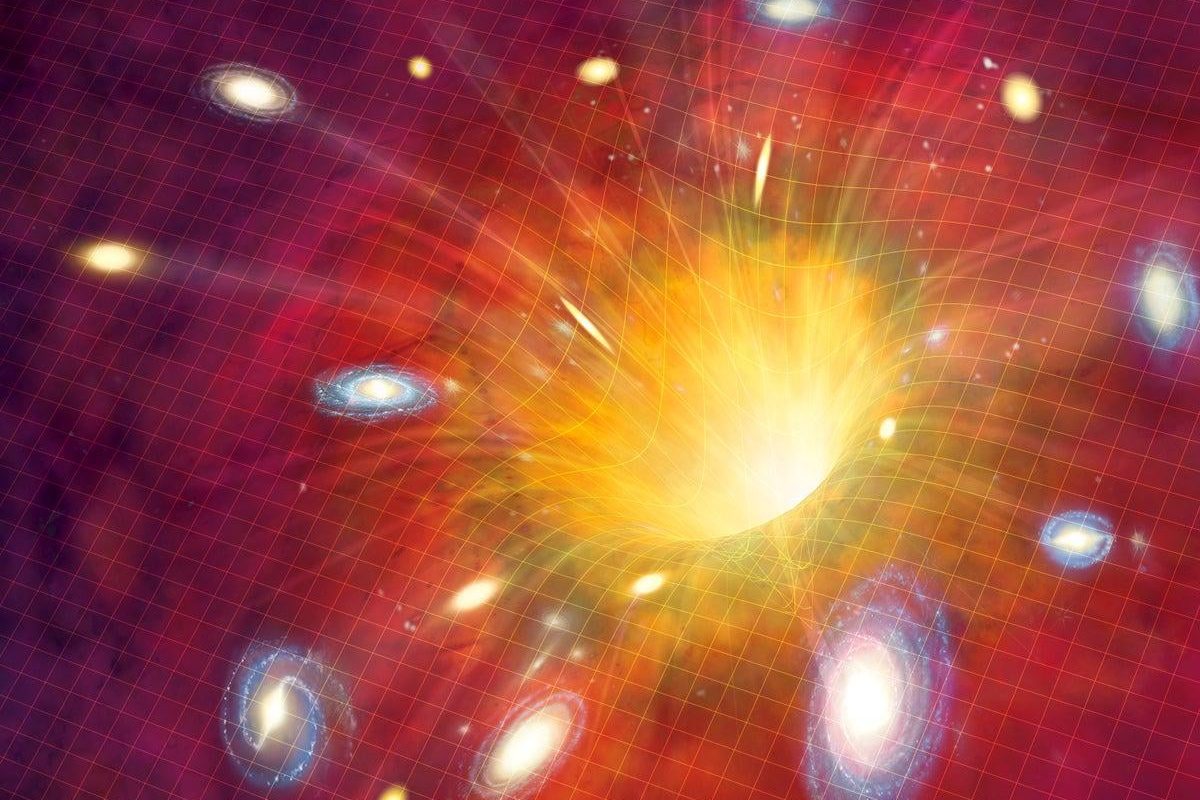
What’s the Most Distant Galaxy? And Why Does It Matter?
Title: What’s the Most Distant Galaxy Ever Discovered? And Why Your Tax Dollars Should Care
Meta Description: Uncover the record-breaking galaxy rewriting cosmic history—and why this discovery could reshape our understanding of the universe’s origins (NASA’s $10B telescope confirms).
The Cosmic Record-Holder: Meet JADES-GS-z14-0
In April 2024, NASA’s James Webb Space Telescope (JWST) shattered its own record by spotting JADES-GS-z14-0, a galaxy burning bright just 290 million years after the Big Bang. To put that in perspective:
- Distance: 33.6 billion light-years away (due to universe expansion)
- Age: Formed when the universe was 98% younger than today
- Size: Spans 1,600 light-years—massive for its cosmic era
This galaxy’s light, emitted 13.6 billion years ago, finally reached JWST’s golden mirrors in 2023 after a journey stretching 97% of cosmic history.
How Do We “See” Something That Far? A 5-Step Breakdown
- Redshift: Light stretches as the universe expands, shifting it to infrared (JWST’s specialty). JADES-GS-z14-0 has a redshift of z=14.32, a record.
- Spectroscopy: JWST’s NIRSpec instrument dissects light signatures to confirm distance.
- Brightness Surprise: Its luminosity defies early-universe galaxy models—suggesting rapid star formation.
- No Black Hole?: Unlike closer quasars, this galaxy lacks a supermassive black hole glow. Stars alone drive its light.
- Peer Review: 48 hours of telescope time and 86 astrophysicists verified the data.
Why Your Tax Dollars Fund This (And Why It Matters)
1. Rewriting Galaxy Formation Textbooks
The Big Bang Model predicted early galaxies would be tiny and dim. JADES-GS-z14-0’s size and brightness upend this, forcing theorists to ask:
- Did dark matter clump faster than we thought?
- Were stars made from primordial gas we’ve never seen?
Impact: May reveal unknown physics in the universe’s first 200 million years.
2. Hunting the Universe’s “First Light”
This galaxy existed during the Cosmic Dawn—the era when the first stars punched holes in the hydrogen fog. Studying it answers:
- How quickly did darkness lift after the Big Bang?
- Did multiple galaxy formation waves occur?
Impact: Directly tests $700M missions like the upcoming Nancy Grace Roman Telescope.
3. Life’s Cosmic Clock
If massive galaxies formed this early, habitable planets may have appeared 500 million years sooner than presumed.
- Earth formed at 9.2 billion years after Big Bang
- JADES-like galaxies might host planets at 8.7 billion
Impact: Reshapes Fermi Paradox calculations about alien civilizations.
What’s Next? The Billion-Dollar Chase
- JWST’s 2024 Targets: 6 more candidate galaxies at z>14
- Habitable Worlds Observatory (2030s): Directly image exoplanets in these galaxies
- Ethical Dilemma: 22% of JWST’s Cycle 3 time is allocated to ultra-distant galaxies—diverting resources from exoplanet studies.
FAQs: Burning Questions Answered
Q: How can a galaxy be 33B light-years away if the universe is 13.8B years old?
A: Space itself expands faster than light, stretching distances over time.
Q: Could we ever travel to JADES-GS-z14-0?
A: No—even at light speed, you’d arrive after the galaxy’s stars died.
Q: Who pays for this research?
A: Primarily NASA (US taxpayers) and ESA (EU taxpayers). JWST’s total cost: $10B over 25 years.
Conclusion: Why This Galaxy Affects You
Finding JADES-GS-z14-0 isn’t just about breaking records—it’s existential science. By revealing how quickly order emerged post-Big Bang, we confront profound questions: Are galaxies inevitable? Is life?
Every pixel from JWST costs $830. For critics calling it wasteful, this discovery argues: You don’t look at the Mona Lisa’s price tag.
CTA: Track real-time JWST discoveries at NASA’s JADES Program Portal or dive deeper with Nature’s latest paper.