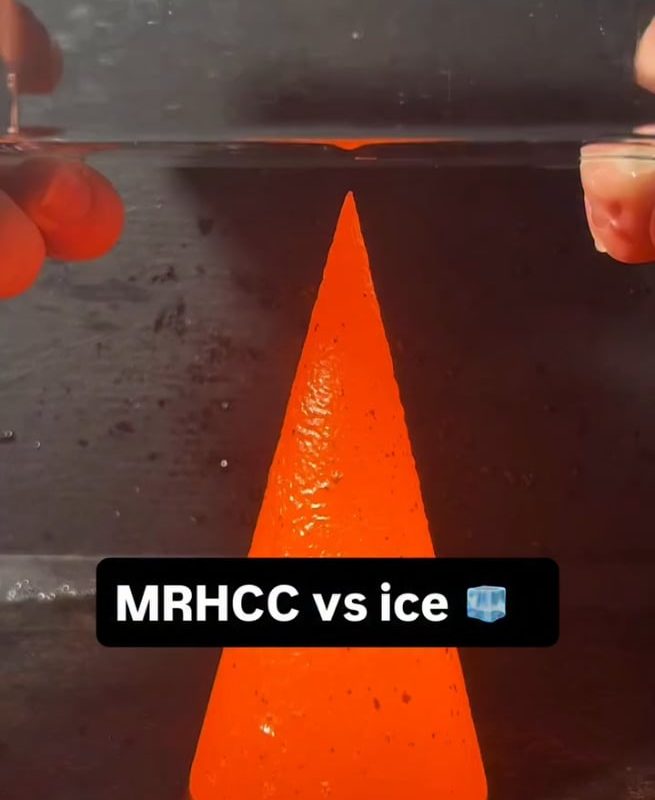
Putting ice through a medium red hot copper cone
Title: The Sizzling Science: What Happens When Ice Meets a Red-Hot Copper Cone?
Introduction
Imagine the dramatic clash of opposites: a freezing block of ice pressed against a scorching-hot copper cone. This electrifying experiment isn’t just visually captivating—it’s a masterclass in thermodynamics, material science, and physics. In this article, we’ll break down the science behind running ice through a medium red-hot copper cone, its practical implications, and why this experiment leaves scientists and enthusiasts mesmerized. Whether you’re a STEM educator, a DIY experimenter, or simply curious about extreme thermal reactions, read on to uncover the fiery secrets of this phenomenon.
The Experiment: Ice vs. Red-Hot Copper
At first glance, shoving ice into a glowing copper cone seems reckless. But this setup is a controlled demonstration of thermal energy transfer:
- The Copper Cone: Heated to a “red-hot” state (≈700–900°C), copper’s high thermal conductivity (401 W/m·K) ensures rapid heat distribution.
- The Ice: At 0°C, ice’s solid structure is no match for extreme heat. But what happens next is unintuitive and thrilling.
Step-by-Step Process
- Heating the Cone: A copper cone is heated until it glows medium-red using a propane torch or kiln.
- Introducing Ice: An ice cube or block is pressed through the cone’s narrow aperture.
- Instantaneous Reaction: The ice doesn’t just melt—it vaporizes explosively due to extreme temperature differences.
The Science Behind the Spectacle
1. Thermal Shock & Phase Transitions
When ice contacts the copper, heat transfers at blinding speed:
- Melting → Vaporization: Ice skips the liquid phase almost entirely (sublimation) due to localized superheating.
- Leidenfrost Effect: A thin vapor layer forms between the ice and copper, momentarily insulating the ice and creating a “hovering” effect before catastrophic breakdown.
2. Copper’s Role as a Thermal Superhighway
Copper’s atomic structure allows electrons to move freely, making it 10x better at conducting heat than stainless steel. This efficiency ensures the ice is bombarded with thermal energy from all sides.
3. Oxidation & Color Changes
Red-hot copper reacts with oxygen, forming a black layer of copper oxide (CuO). This oxide layer can subtly alter heat transfer, adding complexity to the reaction.
Practical Applications & Industrial Relevance
While this experiment seems like flashy pyrotechnics, it mirrors real-world scenarios:
- Metallurgy: Testing material responses to thermal stress (e.g., turbine blades in jet engines).
- Cryogenics: Studying how supercooled materials behave in high-heat environments.
- Safety Protocols: Understanding thermal shock helps design fail-safes for pipelines, engines, and electronics.
DIY Replication: Safety First!
Warning: This experiment involves extreme temperatures. Do not attempt without professional supervision.
If you’re qualified, here’s what you’ll need:
- Materials:
- Pure copper cone (medium thickness)
- Propane torch or forge
- Tongs and heat-resistant gloves
- Ice blocks (pure water reduces impurities)
- Steps:
- Heat the cone in a well-ventilated area until glowing red.
- Stabilize the cone using ceramic boards or clamps.
- Use tongs to push ice through the cone’s opening.
- Observe steam bursts and rapid disintegration!
Why This Experiment Fascinates Scientists
- Extreme Dynamics: Highlights how materials behave at thermal limits.
- Energy Transfer Visualization: A live demo of conduction, convection, and phase changes.
- Educational Hook: Perfect for teaching thermodynamics or material science in classrooms.
Myth-Busting: Common Misconceptions
- ❌ “The ice extinguishes the copper’s heat.”
✅ Truth: Copper’s thermal mass is enormous—ice vaporizes long before cooling the metal significantly. - ❌ “Copper melts in the process.”
✅ Truth: Copper’s melting point is 1,085°C, far beyond typical red-heat temperatures.
Conclusion: Where Fire and Ice Collide
The encounter between ice and a red-hot copper cone is more than just a fiery show—it’s a symphony of physics, chemistry, and engineering. From rapid vaporization to copper’s flawless heat conduction, this experiment reminds us that opposites don’t just attract; they ignite our curiosity.
Whether you’re replicating it in a lab or wowing audiences online, this clash of extremes will always spark awe—and a deeper appreciation for the laws that govern our universe.
SEO Keywords: Red-hot copper cone, ice experiment, thermal conductivity, Leidenfrost effect, copper oxidation, phase change, thermodynamics experiment, science demonstration, thermal shock.
Meta Description: Discover the explosive science behind putting ice through a red-hot copper cone—how thermodynamics, phase changes, and copper’s conductivity create a jaw-dropping experiment. Perfect for STEM educators!