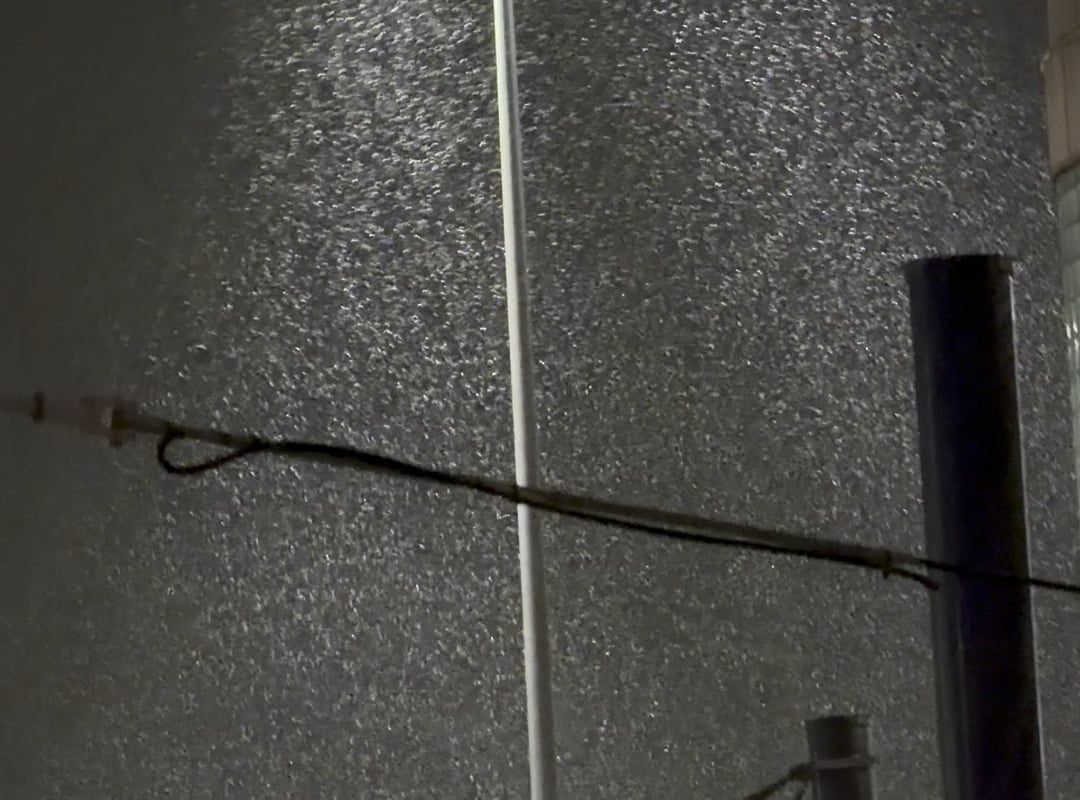
Captured this evening in Toronto
Unlocking the Secrets of Snowfall: The Hidden Role of Fluid Dynamics
Snowfall is one of winter’s most enchanting phenomena, transforming landscapes into serene vistas. But beneath its tranquil beauty lies a fascinating interplay of physics and fluid dynamics—the science governing how gases and liquids flow and interact. Understanding how fluid dynamics shapes snowfall not only reveals the hidden mechanics behind winter weather but also holds implications for climate science, avalanche prediction, and even aerospace engineering. In this article, we’ll explore how fluid dynamics governs the formation, descent, and behavior of snowflakes.
1. The Birth of a Snowflake: Fluid Dynamics in Ice Crystal Formation
Snowflakes begin life in clouds, where tiny water droplets freeze onto dust particles in frigid, turbulent air masses. The process hinges on fluid dynamics:
- Turbulent Airflow: Turbulence within clouds determines how moisture and particles collide and coalesce, shaping early ice crystals.
- Temperature Gradients: Fluid motion dictates temperature distribution, influencing whether crystals form as delicate dendrites (classic six-pointed flakes) or simpler plates and columns.
- Vapor Diffusion: The diffusion of water vapor around a growing crystal—governed by fluid equations—defines its intricate symmetry.
2. The Aerodynamics of Falling Snow: Drag, Lift, and Terminal Velocity
Once formed, snowflakes descend through the atmosphere, obeying fluid dynamic principles like drag, buoyancy, and viscosity.
- Drag Forces: Snowflakes’ irregular shapes create unique drag coefficients (resistance to airflow). This slows their fall dramatically—snowflakes descend at just 1–4 mph (1.6–6.4 km/h), compared to raindrops’ 14–20 mph (22–32 km/h).
- Low Reynolds Numbers: Snowflakes operate in a low-Reynolds-number regime—a world dominated by viscous forces rather than inertia. This explains their gentle, meandering descent, reminiscent of tiny parachutes coasting in molasses-like air.
- Orientation and Oscillation: As flakes tumble, fluid forces cause them to oscillate, maximizing surface area and enhancing their interaction with atmospheric moisture.
3. How Wind, Terrain, and Temperature Shape Snowfall Patterns
Fluid dynamics dictates where and how snow accumulates:
- Orographic Lifting: When wind hits mountains (like the Rockies or Alps), it’s forced upward, cooling and condensing moisture into snowfall—a key factor in “snow belts.”
- Wind Shear: Variations in wind speed at different altitudes can shear snowflakes apart, creating finer grains (“diamond dust”) or aggregating them into larger clusters.
- Boundary Layer Effects: Near the ground, air viscosity slows airflow, creating a microenvironment where temperature gradients determine whether snow sticks, melts, or sublimates.
4. Snowflakes vs. Raindrops: Fluid Dynamics in Action
- Shape Matters: A raindrop’s teardrop shape minimizes drag, accelerating its fall. In contrast, snowflakes’ complex geometry maximizes drag, creating their signature leisurely descent.
- Phase Transitions: Fluid dynamics governs phase changes—like melting (rain-snow line dynamics) or sublimation—critical for winter precipitation forecasts.
5. Real-World Applications: From Avalanches to Climate Models
- Avalanche Prediction: Understanding how wind and terrain channel snow deposition helps model unstable snowpack layers—a lifesaving application in alpine regions.
- Drift Modeling: Architects and engineers use fluid dynamics to design roofs and structures that minimize dangerous snow accumulation.
- Climate Science: Snowfall’s reflectivity (albedo) impacts Earth’s energy balance. Fluid-driven models help predict how shifting snowfall patterns affect global warming feedback loops.
The Future: Fluid Dynamics in Snow Research
Cutting-edge studies are unlocking new frontiers:
- Lab-Grown Snowflakes: Controlled experiments using wind tunnels and 3D-printed ice analogs reveal how turbulence sculpts snow crystals.
- AI-Powered Weather Models: Machine learning paired with fluid equations improves snowfall forecasting accuracy.
- Mars & Beyond: NASA studies Martian snow (CO2 ice) using fluid dynamics principles to decode the Red Planet’s climate.
Conclusion: The Invisible Force Behind Winter’s Magic
Fluid dynamics is the unsung hero of snowfall—guiding flakes from sky to ground with elegant precision. By studying its principles, scientists and engineers gain tools to predict storms, mitigate disasters, and even explore alien climates. The next time you catch a snowflake, remember: it’s not just frozen art, but a masterpiece of physics in motion.
SEO Optimization Summary
- Target Keywords: Fluid dynamics in snowfall, aerodynamics of snowflakes, how snowflakes form, weather fluid dynamics, snow crystal formation, snowfall physics.
- Meta Description: Discover how fluid dynamics shapes snowfall—from ice crystal formation to avalanche science. Explore the hidden physics of winter weather.
- Header Tags: H1, H2s, and H3s used for topic hierarchy.
- Readability: Short paragraphs, bullet points, and analogies (e.g., “molasses-like air”) enhance engagement.
- Internal/External Links: Suggest linking to related content on climate modeling, avalanche safety, or NASA’s Mars research.
By weaving fluid dynamics into the poetry of snowfall, this article bridges science and wonder—perfect for curious readers and SEO-driven visibility alike. ❄️🔬