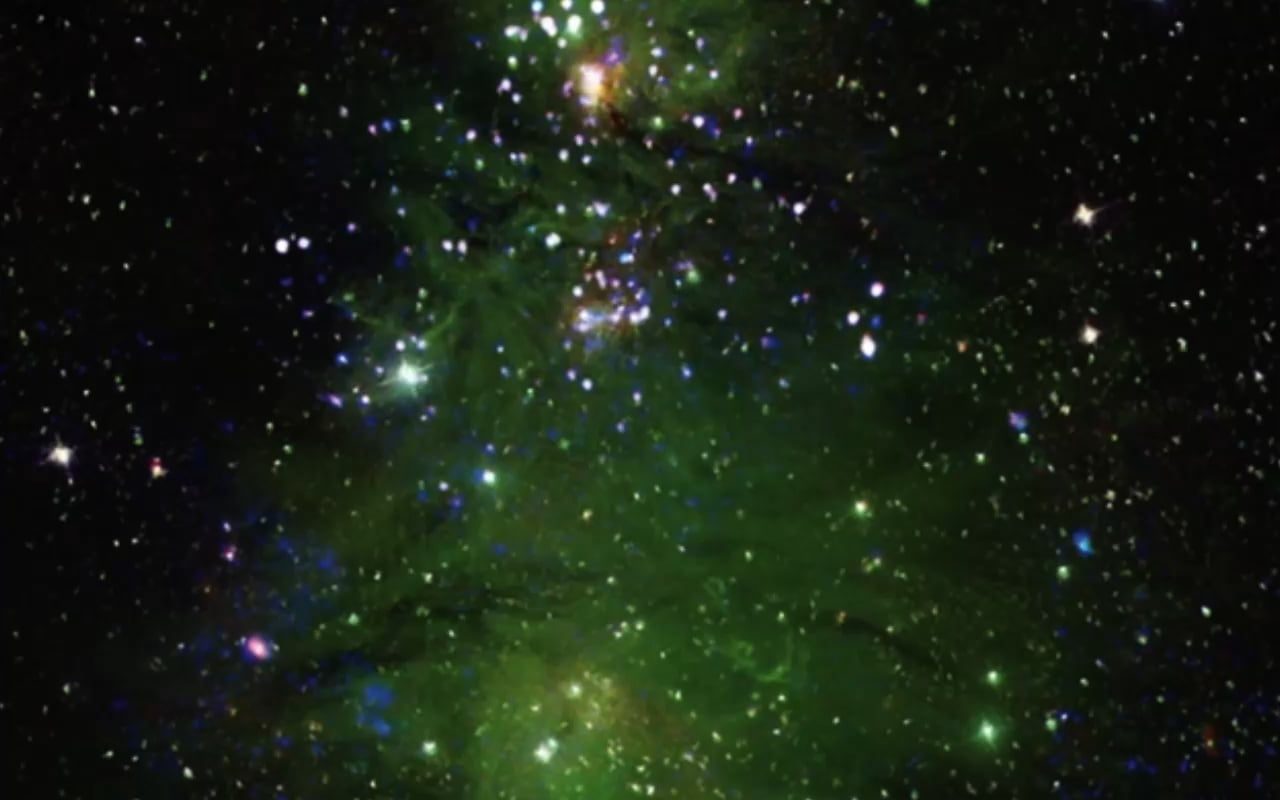
‘Christmas Tree Cluster’
Unveiling the Celestial Holiday Wonder: The Christmas Tree Cluster (NGC 2264)
In the depths of our winter sky, nestled within the faint constellation of Monoceros (the Unicorn), lies a dazzling cosmic ornament that delights astronomers and stargazers alike: the Christmas Tree Cluster. Officially cataloged as NGC 2264, this open star cluster and its surrounding emission nebula form a festive celestial tableau that evokes the spirit of the holiday season. In this guide, we’ll explore the science, beauty, and observational secrets of this unique deep-space gem.
What Is the Christmas Tree Cluster?
The Christmas Tree Cluster is part of a larger star-forming region approximately 2,500 light-years from Earth. It’s named for its distinctive triangular shape, which resembles a decorated Christmas tree when visualized through telescopes or astrophotography. The cluster includes dozens of young, hot stars—some only a few million years old—embedded within a glowing cloud of ionized hydrogen gas (an H II region) known as the Cone Nebula complex.
The “tree” shape is most pronounced when:
- The Cone Nebula (a dark, pillar-like dust structure) forms the “tree trunk.”
- Bright blue stars (like the variable star S Monocerotis) outline the “branches.”
- Pinkish nebulosity (hydrogen gas illuminated by starlight) acts as festive “ornaments.”
Discovery & Key Facts
- Discovered by: William Herschel in 1785.
- Constellation: Monoceros (visible in northern winter/southern summer skies).
- Size: The cluster spans about 30 light-years; the nebula extends further.
- Age: Estimated 1–5 million years—extremely young by cosmic standards.
- Associated Features:
- Cone Nebula: A dark, cone-shaped dust lane illuminated by nearby stars.
- Fox Fur Nebula: A filamentary dust structure (part of NGC 2264).
Why Is It Called the “Christmas Tree Cluster”?
The nickname arises from two key features:
- Visual Resemblance: The cluster’s tapered arrangement of stars mirrors a tree, while the Cone Nebula anchors it like a trunk.
- Seasonal Timing: Best observed in December and January, aligning with the holiday season.
For photographers, using narrowband filters (e.g., H-alpha) enhances the nebula’s red hues, creating a “tree” adorned with ethereal lights.
Scientific Significance: A Stellar Nursery
NGC 2264 isn’t just pretty—it’s a laboratory for star formation:
- Young Stars: Hosts O-type and B-type massive stars, alongside T Tauri stars (infant suns still accreting material).
- Nebula Interactions: Radiation from newborn stars sculpts the surrounding gas, creating cavities and shockwaves.
- Multi-Wavelength Views: Infrared observations reveal stars shrouded in dust, while X-rays map energetic stellar winds.
How to Observe the Christmas Tree Cluster
For Amateur Astronomers
- Best Time: December–February (culminates around midnight in mid-December).
- Location: Look southeast of Orion, near the “Rosette Nebula.”
- Equipment:
- Binoculars: Reveals a hazy patch of stars.
- Small Telescopes: Shows the cluster’s triangular outline.
- Large Telescopes & Cameras: Unveils nebulosity and the Cone’s dark silhouette.
Tips for Astrophotography:
- Use a hydrogen-alpha filter to accentuate the nebula.
- Frame the cluster alongside the Cone Nebula for a “full tree” composition.
- Long exposure times (5+ minutes) capture faint details.
Fun Facts & Cosmic Connections
- S Monocerotis: The brightest star in the cluster is a spectroscopic binary system.
- DIY Astronomy: Citizen scientists can contribute to studies of its variable stars via projects like AAVSO.
- Mythology Tie-In: Monoceros (the Unicorn) is a modern constellation, adding whimsy to this celestial wonder.
Conclusion: A Beacon of Cosmic Celebration
The Christmas Tree Cluster bridges science and symbolism, offering a dazzling reminder of the universe’s creativity. Whether you’re an astronomer hunting for stellar nurseries or a holiday enthusiast seeking cosmic cheer, NGC 2264 delivers awe and inspiration. This winter, point your telescope skyward—nature’s Yuletide masterpiece awaits!
Keywords for SEO: Christmas Tree Cluster, NGC 2264, Cone Nebula, Monoceros constellation, star cluster, astronomy, nebula, stargazing, S Monocerotis, winter sky, deep-sky objects, astrophotography, star formation.
Meta Description: Discover the Christmas Tree Cluster (NGC 2264)—a festive star cluster and nebula in Monoceros. Learn how to observe this cosmic wonder, its scientific secrets, and why it’s a holiday favorite!