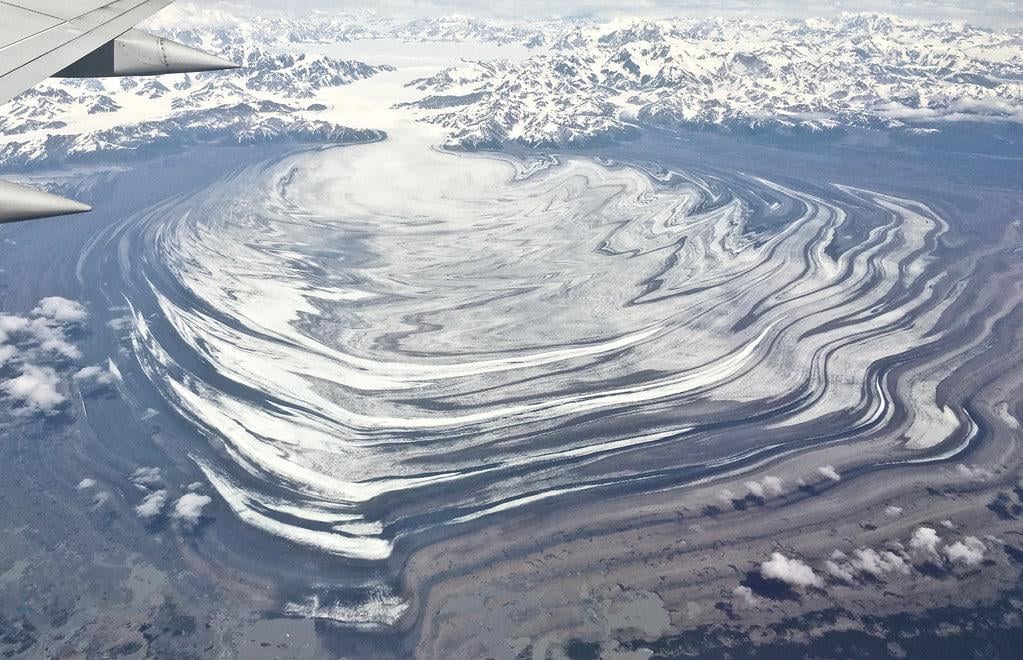
The Malaspina Glacier in Alaska presents a particularly unusual shape.
Title: Unraveling the Mystery: Why Alaska’s Malaspina Glacier Has a Bizarre, “Pancaked” Shape
Meta Description: Explore the unique geology behind Alaska’s Malaspina Glacier, the world’s largest piedmont glacier. Discover why its surreal, sprawling shape defies typical glacier formations.
Alaska’s glaciers are legendary for their raw beauty and scale, but none captivate geologists and adventurers quite like the Malaspina Glacier. Tucked within the Wrangell-St. Elias National Park and Preserve, this icy behemoth stands out not just for its size but for its utterly unusual shape—a sprawling, lobe-like form resembling a giant, flattened pancake or abstract painting seen from above. What forces of nature created this geological rarity? Let’s dive into the science and spectacle of Malaspina.
Malaspina Glacier at a Glance
- Location: Southern Alaska, flowing from the Saint Elias Mountains toward the Gulf of Alaska.
- Size: Sprawling over 1,500 square miles (larger than Rhode Island!), it’s the largest piedmont glacier in the world.
- Uniqueness: Unlike valley glaciers that snake through mountains, its vast, fan-like shape stretches across coastal plains.
- Visibility: Its striking concentric rings and chaotic surface are best viewed from satellite imagery or aerial tours.
Why Malaspina Glacier’s Shape Is So Unusual
Most glaciers flow downward through valleys, constrained by mountain walls. Malaspina, however, is a piedmont glacier—a rare type that spills out of mountains onto flat terrain, spreading laterally like batter in a pan. Here’s why its shape defies expectations:
-
The Piedmont Effect
- Malaspina originates from the colossal Seward Ice Field, where ice flows through multiple valleys before merging. When it hits the coastal plain, it loses topographic constraints, fanning outward into a vast, disc-shaped lobe.
- Think of it like squeezing toothpaste: Once released from the tube (the mountain valleys), it spreads uncontrollably.
-
A “Frozen Snail Shell”
- Satellite images reveal mesmerizing concentric ridges radiating from its center. These are medial moraines—bands of rock debris carried by tributary glaciers. As the ice spreads, these bands twist into hypnotic loops, resembling a giant shell or fingerprint.
- The patterns are created by the glacier’s slow, radial movement (up to 1 meter per day).
-
The Role of Ice and Debris
- Malaspina is a “black glacier”—its surface is littered with rocks and silt due to heavy debris from surrounding mountains. This insulation ironically slows melting, allowing the glacier to maintain its massive footprint.
- Beneath its lobes, meltwater carves supraglacial streams, adding to its mazelike appearance.
A Geological Wonder With Secrets to Uncover
Malaspina isn’t just scenic; it’s a living laboratory. Scientists study its structure to understand:
- Climate History: Ice cores from Malaspina reveal millennia-old atmospheric data trapped in its layers.
- Glacial Dynamics: How debris affects melting rates and movement in warming climates.
- Sea-Level Rise: As Alaska’s glaciers retreat, Malaspina’s response helps model future coastal impacts.
Threats to Malaspina’s Future
Like most glaciers, Malaspina is losing its battle against climate change:
- Rapid Thinning: Warming temperatures have accelerated melting, thinning the glacier by up to 3 feet per year.
- Coastal Retreat: Its terminus is receding, exposing new lagoons and wetlands along the Gulf of Alaska.
- Habitat Shifts: Wildlife like seals and migratory birds adapt as the landscape transforms.
How to Experience Malaspina Glacier
While remote, Malaspina is accessible via:
- Flightseeing Tours: Fly from Yakutat or Cordova for aerial views of its surreal patterns.
- Nearby Parks: Explore Wrangell-St. Elias’s trails for distant vistas or boat tours along Disenchantment Bay.
Pro Tip: Visit in late summer to see meltwater pools turn vibrant blue against the gray moraines.
Conclusion: Nature’s Artistry in Ice
The Malaspina Glacier’s peculiar shape is no accident—it’s a masterpiece sculpted by gravity, debris, and time. As the largest piedmont glacier on Earth, it challenges our notions of how glaciers “should” look while offering vital clues to Earth’s climatic past and future. For adventurers and scientists alike, Malaspina is a humbling ode to nature’s creativity—and a urgent reminder of the fragility of icy worlds.
Target Keywords:
- Malaspina Glacier Alaska
- Largest piedmont glacier
- Unusual glacier shapes
- Glacier formations Alaska
- Climate impact on glaciers
Internal Linking Opportunities:
- Explore more Alaskan glaciers: Hubbard Glacier Guide
- How climate change is reshaping Alaska’s wilderness
This SEO-optimized article combines science, visuals, and compelling storytelling to engage readers while targeting search queries about Malaspina Glacier’s unique geography. Let me know if you’d like adjustments!