Fluidized Bed Powdercoating
Fluidized Bed Powder Coating Explained: Process, Benefits & Applications
In the world of industrial finishing, fluidized bed powder coating stands out for its ability to create durable, high-performance coatings on metal components. This method is ideal for applications requiring thick, protective layers—from machinery parts to outdoor furniture. Below, we break down how it works, its advantages, key uses, and how it compares to other coating techniques.
What Is Fluidized Bed Powder Coating?
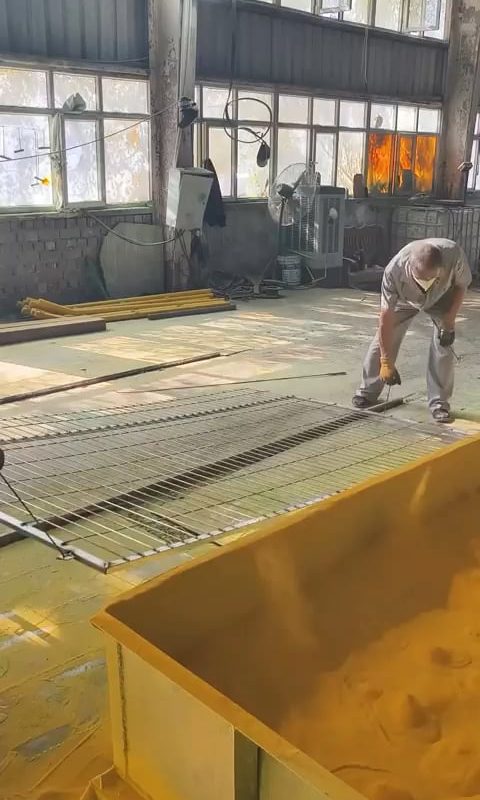
Fluidized bed powder coating is a dry finishing process where preheated metal parts are dipped into a container of finely-ground polymer powder. The powder is “fluidized” by injecting compressed air through a porous plate at the bottom of the bed, causing the particles to behave like a liquid. When the heated part contacts the powder, the material melts and adheres to the surface, forming a uniform, high-thickness coating.
How Does the Fluidized Bed Process Work?
The process involves four key steps:
-
Preheating the Substrate
Parts are heated to 250–400°C (depending on the powder type) to ensure the polymer melts instantly upon contact. -
Fluidization
Compressed air flows upward through the powder bed, lifting and suspending particles to create a fluid-like mixture. -
Dipping
The preheated part is submerged into the fluidized bed, allowing powder to coat all surfaces evenly. -
Curing
The coated part is baked (post-heated) to fully cure the layer, enhancing adhesion and durability.
Key Advantages of Fluidized Bed Coating
- Thicker, More Protective Coatings: Achieves layers up to 250–500 microns (vs. 50–100 microns with electrostatic methods).
- Exceptional Adhesion & Uniformity: Ideal for complex geometries or parts with edges.
- Zero VOCs: Eco-friendly, solvent-free process with minimal waste.
- High Durability: Resistant to impacts, corrosion, and extreme temperatures.
- Efficiency: Faster than liquid coatings and suits high-volume production.
Limitations to Consider
- Part Size & Complexity: Large or intricate parts may require specialized equipment.
- Substrate Compatibility: Limited to metals (e.g., steel, aluminum) that withstand preheating.
- Slower for Small Batches: Best suited for medium-to-large production runs.
Fluidized Bed vs. Electrostatic Powder Coating
| Factor | Fluidized Bed | Electrostatic Spray |
|---|---|---|
| Coating Thickness | Thick (250–500 microns) | Thin (50–200 microns) |
| Part Shape Compatibility | Excellent for edges/angles | Better for large, flat surfaces |
| Heat Resistance | Requires preheating (high-temp parts only) | No preheating (uses electrostatic charge) |
| Common Uses | Valves, pipes, appliances | Automotive bodies, consumer goods |
Top Applications
Fluidized bed coating excels in industries demanding rugged, long-lasting finishes:
- Agriculture & Construction: Coat tractor components, fencing, and tools.
- Automotive: Protect underbody parts, springs, and brackets.
- Electrical: Insulate wires, transformers, and enclosures.
- Consumer Goods: Coat oven racks, dishwasher baskets, and outdoor furniture.
FAQs About Fluidized Bed Coating
Q: Can plastics or wood be coated this way?
A: No—substrates must conduct heat (e.g., metal) to melt the powder.
Q: How durable is the finish?
A: Extremely durable—ideal for parts exposed to abrasion, UV rays, or chemicals.
Q: Is it cost-effective?
A: Yes for high-volume runs, thanks to minimal waste and fast curing.
Conclusion: Is Fluidized Bed Right for Your Project?
Fluidized bed powder coating is unmatched for projects requiring robust, weather-resistant coatings on metal parts. While electrostatic spraying offers finer finishes for delicate items, fluidized bed delivers superior thickness and protection for industrial equipment, outdoor structures, and heavy-duty components.
By understanding its strengths and limitations, manufacturers can optimize performance, reduce costs, and extend product lifespans—making it a vital tool in the finishing arsenal.
Ready to upgrade your coating process? Consult a fluidized bed expert to assess your needs today!
Target Keywords: Fluidized bed powder coating, powder coating process, industrial coating methods, thick protective coatings, fluidized bed vs electrostatic.
Meta Description: Discover how fluidized bed powder coating works, its advantages over electrostatic methods, and its top applications for heavy-duty metal parts.