Tiny Spines That Keep Sharksuckers Attached
Meta Title: Tiny Spines in Sharksuckers: How Remoras Stick to Hosts | Marine Biology
Meta Description: Discover how sharksuckers (remoras) use microscopic spines to cling to sharks, whales, and boats. Explore the science behind nature’s ultimate suction power.
Tiny Spines That Keep Sharksuckers Attached: The Secret Behind Nature’s Suction Power
Sharksuckers, commonly known as remoras, are nature’s ultimate hitchhikers. These fish latch onto sharks, whales, turtles, and even boats, traveling effortlessly through the ocean. But how do they grip so firmly without falling off? The answer lies in a remarkable adaptation: tiny, comb-like spines on their suction disc.
In this article, we’ll dive deep into the biomechanics of remoras, revealing how their unique dorsal fin evolved into a “super glue” suction pad and why these microscopic spines are key to their survival.
The Anatomy of a Remora’s Suction Disc
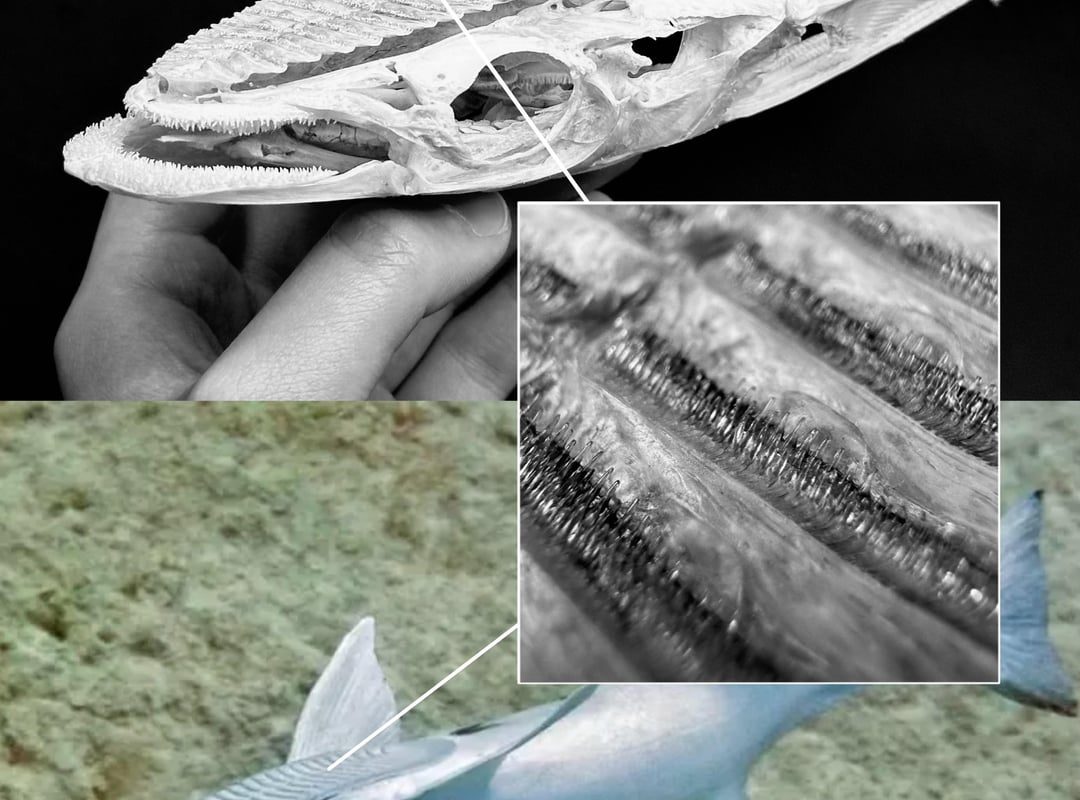
Remoras possess a specialized dorsal fin modified into a flat, oval-shaped suction disc on their heads. This disc is lined with 15–30 bony plates called lamellae, each covered in microscopic spines (also known as spinnules). Here’s how it works:
-
Creating a Vacuum
- By sliding their disc backward, remoras create a low-pressure zone, sealing themselves to smooth surfaces.
- The disc’s soft edges conform to the host’s skin or scales, preventing water from leaking in.
-
Role of the Spines
- The tiny, backward-pointing spines act like miniature hooks, gripping microscopic ridges on the host’s skin.
- This maximizes friction, ensuring remoras stay attached even at speeds of 60+ mph when riding fast swimmers like sharks.
Why Spines Matter: The Physics of Unshakable Attachment
The spines’ design solves two critical challenges:
1. Resisting Shear Forces
When a host accelerates or changes direction, water drag tries to peel the remora off. The spines anchor into the host’s skin, resisting sideways (shear) forces that would otherwise dislodge them.
2. Minimizing Damage to the Host
Unlike parasites, remoras don’t harm their hosts. The spines are small and blunt, gripping without piercing the skin—a win-win for both parties.
Evolutionary Genius: How Remoras Outperform Other Suction Systems
Remora spines outperform artificial suction cups and even gecko feet in wet environments:
| Feature | Remora Disc | Synthetic Suction Cups |
|---|---|---|
| Wet Adhesion | Thrives underwater | Fails with moisture |
| Reusability | Can reattach instantly | Loses grip over time |
| Energy Efficiency | Zero energy needed to maintain hold | Requires continuous pressure |
Biomimicry Potential: From Marine Biology to Human Innovation
Scientists are studying remora spines to inspire breakthroughs in:
- Medical Adhesives: Scar-free bandages or surgical tapes that stick to wet tissues.
- Underwater Robotics: Grippers for deep-sea exploration or pipeline maintenance.
- Sportswear: Enhanced traction for swimsuits or gear.
In 2020, researchers at Beihang University created a remora-inspired adhesive that held 340x its weight underwater—proving nature’s design is unbeatable.
FAQs: Tiny Spines of Sharksuckers
Q: Do remoras hurt their hosts?
A: No—the spines grip superficially without breaking the skin. Sharks barely notice their riders!
Q: How do remoras detach?
A: They curl the front of their disc upward, breaking the vacuum seal instantly.
Q: Why don’t other fish have this adaptation?
A: Remoras evolved this trait over 30 million years—a niche survival strategy for nutrient-rich ocean currents.
Conclusion: Nature’s Perfect Hitchhiking System
The tiny spines on a remora’s suction disc are a masterpiece of evolution—combining physics, flexibility, and friction to create an unshakeable grip. As researchers unravel their secrets, we’re one step closer to harnessing this power for human technology.
Next time you spot a shark with a remora sidekick, remember: those unassuming spines are the reason this odd couple rules the seas.
Keywords for SEO:
remora suction disc, how remoras attach, sharksucker anatomy, marine adhesion biomimicry, tiny spines in remoras, remora vs shark, underwater adhesion technology