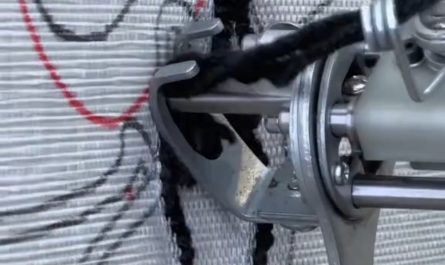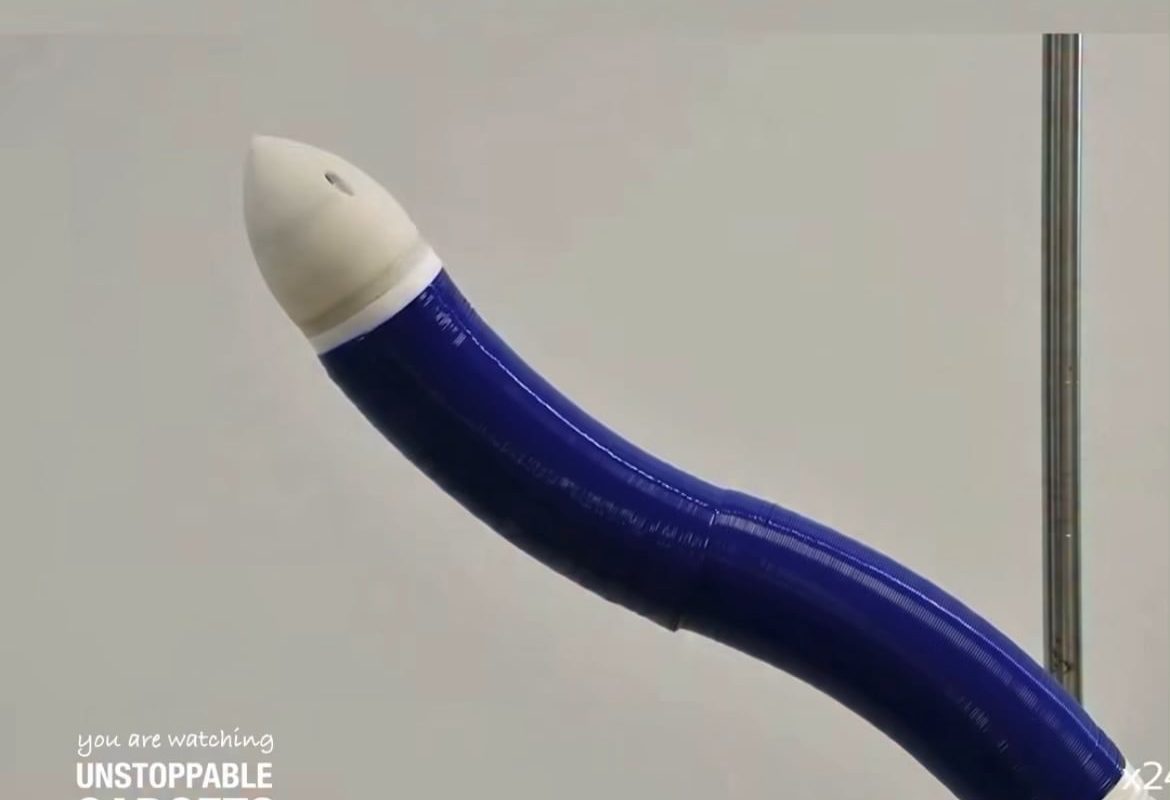
Italian researchers have created a vine-like robot that grows by 3D-printing itself and responds to gravity and light
Title: Italian Breakthrough: A 3D-Printing, Light- and Gravity-Sensing Vine Robot Set to Transform Industries
Meta Description: Italian researchers unveil a revolutionary vine-inspired robot that grows via 3D printing, responding to light and gravity. Discover how this innovation could reshape exploration, medicine, and more.
Introduction
In a groundbreaking fusion of biology and robotics, Italian researchers have developed a plant-inspired robot that mimics the growth of climbing vines. This soft, flexible robot can extend itself by 3D-printing its own structure, navigate complex environments autonomously, and respond to external stimuli like gravity and light. The innovation, detailed in Science Robotics and led by teams from the Istituto Italiano di Tecnologia (IIT), marks a leap forward in bio-inspired robotics with vast implications for search-and-rescue missions, extraterrestrial exploration, and medical applications.
How the Vine Robot Works: Nature Meets Cutting-Edge Tech
Inspired by climbing plants like ivy, the robot replicates their ability to grow toward light (phototropism) and against gravity (gravitropism). Unlike conventional rigid robots, it uses soft robotics principles and a novel 3D-printing mechanism to build its body on-the-fly.
Key Components:
-
3D-Printing Growth Mechanism:
- The robot’s tip houses a printer-like nozzle that extrudes a thermoplastic polymer, layer by layer, to form a hollow, tubular structure.
- As material is deposited, the body lengthens, allowing the robot to “grow” at speeds of up to 7 mm per second.
-
Gravity and Light Sensors:
- Light sensors guide the robot toward illumination, while embedded sensors detect gravitational pull.
- This dual-stimuli response enables it to autonomously navigate obstacles or find optimal paths.
-
Soft, Adaptive Design:
- Its lightweight, flexible body can squeeze through gaps, coil around objects, or grow vertically—ideal for confined spaces.
How It Navigates:
- When sensors detect light or gravitational shifts, the tip reorients itself, steering growth in the optimal direction.
- The process is energy-efficient, requiring minimal internal pressure to extend—a stark contrast to heavy motor-driven robots.
Potential Applications: From Disaster Zones to Outer Space
This vine-like robot’s unique capabilities open doors across industries:
- Search and Rescue:
- Navigate rubble in collapsed buildings to locate survivors or deliver supplies.
- Medical Advancements:
- Act as steerable endoscopic tools for minimally invasive surgeries.
- Space Exploration:
- Grow through unstable extraterrestrial terrain (e.g., Mars) to deploy sensors or collect samples.
- Environmental Monitoring:
- Slither through ecosystems to track pollution or wildlife without disrupting habitats.
The Science Behind the Inspiration
The project, spearheaded by Dr. Barbara Mazzolai and her team at IIT, builds on their earlier work with Plantoid robots—artificial plants that mimic root growth. By studying how real vines navigate via environmental cues, the team engineered a robot that embodies “embodied intelligence,” where its structure and behavior are intrinsically linked.
Challenges Overcome:
- Material Science: Developing a polymer that balances flexibility, durability, and printability.
- Energy Efficiency: Ensuring minimal power consumption for prolonged missions.
What’s Next for the Vine Robot?
While still in the prototype phase, future iterations aim to:
- Integrate AI-driven decision-making for complex navigation.
- Enable multi-directional growth (e.g., branching like real vines).
- Use biodegradable materials for eco-friendly applications.
Why This Matters
This innovation highlights how bio-inspired design can solve engineering challenges. As IIT researcher Emanuela Del Dottore notes: “We’re not just copying nature—we’re learning its principles to create sustainable, adaptive technologies.”
Conclusion
The Italian vine robot is more than a marvel of engineering—it’s a testament to the power of interdisciplinary innovation. By blending robotics, materials science, and biology, this technology could soon redefine how we explore hazardous environments, heal patients, and interact with fragile ecosystems. As development progresses, expect this “growing robot” to branch into new frontiers.
SEO Tips for Implementation:
- Target Keywords: Bio-inspired robotics, vine robot, 3D-printing robot, soft robotics, IIT innovation, phototropic robot.
- Internal Links: Link to articles on soft robotics, biomimicry, or IIT’s Plantoid projects.
- Header Tags: Use H2/H3 tags for readability and keyword inclusion (e.g., “How the Vine Robot Works”).
- Alt Text: Include descriptive alt text for images (e.g., “Vine robot growing through obstacles”).
Let me know if you need adjustments for tone, length, or additional technical details!