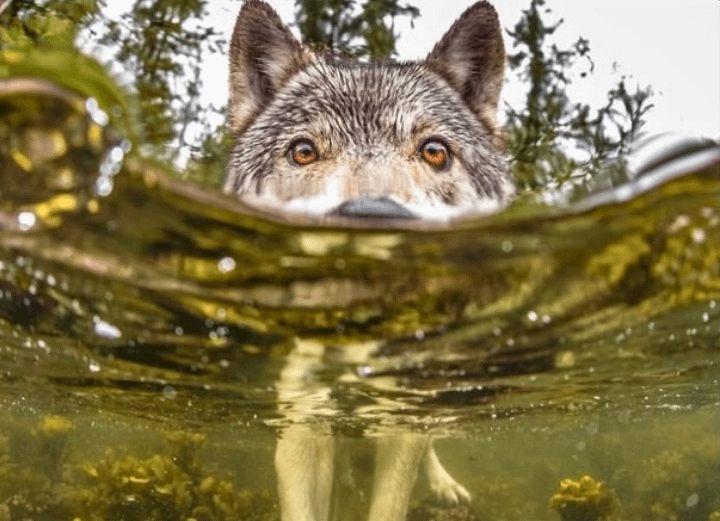
There is a group of wolves in British Columbia known as “sea wolves”. They’re behaviourally distinct, swimming from island to island and preying on sea animals. 90% of their food comes from the sea. They’ve distinct DNA that sets them apart from mainland wolves and are entirely dedicated to the sea.
Discover British Columbia’s Sea Wolves: The Marine Mammals Redefining Wolf Behavior
Imagine wolves that don’t prowl forests or mountains but instead navigate a world of saltwater, islands, and tides. In the remote coastal wilderness of British Columbia, a remarkable population of wolves has evolved to thrive in harmony with the ocean. Known as “sea wolves” or coastal wolves (Canis lupus crassodon), these agile predators swim between islands, feast on marine prey, and boast genetic adaptations unlike any of their inland relatives. Dive into the mysteries of these marine-focused wolves and their vital role in Canada’s Pacific ecosystems.
The Coastal Wolf Habitat: Where Land Meets Sea
British Columbia’s sea wolves inhabit a labyrinth of islands, fjords, and temperate rainforests stretching from Vancouver Island to the Great Bear Rainforest. Unlike their mainland cousins, these wolves live in a fluid environment shaped by tides and storms. Their territories span rugged shorelines, ancient cedar forests, and biodiverse intertidal zones, which provide endless food sources—provided they’re willing to swim for them.
- Island-Hopping Survivalists: Sea wolves routinely swim distances of up to 12 kilometers (7.5 miles) between islands, riding ocean currents to conserve energy.
A Unique Marine Diet: 90% From the Ocean
While inland wolves hunt deer, elk, or rodents, coastal wolves have turned to the sea for sustenance. Studies reveal that 90% of their diet comes from marine sources, including:
- Salmon (during spawning seasons)
- Harbor seals and sea lions
- Shellfish like clams and mussels
- Whale carcasses and herring eggs
This seafood-heavy diet isn’t just a preference—it’s a necessity. Salmon, in particular, provides critical fatty acids that fuel these wolves through harsh winters.
Adaptations: How Sea Wolves Differ from Mainland Wolves
Coastal wolves aren’t just behaviorally distinct—they’re genetically unique. DNA analyses confirm they diverged from continental wolves over 6,000 years ago, adapting to their marine-dominated environment in key ways:
- Smaller Size: Streamlined bodies for swimming.
- Water-Resistant Fur: Denser undercoats protect against cold Pacific waters.
- Social Behavior: Some hunt alone or in pairs rather than large packs, ideal for stealthy shoreline foraging.
Researchers from the University of Victoria liken them to a “marine mammal” lineage within the wolf family.
Threats and Conservation: Protecting a Fragile Legacy
With only an estimated 200–400 coastal wolves remaining, their survival hinges on healthy marine ecosystems. Major threats include:
- Overfishing: Depletes salmon populations.
- Habitat Loss: Logging and coastal development.
- Climate Change: Rising sea temperatures disrupt salmon migration.
Conservation groups like Raincoast Conservation Foundation advocate for protecting the Great Bear Rainforest and curbing trophy hunting to preserve these wolves’ genetic legacy. Indigenous stewardship—such as the Heiltsuk Nation’s wildlife monitoring—plays a pivotal role in these efforts.
Ecotourism: Witnessing Sea Wolves Responsibly
Adventurous travelers can observe sea wolves sustainably through Indigenous-led ecotours. Key experiences include:
- Kayaking Tours: Explore island territories with guides versed in wolf ecology.
- Salmon Run Viewpoints: Watch wolves fish in rivers during autumn.
- Great Bear Rainforest Safaris: Collaborate with tour operators certified by Commercial Bear Viewing Association (CBVA).
Pro Tip: Visit in fall for peak wolf activity and avoid disrupting their foraging.
Conclusion: Guardians of the Pacific Coast
British Columbia’s sea wolves remind us that nature’s boundaries are fluid. By adapting to the ocean, they’ve carved out an ecological niche unlike any other predator—linking forests, rivers, and seas into a single lifeline. Protecting them means safeguarding the delicate balance of the Pacific coast, where wolves don’t just howl but ride the waves.
Act Now: Support conservation through organizations like Pacific Wild or Raincoast. Every step toward saving these wolves preserves a chapter in Earth’s evolutionary story.
Meta Description: “Explore BC’s elusive sea wolves: marine-adapted predators swimming between islands, eating 90% seafood, and boasting unique DNA. Learn how conservation protects these coastal icons.”
Keywords: sea wolves, coastal wolves British Columbia, marine wolves, ocean-adapted wolves, Great Bear Rainforest wildlife, swimming wolves, wolf conservation, unique wolf DNA, coastal predator ecology, British Columbia ecotourism.