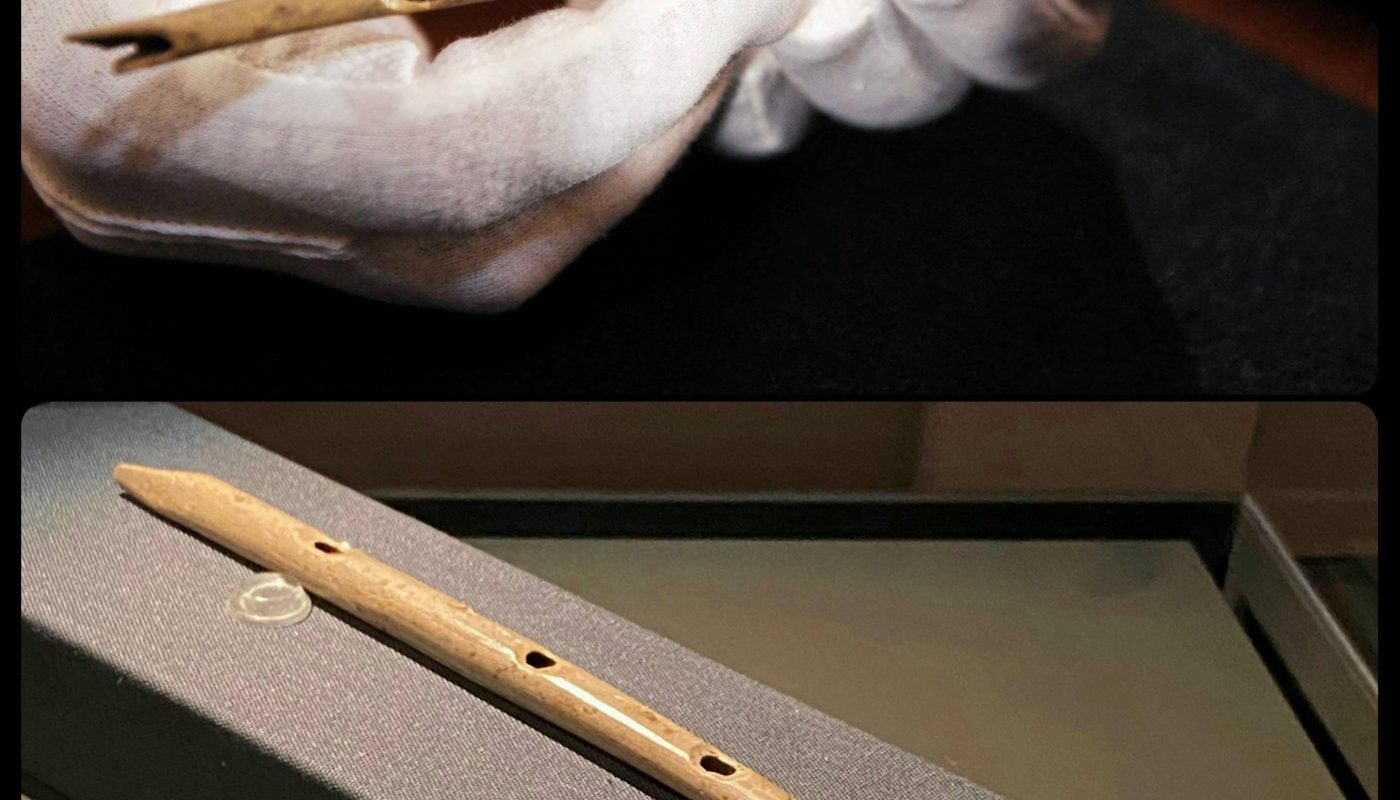
Prehistoric Flute from Germany, c.40,000 BCE: this is one of the oldest musical instruments ever discovered, and it was carved from the wing-bone of a griffon vulture
Title: Echoes of the Ice Age: The 40,000-Year-Old Prehistoric Flute from Germany
Meta Description: Discover the ancient griffon vulture bone flute from Germany, dating back 40,000 years. Explore its history, craftsmanship, and significance as one of humanity’s oldest musical instruments.
URL Suggestion: /prehistoric-flute-germany-40000-bce
Introduction
In the shadowy recesses of human history, music has always been a bridge connecting us to our ancestors. Among the most astonishing relics of this ancient artistry is the prehistoric flute from Germany, carved from the wing bone of a griffon vulture around 40,000 BCE. This extraordinary artifact, unearthed in the Swabian Jura region, offers a haunting melody from the Ice Age and stands as one of the oldest musical instruments ever discovered. In this article, we delve into the story of this flute, its craftsmanship, and its revolutionary implications for understanding early human culture.
The Discovery: A Window into Paleolithic Creativity
The flute was uncovered in 2008 at Hohle Fels Cave, a UNESCO World Heritage Site in southwestern Germany, by archaeologist Nicholas Conard and his team. Nestled among tools, carvings, and other artifacts of the Aurignacian culture (associated with early Homo sapiens in Europe), the flute dates to the Upper Paleolithic period, a time of explosive cultural innovation.
What makes this find exceptional is its age: over 40,000 years old. This places its creation just as modern humans were displacing Neanderthals in Europe, suggesting music may have played a role in social bonding, ritual, or even survival.
Craftsmanship: The Anatomy of an Ancient Instrument
Carved from the radius bone of a griffon vulture (Gyps fulvus), the flute measures approximately 21.8 cm (8.5 inches) in length and features five precisely drilled finger holes. A V-shaped notch at one end served as the mouthpiece, allowing the player to blow air across the opening to produce sound.
Key Features:
- Material: Griffon vulture bones were ideal for flute-making due to their hollow, lightweight structure.
- Precision: The finger holes show deliberate spacing and smoothing, indicating advanced tool use (likely stone blades) and acoustic understanding.
- Playability: Experimental reconstructions confirm the flute could produce a pentatonic scale, hinting at structured musical traditions.
For comparison, older disputed instruments, like Slovenia’s Divje Babe “Neanderthal flute” (60,000 BCE), lack the clear craftsmanship of this Swabian Jura artifact, solidifying its status as humanity’s oldest confirmed musical instrument.
Why Music Mattered in Prehistoric Societies
The existence of such a sophisticated instrument reshapes our understanding of Paleolithic life:
- Social Cohesion: Music likely strengthened community ties during hunts, rituals, or storytelling.
- Cognitive Development: Crafting the flute required abstract thinking, mathematics (hole spacing), and fine motor skills.
- Symbolic Behavior: Like the famed Venus of Hohle Fels (found nearby), the flute underscores the spiritual and artistic depth of early humans.
As Conard noted: “These finds reinforce the idea that the Aurignacian was a period of major innovation in art and technology.”
Debates and Legacy
While the flute’s age is uncontested, debates linger over whether Neanderthals also made music. The sophistication of the Hohle Fels flute, however, is uniquely tied to Homo sapiens, suggesting they may have used cultural advantages—like music—to thrive in harsh Ice Age environments.
Today, the original flute resides in the Museum of Prehistory in Blaubeuren, Germany, where it continues to inspire musicians, archaeologists, and visitors alike. Replicas have even been played to recreate the mesmerizing, earthy tones that echoed through caves millennia ago.
Conclusion: The Universal Language of Humanity
The 40,000-year-old griffon vulture flute is more than an artifact—it’s a testament to the timeless human impulse to create beauty and meaning. As one of the oldest instruments in the world, it reminds us that music has always been woven into the fabric of our species. Whether used for celebration, mourning, or communication, this ancient flute bridges the gap between modern listeners and the enigmatic minds of our Ice Age ancestors.
Keywords for SEO:
Prehistoric flute, oldest musical instrument, Paleolithic music, Hohle Fels flute, Ice Age artifacts, ancient flute, griffon vulture bone flute, Swabian Jura archaeology, Aurignacian culture, Nicholas Conard, Upper Paleolithic tools.
Explore Further:
- Visit the Museum of Prehistory in Blaubeuren, Germany.
- Listen to modern replicas of the flute on YouTube.
- Read Nicholas Conard’s research in Nature journal.
By understanding our musical roots, we uncover melodies that have shaped humanity for tens of thousands of years. 🎶