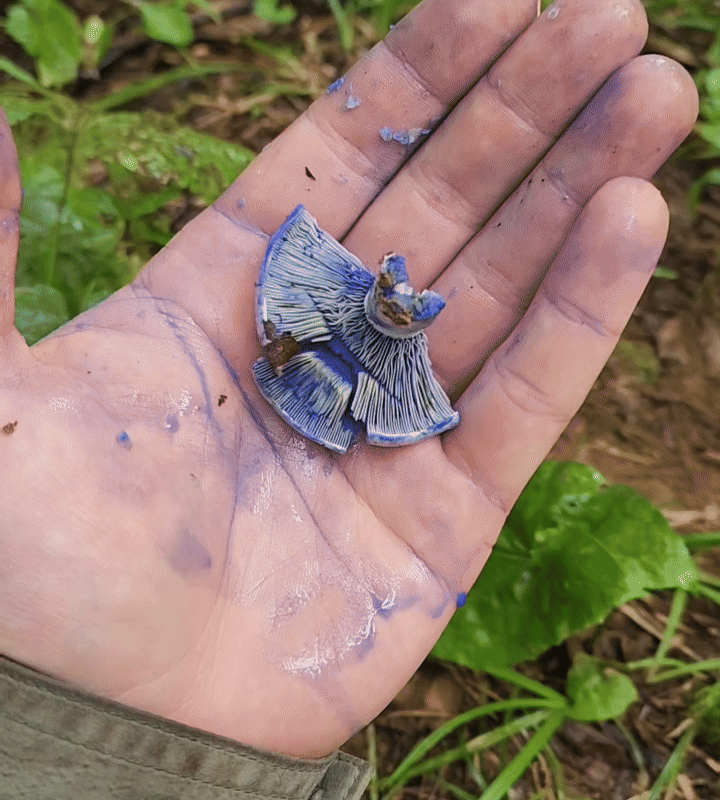
Indigo milk cap (Lactarius indigo)
Discover the Indigo Milk Cap (Lactarius indigo): Nature’s Vibrant Blue Mushroom
Introduction
The Indigo Milk Cap (Lactarius indigo) is one of the most visually striking mushrooms in the fungal kingdom. With its deep blue hue and unique “milky” sap, this mushroom captivates foragers, chefs, and nature enthusiasts alike. In this comprehensive guide, we’ll explore its identification, habitat, edibility, and ecological role—plus essential tips for safe foraging.
What is the Indigo Milk Cap?
Lactarius indigo, commonly known as the Indigo Milk Cap or Blue Milk Mushroom, is a member of the Lactarius genus, renowned for producing a milky latex when cut. Unlike its relatives, this species stands out thanks to its vivid blue pigment, derived from a natural organic compound called azulene.
Key Identification Features
- Cap & Color: 2–6 inches wide; convex when young, flattening with age. Bright indigo-blue when fresh, fading to grayish-blue with age or handling.
- Gills: Blue, crowded, and decurrent (running down the stem). They bruise greenish when damaged.
- Stem: 1–3 inches tall; same blue color as the cap, often hollow in mature specimens.
- “Milk”: When cut or broken, it oozes a striking lapis-lazuli-blue latex that slowly turns green upon exposure to air.
- Spore Print: Creamy white to pale yellow.
Where Does the Indigo Milk Cap Grow?
This mushroom forms symbiotic relationships with trees, particularly oaks and pines, in mixed hardwood forests.
Habitat & Distribution
- Range: Native to North America (eastern U.S., Mexico) and parts of East Asia (China, Korea).
- Season: Summer to fall, often appearing after rainfall.
- Growing Conditions: Thrives in well-drained, acidic soils beneath host trees.
Is the Indigo Milk Cap Edible?
Yes! Lactarius indigo is edible and non-toxic, though its culinary appeal varies.
Taste & Culinary Uses
- Flavor Profile: Mild, earthy, and slightly nutty—similar to portobello mushrooms but less intense.
- Texture: Firm when young; becomes brittle as it matures.
- Cooking Notes:
- The blue color fades to gray when cooked, losing its visual drama.
- Popular in sautéed dishes, soups, or pickled for added vibrancy.
- Pair with hearty ingredients like garlic, thyme, or wild rice.
Safety Tips
- Always confirm identification using multiple features (color, latex, habitat).
- Rare reports of stomach upset in sensitive individuals—try a small portion first.
- Avoid confusing it with toxic look-alikes (see below).
Foraging Tips & Ethical Harvesting
- Bring a Field Guide: Use mushroom ID apps or books to verify species.
- Check the Latex: Cutting the gills to observe blue milk is a foolproof test.
- Sustainable Harvesting:
- Collect only mature specimens; leave young mushrooms to sporulate.
- Use a knife to cut stems, preserving the mycelium belowground.
- Avoid Pollution: Steer clear of mushrooms near roads or industrial areas.
Look-Alikes to Avoid
While Lactarius indigo is distinctive, beginners might mistake it for:
- Lactarius chelidonium: Smaller, with yellowish milk and less vibrant color.
- Non-blue Lactarius species: Some bruise blue but lack indigo pigmentation.
- Toxic blue mushrooms: Rare, but always prioritize caution.
Rule of Thumb: If it doesn’t bleed blue, it’s not the indigo milk cap!
Cultivation: Can You Grow Indigo Milk Caps?
Unlike button mushrooms, Lactarius indigo is difficult to cultivate due to its mycorrhizal nature. It requires a symbiotic relationship with living tree roots. Foragers must rely on wild populations, underscoring the need for sustainable practices.
Ecological Role
Indigo Milk Caps play a vital role in forest ecosystems:
- Mycorrhizal Partnerships: They exchange nutrients with host trees, boosting forest health.
- Wildlife Food: Squirrels, deer, and insects feed on these mushrooms.
Final Thoughts
The Indigo Milk Cap is a marvel of nature—a dazzling blue fungus that’s as ecologically important as it is beautiful. Whether you’re a curious forager, a foodie seeking novelty, or a mushroom lover, Lactarius indigo offers a glimpse into the wonders of mycology.
Pro Tip: Join a local mycological society to learn safe foraging practices and discover more fungal gems!
SEO Keywords: Indigo Milk Cap, Lactarius indigo, blue mushroom, edible mushrooms, mushroom identification, foraging tips, wild mushrooms, mycorrhizal fungi, mushroom cultivation, blue latex mushroom.
By blending science, safety, and awe, this guide ensures you’re equipped to appreciate—and responsibly interact with—one of nature’s most extraordinary fungi. 🍄💙