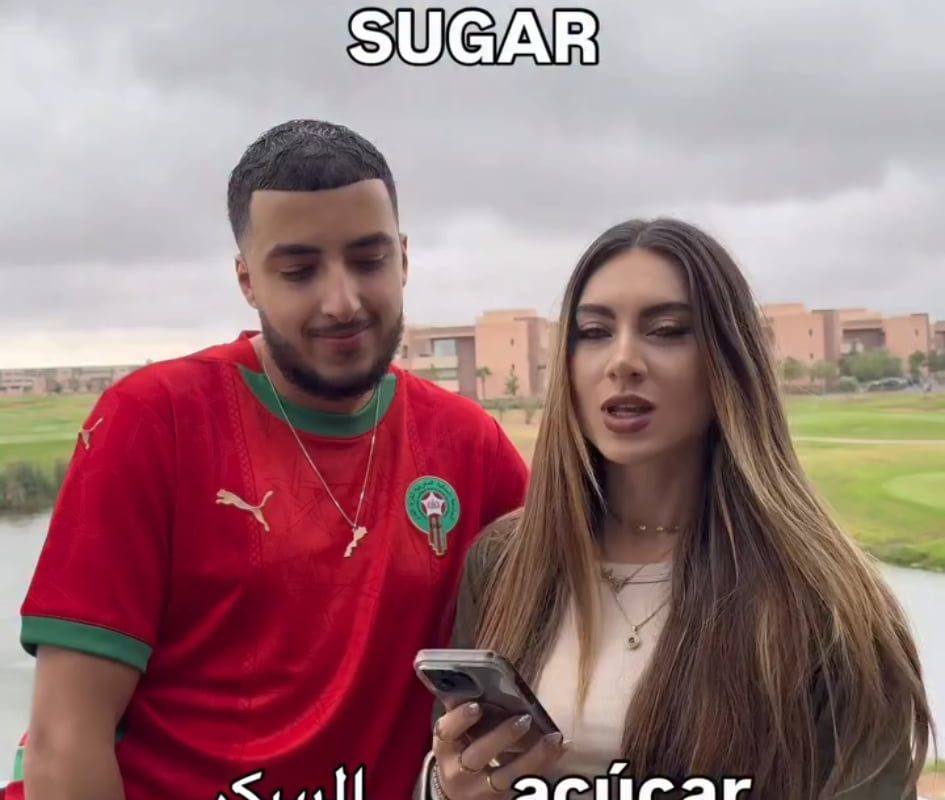
Due to the Arab conquests of the Iberian Peninsula, Portuguese and other languages of the region still share numerous words with Arabic.
Title: The Lasting Linguistic Legacy: How Arabic Shaped Portuguese and Iberian Languages Through Conquest
Introduction
The Arab conquests of the Iberian Peninsula, beginning in 711 CE, transformed the region’s cultural and linguistic landscape for centuries. Known as Al-Andalus under Islamic rule, this era left an indelible mark on the languages spoken there today—especially Portuguese, Spanish, and Catalan. From everyday vocabulary to architectural terms, Arabic influence remains embedded in the lexicon of the Iberian world. This article explores how centuries of Arab rule led to a linguistic fusion still audible in the words we use today.
The Historical Backdrop: Al-Andalus and the Arab Conquests
In the early 8th century, Moorish armies crossed from North Africa into the Iberian Peninsula, swiftly conquering much of modern-day Spain and Portugal. For over 700 years, Al-Andalus thrived as a hub of science, art, and commerce, fostering a unique blend of Arab, Berber, Christian, and Jewish cultures. Despite the Christian Reconquista gradually reclaiming territory by 1492, Arabic’s influence endured, seeping into the Romance languages developing in the region.
Key factors driving this linguistic exchange included:
- Trade and Administration: Arabic became the language of governance, science, and trade.
- Cultural Integration: Mozarabic communities (Christians under Muslim rule) acted as bridges between languages.
- Urban Centres: Cities like Córdoba, Seville, and Lisbon absorbed Arabic innovations in agriculture, architecture, and academia.
Tracing Arabic in Portuguese: Words You Never Knew Had Arab Roots
Portuguese owes roughly 800–1,000 words to Arabic, many beginning with the distinctive article “al-” (equivalent to “the”). These terms often relate to fields where Al-Andalus excelled:
Everyday Vocabulary
- Açúcar (sugar) ← as-sukkar (َالسُكَّر)
- Almofada (cushion) ← al-mikhadda (المخدة)
- Oxalá (hopefully) ← inshallah (إن شاء الله)
Agriculture and Food
- Arroz (rice) ← ar-ruzz (الرز)
- Azeite (olive oil) ← az-zait (الزيت)
- Laranja (orange) ← naranj (نارنج)
Science and Technology
- Algoritmo (algorithm) ← al-Khwarizmi (a Persian mathematician’s name Arabized)
- Álcool (alcohol) ← al-kuhl (الكحل)
- Zenith ← samt ar-ras (سمت الرأس; “direction of the head”)
Beyond Portuguese: Arabic’s Footprint in Spanish, Catalan, and More
Arabic’s influence extends across the Iberian linguistic family:
-
Spanish:
- Ojalá (I hope) ← inshallah
- Aldea (village) ← al-day’a (الضيعة)
- Acequia (irrigation channel) ← as-saqiya (الساقية)
-
Catalan:
- Sucre (sugar) ← as-sukkar
- Cotó (cotton) ← al-qutn (القطن)
-
Place Names:
- Algarve (Portugal) ← al-Gharb (الغرب; “the west”)
- Guadalquivir (Spanish river) ← al-wadi al-kabir (الوادي الكبير; “the great river”)
Why Did Arabic Words Survive the Reconquista?
Even after Christian kingdoms regained control, Arabic vocabulary persisted. Why?
- Practicality: Many terms described novel concepts (e.g., irrigation systems like acequias).
- Cultural Entrenchment: Words for food, tools, and architecture had no easy Romance substitutes.
- Mozarabic Mediation: Bilingual communities preserved Arabic terms in daily speech.
The Legacy of Al-Andalus in Modern Iberia
Today, Arabic-derived words are so deeply woven into Iberian languages that speakers rarely notice their origins. This linguistic inheritance highlights an era of intellectual flourishing, where libraries in Toledo and Córdoba preserved Greco-Roman knowledge and advanced fields like astronomy, medicine, and mathematics.
Modern connections endure, too:
- Culinarily: Dishes like arroz con leche (rice pudding) use Arabic-introduced ingredients.
- Architecturally: Words like azulejo (tile; from al-zulayj الزليج) adorn Portugal’s iconic blue-and-white designs.
Conclusion: A Timeless Linguistic Tapestry
The Arab conquests of Iberia did more than redraw political maps—they enriched the region’s languages with lasting beauty and utility. From the almazara (olive press) in Spanish villages to the oxalá sighed in Portuguese conversations, Arabic remains a living thread in Iberia’s cultural fabric. Recognizing these words is more than etymology; it’s a celebration of a shared history that shaped the West as we know it.
SEO Keywords: Arab conquests Iberian Peninsula, Arabic influence Portuguese, Al-Andalus languages, Arabic words in Spanish, Mozarabic language, Arabic etymology, linguistic heritage, Portuguese Arabic vocabulary, Algarve meaning, history of Al-Andalus.
By exploring these linguistic echoes, we gain a deeper appreciation for how conquest and coexistence can leave a legacy far more enduring than empires themselves.