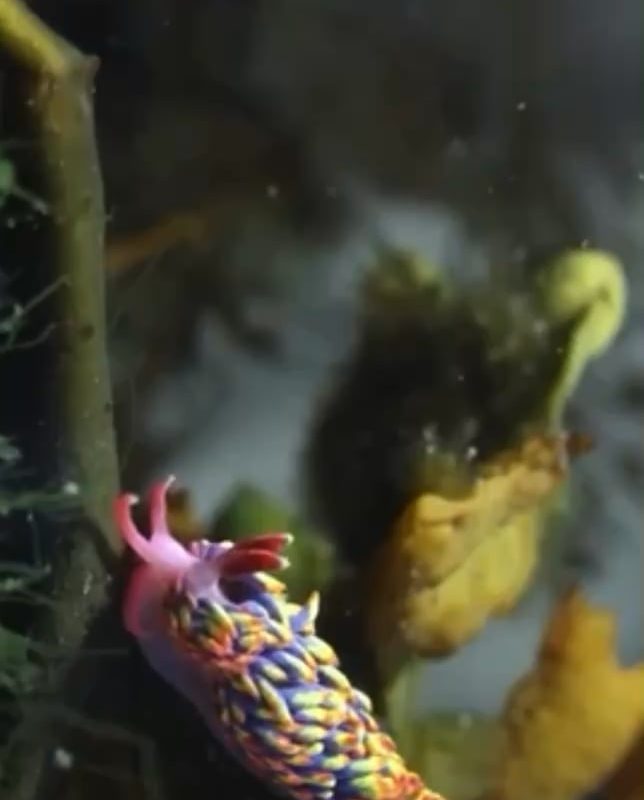
The rainbow sea slug (Babkina anadoni), which originates from the Mediterranean, has begun appearing in the UK’s south-west due to warmer water temperatures
Title: Rainbow Sea Slugs Reveal Rising Ocean Temperatures as Mediterranean Species Migrates to UK Waters
The UK’s southwestern coastline has become an unexpected stage for a vibrant marine phenomenon: the rainbow sea slug (Babakina anadoni), a jewel-toned creature typically found in the warmer waters of the Mediterranean Sea. Over the last two years, sightings of these tiny, dazzling nudibranchs have surged across Cornwall and the Isles of Scilly, marking a stark indicator of warming ocean temperatures and shifting marine ecosystems.
A Mediterranean Visitor in British Seas
The rainbow sea slug is a rare gastropod known for its vivid, otherworldly appearance. Measuring just 2–3 cm in length, its body shimmers with streaks of electric purple, neon orange, and vibrant pink—a natural defense mechanism to deter predators. Historically restricted to Spain’s Atlantic coast and the Mediterranean, this subtropical species was first spotted in UK waters in 2022 during a Seasearch diving survey off the Isles of Scilly. Since then, repeated sightings by citizen scientists and marine biologists suggest a growing population establishing itself in the southwest.
Why Are Rainbow Slugs Appearing in the UK?
Climate change is the primary driver behind this unusual migration. Ocean temperatures around the UK have risen significantly over the past decade, with the south-west experiencing some of the fastest-warming trends. According to the Marine Biological Association, summer sea-surface temperatures in Cornwall now regularly exceed 16°C (61°F), creating a viable habitat for species previously confined to warmer latitudes.
- Warmer Waters: Rising temperatures mimic the slug’s native Mediterranean environment.
- Altered Currents: Changes in ocean currents may transport larvae and eggs farther north.
- Food Source Availability: The slugs feed on local hydroids (small, coral-like organisms), which thrive in the UK’s warming shallows.
Citizen Science Spots the Trend
Cornwall Wildlife Trust and conservation group Seasearch have documented these sightings through volunteer diver surveys. Lucy McRobert of the Trust notes, “The rainbow sea slug is one of over 70 marine species newly recorded in Cornwall since 2000. Each discovery highlights how rapidly our seas are changing.”
Ecological Implications
While the rainbow slug’s arrival adds to the biodiversity of UK waters, scientists caution that this migration is a symptom of deeper ecological shifts. Warmer seas can disrupt native species, promote invasive competitors, and destabilize food chains. Dr. Paul Naylor, a marine biologist, warns, “These ‘tropical tourists’ are fascinating, but their presence confirms that our marine ecosystems are under stress.”
How to Spot a Rainbow Sea Slug
For divers and snorkelers eager to glimpse this rare species:
- Location: Focus on rocky reefs and sheltered coves in Cornwall, Devon, and the Isles of Scilly.
- Depth: They inhabit waters 5–15 meters deep, often near hydroid colonies.
- Season: Summer and early autumn offer the best chances.
Conservation and Climate Action
The rainbow sea slug serves as a living barometer of ocean health. Experts urge reduced carbon emissions and habitat protection to curb further disruptions. Meanwhile, reporting sightings to groups like Seasearch helps track these changes.
Conclusion: A Colorful Warning from the Deep
The arrival of Babakina anadoni in the UK is more than a curiosity—it’s evidence of a rapidly transforming ocean. While their electric beauty captivates divers, these tiny slugs underscore the urgent need to address climate change before irreversible damage strikes marine life worldwide.
Keywords for SEO: Rainbow sea slug UK, Babakina anadoni, Mediterranean marine species UK, climate change Cornwall, marine biodiversity southwest England, ocean warming sea slugs, rare nudibranch sightings, Seasearch citizen science, Cornwall Wildlife Trust marine life.
![[Christmas tree] Stacked my rare vintage German Wehrle clocks just to see their combined glow. I was stunned to see a 'radioactive' Christmas tree emerge in the dark](https://www.smartplusmedia.com/wp-content/uploads/2026/01/Christmas-tree-Stacked-my-rare-vintage-German-Wehrle-clocks-just-445x265.jpg)