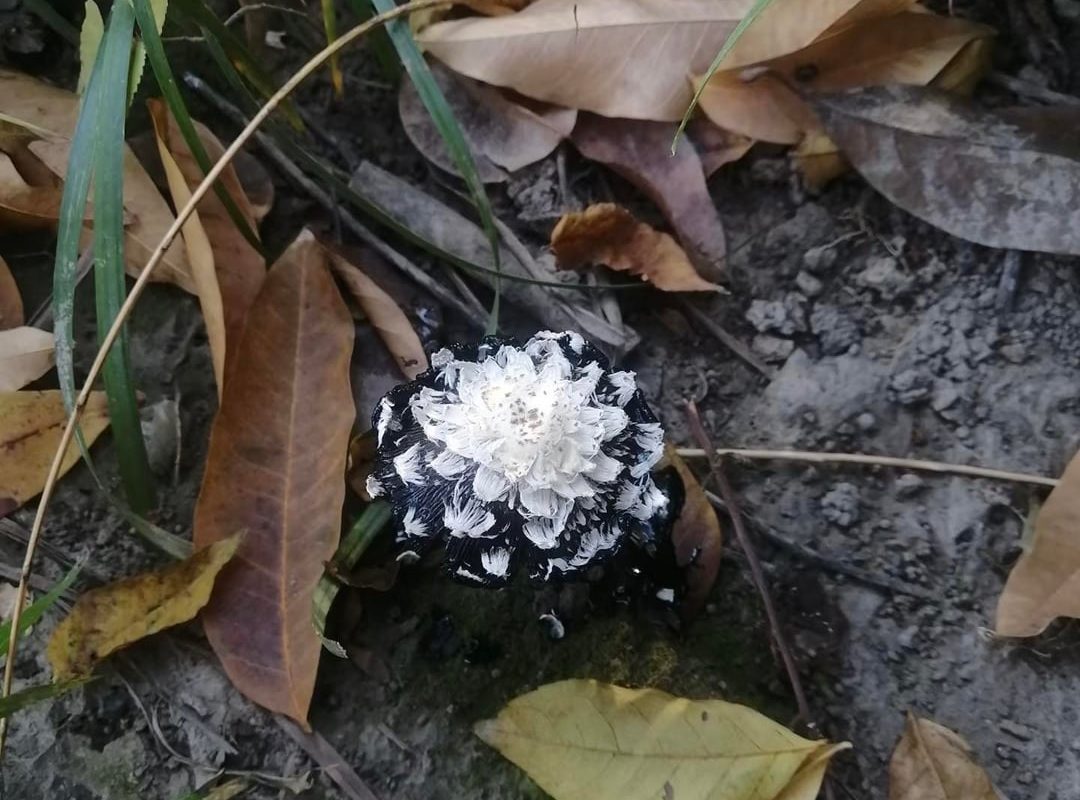
Found a “black-flowering mushroom.”
Title: The Mystery of the “Black-Flowering Mushroom”: Identification, Risks, and Fascinating Fungi Facts
Meta Description: Discover the truth behind the so-called “black-flowering mushroom,” including how to identify it, safety precautions, and the intriguing science of dark fungi.
Introduction: The Enigma of the “Black-Flowering Mushroom”
Imagine stumbling upon a mushroom in the wild with striking jet-black hues, resembling petals or flower-like structures. While fungi don’t technically “flower” like plants, some species develop dark, intricate shapes that can fool even seasoned nature lovers. This article unravels the mystery of the so-called “black-flowering mushroom”—exploring its identification, potential dangers, ecological role, and why these fungi inspire both awe and caution.
What Is a “Black-Flowering Mushroom”? Clarifying the Misconception
First, let’s debunk the term: mushrooms are fungi, not plants, so they don’t produce flowers. The phrase “black-flowering mushroom” likely refers to one of two things:
- A mushroom with black gills, spores, or cap resembling floral shapes.
- A fungus with inky, decaying caps that curl upward, creating a petal-like appearance.
Common candidates include:
- Coprinus species (Inky Caps): These mushrooms dissolve into a black, ink-like liquid as they mature—a process called deliquescence.
- Panaeolus cinctulus: A dark-spored mushroom with a bell-shaped cap.
- Galerina marginata (Deadly Galerina): A toxic brown-to-black mushroom found on wood.
- Black Morels (Morchella spp.): Rare, edible fungi with honeycomb-like black caps.
Always prioritize caution: Misidentifying mushrooms can be dangerous or deadly.
Where Are Black Fungi Found? Habitat Clues
Dark-colored mushrooms thrive in damp, nutrient-rich environments:
- Decaying wood (logs, stumps, or mulch).
- Grassy fields or compost piles.
- Forest floors with moist soil.
Inky Caps (Coprinus), for example, often appear in clusters on lawns or mulch after rain. Meanwhile, Deadly Galerina favors rotting conifer wood.
Are These Mushrooms Poisonous or Edible? Safety First!
Never eat a mushroom unless identified by an expert (e.g., a mycologist). Many dark fungi are lethal, including:
⚠️ Deadly Galerina (Galerina marginata): Contains amatoxins, the same poison found in Death Cap mushrooms. One cap can cause liver failure.
⚠️ Poison Pie (Hebeloma crustuliniforme): Brown-black gills and a foul odor; causes severe gastrointestinal distress.
Even “edible” Inky Caps (Coprinus comatus) have caveats:
- They’re safe to eat only before their caps liquefy.
- Consuming alcohol within 48 hours can trigger sickness due to coprine, a compound that disrupts alcohol metabolism.
Why Are Some Mushrooms Black? The Science of Pigmentation
Dark pigments in fungi (melanin or others) serve evolutionary purposes:
- UV Protection: Shields spores from sunlight.
- Moisture Retention: Dark colors absorb heat, aiding growth in cool climates.
- Camouflage: Helps fungi blend into shadowy habitats.
What to Do If You Find a Black or Dark Mushroom
- Don’t Touch or Taste It: Even handling toxic species can irritate skin.
- Photograph It: Capture the cap, gills, stem, and habitat. Use apps like iNaturalist for crowdsourced ID—but don’t rely on them for safety.
- Note Key Features:
- Gill color (black, brown, or white).
- Spore print (place the cap on paper overnight).
- Growth pattern (solo or clustered).
- Consult Experts: Reach out to local mycological societies or university labs.
Myth Busting: Do Black Mushrooms Have Medicinal Properties?
- Shiitake (Lentinula edodes): Dark brown/black variants are rich in antioxidants and immune-boosting compounds.
- Reishi (Ganoderma spp.): Some strains have black lacquered caps and are used in traditional medicine.
Still, always verify species and consult professionals before consumption.
Conclusion: Appreciate, Don’t Underestimate, Nature’s Dark Fungi
The “black-flowering mushroom” isn’t a flower—it’s a marvel of fungal adaptation. Whether you’re a curious forager or a nature enthusiast, remember that these mysterious organisms play vital roles in ecosystems as decomposers and symbionts. Stay safe, admire their beauty from afar, and let experts guide your explorations.
Bonus Tip: Join a mushroom foraging workshop or mycological society to deepen your knowledge safely!
SEO Keywords: black flowering mushroom, black mushroom identification, dark fungi, poisonous mushrooms, inky cap mushroom, Galerina marginata, identifying wild mushrooms, mushroom safety, fungi with black spores, Coprinus species.
Disclaimer: This article is for informational purposes only. Never consume wild mushrooms without verified identification by a qualified expert.