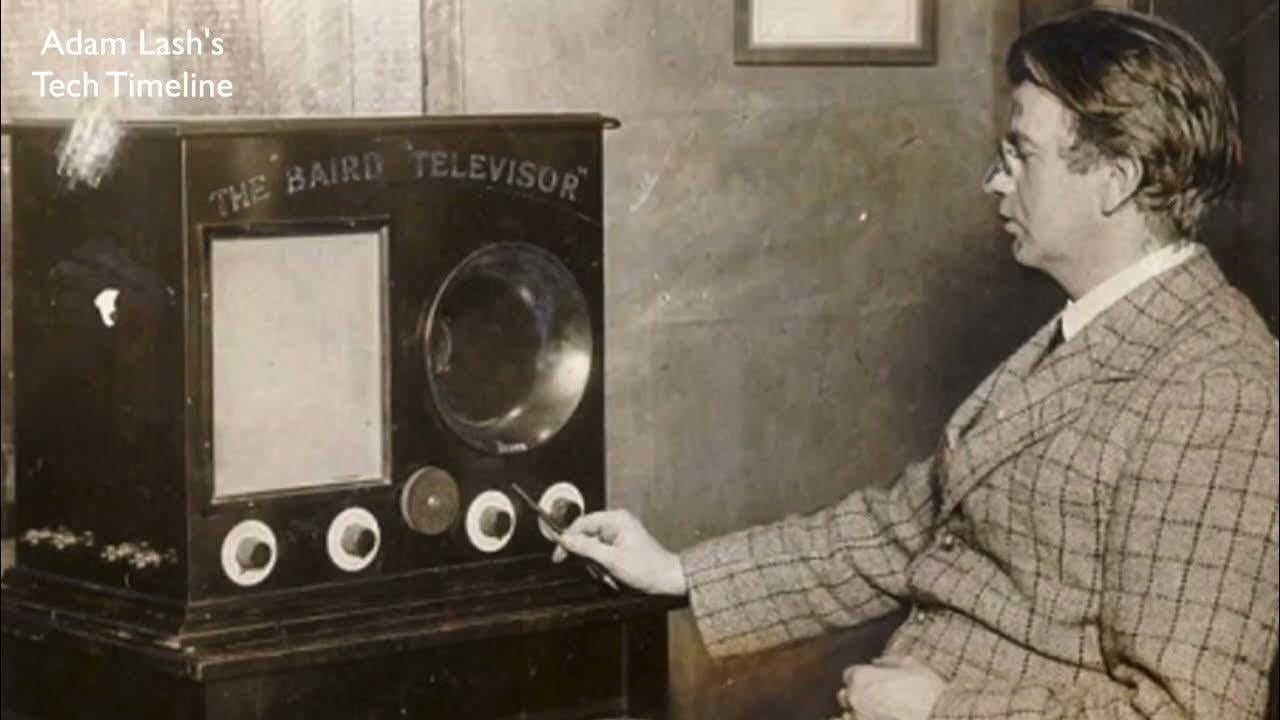
A Picture of the First TV in the World (1926)
Title: The Birth of Modern Entertainment: A Glimpse at the First Television in the World (1926)
Featured Image Suggestion: A black-and-white photograph of John Logie Baird standing beside his early mechanical television apparatus, showing the iconic spinning discs and rudimentary screen.
Introduction
Imagine a world without streaming services, high-definition screens, or instant access to global news and entertainment. In 1926, that world witnessed a revolutionary invention that would change human communication forever: the first working television. Pioneered by Scottish inventor John Logie Baird, this mechanical marvel marked the dawn of the television era, setting the stage for today’s multimedia landscape. In this article, we’ll explore the story behind the first television, its groundbreaking technology, and its enduring legacy.
Who Invented the First Television?
The credit for creating the world’s first functional television goes to John Logie Baird, an ambitious Scottish engineer and inventor. Driven by a fascination with transmitting moving images, Baird spent years experimenting in his modest laboratory in London’s Soho district. Despite limited funding and skepticism from peers, he achieved what seemed impossible: broadcasting live, moving images using simple, hand-built components.
The Historic Moment: January 26, 1926
On January 26, 1926, Baird made history by demonstrating his “televisor” to members of the Royal Institution and a journalist from The Times. The demonstration took place in his attic room at 22 Frith Street, London. Using a mechanical system involving spinning discs, neon lights, and a mere 30 lines of resolution (palely compared to today’s 4K standards), Baird successfully transmitted a live image of a human face.
The subject? His business partner, Oliver Hutchinson, whose flickering, ghostly visage became the first televised image in history. While primitive, this breakthrough proved that “seeing by wireless” was no longer science fiction.
How Did the First TV Work?
Baird’s television relied on mechanical scanning, a far cry from today’s electronic systems. Here’s a simplified breakdown of its design:
- Spinning Discs (Nipkow Disc): A perforated rotating disc scanned an object line by line, breaking light into tiny points.
- Photoelectric Cells: These cells converted light into electrical signals, akin to early radio waves.
- Neon Lamp Receiver: At the receiver end, a neon lamp flickered in sync with the signals, recreating the image on a small screen.
The result? A postage stamp-sized, orange-hued image that required viewers to squint through a magnifying lens. Yet, it was a triumph of ingenuity.
The First Images: Faces, Silhouettes, and a Ventriloquist’s Dummy
Before Hutchinson’s famous broadcast, Baird tested his device with simpler subjects. In 1925, he televised the face of “Stooky Bill”, a ventriloquist dummy with exaggerated features that helped the rudimentary system capture contrast. Later, he transmitted moving silhouettes of colleagues in adjacent rooms. These experiments laid the groundwork for the 1926 human-face broadcast, which stunned observers with its “realism.”
Why Was Baird’s Television Revolutionary?
Baird’s invention wasn’t the first attempt at image transmission, but it was the first practical, publicly demonstrated system capable of broadcasting live moving images. His work:
- Popularized the concept of television, inspiring global interest in broadcast technology.
- Sparked commercial ventures: By 1928, Baird’s company aired the first transatlantic TV signal and launched a TV station (Baird Television Development Company).
- Paved the way for electronic TV: Though mechanical TV was soon replaced by electronic systems (developed by Philo Farnsworth and Vladimir Zworykin), Baird proved the concept’s viability.
Legacy of the 1926 Television
While Baird’s mechanical television was obsolete by the 1930s, his tenacity cemented him as a pioneer. Modern TV owes much to his foundational work:
- Broadcast Standards: Baird’s early broadcasts influenced modern frame rates and signal transmission.
- Cultural Impact: Within decades, TV became a household staple, reshaping news, entertainment, and society.
- Innovation Mindset: Baird’s story exemplifies how humble beginnings can spark global transformation.
Controversies and Competitors
Baird wasn’t alone in the race to invent TV. American inventor Philo Farnsworth and Russian engineer Vladimir Zworykin developed competing electronic systems in the late 1920s. While Baird’s mechanical approach lost out to their faster, sharper electronic tech, history remembers him as the first to turn the dream of TV into reality.
Where Is the First TV Today?
The original 1926 televisor no longer exists, but replicas and Baird’s later models are preserved in museums:
- London’s Science Museum
- National Museum of Scotland (Edinburgh)
- The Media Museum (Bradford, UK)
Conclusion: A Pixelated Start to a Digital World
John Logie Baird’s 1926 television — crude, flickering, and tiny — was the “big bang” of modern visual communication. While today’s smart TVs boast billions of colors and internet connectivity, they owe their existence to a Scot tinkering in an attic with spinning discs and sheer determination. The next time you binge-watch a show, take a moment to marvel at the 1926 invention that made it all possible.
Keywords for SEO:
First television in the world, John Logie Baird televisor, 1926 TV invention, mechanical television history, oldest TV image, who invented TV, Stooky Bill, television evolution, broadcast history, Father of Television.
Meta Description:
Discover the story behind the world’s first television, invented by John Logie Baird in 1926. Learn how a mechanical marvel with spinning discs revolutionized communication forever.
Shareable Fact:
The first TV image in 1926 had just 30 lines of resolution — less than 0.0005% of a modern 4K screen!
By blending historical insight with technical detail, this article aims to rank for key searches around the invention of television while captivating readers with a pivotal moment in human innovation.