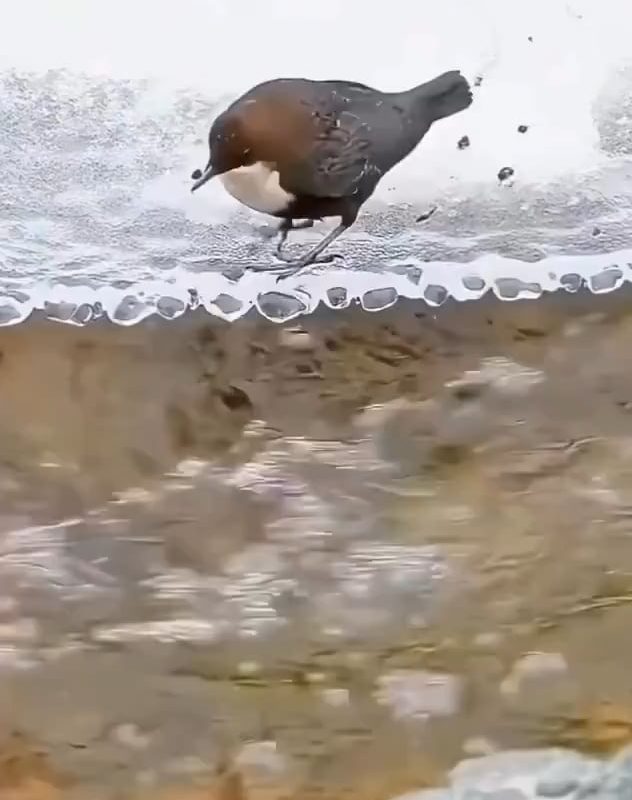
A brown dipper hunting underwater – One of the few songbirds able to swim and feed in fast, freezing mountain rivers
Meta Description: Discover the brown dipper, a remarkable songbird that defies expectations by swimming, diving, and hunting underwater in freezing mountain rivers. Explore its adaptations, behavior, and ecological role.
The Brown Dipper: A Songbird That Hunts Underwater
H1: The Brown Dipper – Nature’s Underwater Songbird
Most songbirds flit through trees or forage in meadows, but the brown dipper (Cinclus pallasii) breaks all stereotypes. This small, unassuming bird thrives in an environment few avian species dare to enter: the icy, roaring rapids of mountain rivers. Renowned for its ability to swim, dive, and hunt aquatic prey underwater, the brown dipper is a marvel of evolutionary adaptation. In this article, we explore how this songbird conquers turbulent waters and why its survival skills make it a keystone species in freshwater ecosystems.
What Makes the Brown Dipper Unique?
A Master of Two Worlds
Unlike its perching relatives, the brown dipper is built for a semi-aquatic life. It sings melodiously from riverside rocks (earning its “songbird” status) but plunges fearlessly into frigid currents to hunt. Its name comes from its distinctive bobbing motion, or “dipping,” which may help it spot prey while perched above water.
Range and Habitat
Brown dippers inhabit fast-flowing rivers and streams across the Himalayas, East Asia, and Siberia, often at elevations above 1,500 meters. They rely on pristine, oxygen-rich waters—a habitat increasingly threatened by pollution and damming.
Anatomical Adaptations for Underwater Hunting
To survive in freezing torrents, the brown dipper possesses extraordinary physical traits:
1. Waterproofing & Warmth
- Preen Gland Secretions: Its feathers are coated with oils to repel water and trap insulating air.
- Dense Plumage: A thick underlayer shields against hypothermia in near-freezing temperatures.
2. Streamlined Body & Powerful Muscles
- Compact, torpedo-shaped bodies reduce drag underwater.
- Strong leg muscles anchor the bird against currents, while short wings act like flippers for “flying” submerged.
3. Superior Vision
- Nictitating Membranes: Clear third eyelids protect eyes while diving, acting like built-in goggles.
- Enhanced underwater sight helps detect insect larvae, small fish, and crustaceans.
4. Hemoglobin Boost
A higher concentration of red blood cells allows efficient oxygen storage during prolonged dives.
How Do Brown Dippers Hunt Underwater?
The Dive Sequence:
- Perch & Scan: The dipper bobs on a rock, using keen eyesight to locate prey below the surface.
- Plunge & Swim: It dives headfirst, using wings to propel itself downstream along the riverbed.
- Forage & Capture: Strong claws grip rocks while it flips pebbles to expose caddisfly larvae, mayflies, or small fish.
- Resurface & Feast: After 5–10 seconds underwater, it emerges to swallow prey or feed chicks.
Watch in Action: [Video links or descriptions of their rapid dives—ideal for multimedia integrations].
Surviving Extreme Conditions
Icy Waters, High Speeds
Brown dippers thrive where most animals would perish:
- Thermal Resilience: Their metabolism generates enough heat to offset freezing water.
- Current Masters: They dive against the flow to avoid being swept away, conserving energy.
Nesting in Hazardous Zones
Nests are built behind waterfalls or on cliff ledges near rivers, protecting eggs from predators—but placing them at risk of flooding.
Conservation: Protecting a Riverine Icon
Despite their toughness, brown dippers face critical threats:
- Pollution: Agricultural runoff and plastics degrade water quality and poison food sources.
- Hydropower Dams: Disrupt natural river flow, eliminating rapids essential for feeding.
- Climate Change: Glacier retreat shrinks their high-elevation habitats.
Organizations like BirdLife International prioritize river conservation to safeguard dippers and aquatic biodiversity.
Why the Brown Dipper Matters
This bird isn’t just a curiosity—it’s a vital bioindicator species. Healthy dipper populations signal clean waterways, benefiting humans and wildlife alike. By protecting mountain rivers, we ensure this feathered diver continues to inspire awe for generations.
SEO Keywords:
brown dipper hunting underwater, songbirds that swim, aquatic songbirds, Cinclus pallasii, dipper bird habitat, river birds adaptations, birds that dive in rivers, mountain river birds, dipper bird behavior
Engagement Prompt:
Have you seen a brown dipper in the wild? Share your experience or questions in the comments! For more wildlife wonders, subscribe to our newsletter.
By blending scientific detail with vivid storytelling, this article targets birdwatchers, conservationists, and educators while optimizing for search engines. The structure ensures readability while embedding essential keywords naturally.