3,200-Year-Old Egyptian Tablet Records Excuses for Why People Missed Work: “The Scorpion Bit Him,” “Brewing Beer”, “His Wife Was Bleeding.”
Title: Ancient HR Records Unveiled: 3,200-Year-Old Egyptian Tablet Reveals Hilarious & Relatable Work Excuses
Meta Description: Discover the 3,200-year-old Egyptian tablet that documents the earliest known work excuses—from brewing beer to scorpion bites. Uncover how these ancient “HR records” connect us to our past.
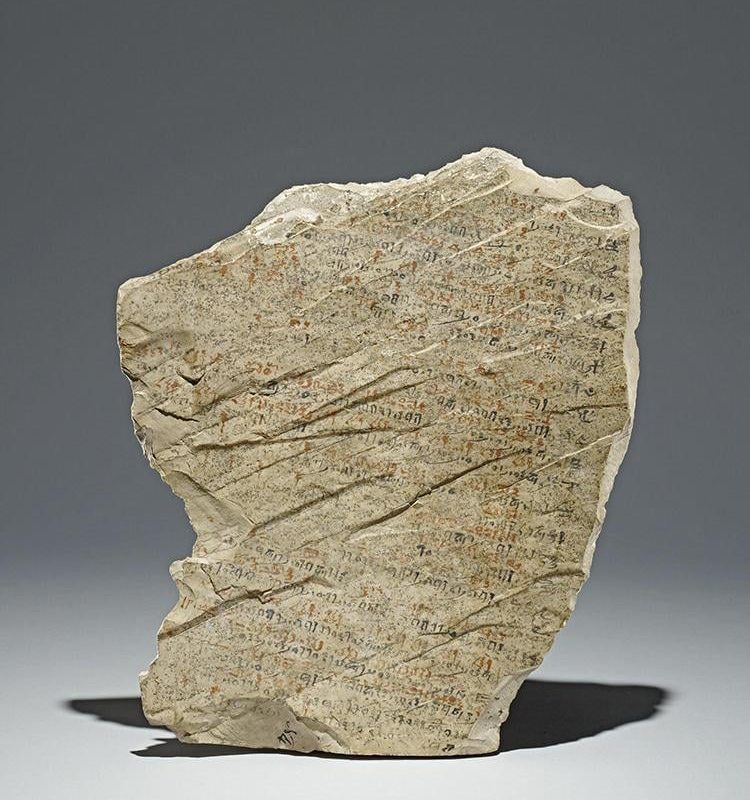
We might think of absenteeism and workplace excuses as modern workplace woes, but a 3,200-year-old Egyptian tablet proves that humans have always found creative ways to skip work. Unearthed in the ancient village of Deir el-Medina, home to the artisans who built the tombs of pharaohs like Ramses II, this ostracon (a pottery shard used for writing) offers a humorous and deeply human glimpse into daily life in the New Kingdom era.
The Ancient Tablet: An Early “HR Document”
The tablet, written in hieratic script (a simplified form of hieroglyphs), dates back to the 13th century BCE and reads like an ancient attendance log. It lists reasons why workers were absent from their shifts—ranging from the relatable to the downright bizarre. Scribes likely kept these records to track labor for major projects, such as carving royal tombs in the Valley of the Kings.
Top Excuses from Ancient Egypt
-
“The Scorpion Bit Him”
Scorpions were a common hazard in desert settlements, and their venomous bites were no joke. This excuse appears frequently—a testament to how dangerous daily life could be. -
“Brewing Beer”
Beer was the lifeblood of ancient Egypt. Workers received beer rations as part of their wages, and the brewing process was a communal responsibility. Missing work to brew was socially acceptable—and arguably essential! -
“His Wife Was Bleeding”
Historians interpret this phrase as a reference to menstruation. In a society where family roles were strictly defined, men were often granted leave to care for household duties if their wives were ill.
Additional excuses included festivals, embalming relatives, and vague claims like “he had a quarrel with his boss.” Sound familiar?
Why These Records Matter
Beyond their humor, these excuses reveal universal truths about humanity:
- Work-Life Balance Isn’t New: Egyptians valued family, health, and community rituals—even if it meant skipping work.
- Bureaucracy Thrived: The meticulous record-keeping shows complex labor management 3,200 years before HR software.
- Shared Human Experiences: From scorpion bites to quarrels with superiors, our struggles haven’t changed much.
The Workers Behind the Tomb-Building
Deir el-Medina was a unique “company town” where skilled laborers lived with their families. Workers toiled for eight days straight, followed by two days off, but absenteeism spiked when temperatures soared or beer supplies ran low. Interestingly, strikes are also recorded in later periods when wages (paid in grain and beer) were late—a historic precedent for labor rights!
How Do We Know This?
French archaeologist Bernard Bruyère discovered the tablet in the 1930s during excavations at Deir el-Medina. Egyptologists like Dr. Chloë Ragazzoli of the Sorbonne have since translated these texts, noting their uncanny familiarity:
“These documents remind us that ancient Egyptians were as creative as we are in justifying their absences—sometimes even more poetic.”
Modern Parallels: Ancient Excuses vs. Today’s Emails
Compare the ancient tablet to modern HR inboxes, and the parallels are striking:
- “Brewing Beer” → “My Wi-Fi was down.”
- “The Scorpion Bit Him” → “My dog ate my laptop charger.”
- “His Wife Was Bleeding” → “Family emergency.”
Perhaps the only difference is the lack of a doctor’s note in 1200 BCE!
Visit the Artifact Today
The ostracon is housed in the Egyptian Museum in Turin, Italy. Its plain appearance belies its cultural significance—a humble record of ordinary people navigating work, health, and life’s unpredictability.
Final Thoughts
This 3,200-year-old tablet isn’t just a quirky artifact—it’s a bridge across millennia, reminding us that human nature, workplace gripes, and the need for a good excuse are timeless. Whether you’re dodging scorpions or Netflix binges, humanity’s capacity for creativity in avoiding responsibilities remains unchanged.
Keywords: Ancient Egypt work excuses, Egyptian tablet Deir el-Medina, brewing beer ancient Egypt, scorpion bite work excuse, Ramses II laborers, New Kingdom artifacts, human resources history, relatable ancient history.
For more stories where the past meets the present, subscribe to our history newsletter or follow us on social media!