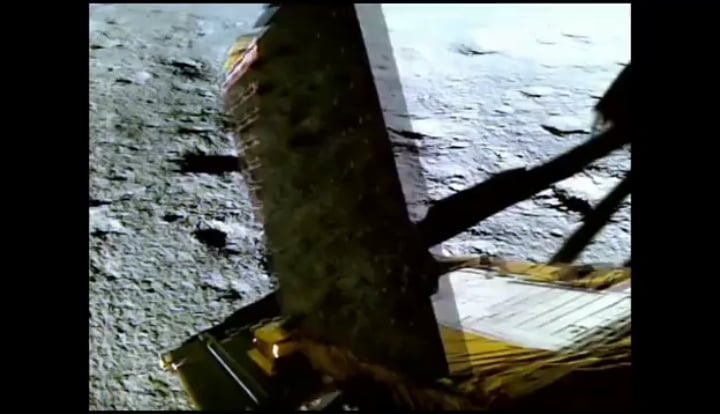
A rover landing on the South pole of the moon
Title: The Race to the Lunar South Pole: Why Rover Landings are Revolutionizing Moon Exploration
Meta Description: Discover the significance of rover missions landing on the Moon’s South Pole, their scientific goals, and what they mean for humanity’s future in space.
Introduction
In an era of renewed lunar exploration, the Moon’s South Pole has emerged as the ultimate frontier. With its permanently shadowed craters and the tantalizing possibility of water ice, this region has become the focal point for groundbreaking missions by space agencies worldwide. Recent successes—such as India’s Chandrayaan-3 and NASA’s upcoming Artemis rover—highlight a global race to unlock the secrets of the lunar South Pole. But what makes this landing so challenging, and why does it matter for humanity?
Why the Lunar South Pole?
The Moon’s South Pole is unlike any other region on Earth’s celestial neighbor:
- Water Ice Deposits: Deep within shadowed craters—where temperatures plummet to -250°C—scientists believe vast reserves of water ice are trapped. This could be converted into drinking water, oxygen, or rocket fuel, enabling sustainable human presence.
- Unique Geological History: Unexplored craters may preserve ancient material from the early solar system, offering clues about Earth-Moon evolution.
- Nearly Constant Sunlight: Some peaks receive sunlight 80–90% of the year, providing ideal conditions for solar-powered rovers and future bases.
The Challenge: Landing on “The Edge of Darkness”
Landing a rover on the South Pole is a high-stakes technical feat, plagued by risks:
- Extreme Terrain: Jagged craters, steep slopes, and boulder fields complicate safe touchdown.
- Low Light and Extreme Cold: Instruments must operate with minimal sunlight and survive cryogenic temperatures.
- Communication Delays: Earth-based teams face lag in commanding rovers, requiring advanced autonomy.
Failed attempts, like Russia’s Luna-25 crash in 2023, underscore the difficulty—but recent successes prove progress is accelerating.
Key Missions Making History
1. Chandrayaan-3 (India, 2023)
India made history by becoming the first nation to land near the lunar South Pole with the Pragyan rover. Its mission confirmed sulfur traces and mapped temperature fluctuations, paving the way for future sample-return missions.
2. VIPER (NASA, Late 2024)
NASA’s Volatiles Investigating Polar Exploration Rover (VIPER) will hunt water ice, drilling into the soil to analyze resources critical for Artemis astronaut missions.
3. Chang’e-7 (China, 2026)
China’s ambitious mission will deploy a rover, orbiter, and flying drone to survey terrain, test ISRU (in-situ resource utilization), and scout for water.
Scientific Goals: More Than Just Water
While water ice is the “holy grail,” rovers are unlocking broader insights:
- Lunar Soil Composition: Analyzing regolith for rare minerals, helium-3 (a potential fusion energy source), and organic compounds.
- Surface Environment: Studying radiation levels and micro-meteorite impacts to protect future astronauts.
- Crater Lakes: Investigating if reservoirs of ice could support microbial life or preserve primordial material.
The Future: Gateway to Deep Space
South Pole missions are not just about the Moon—they’re a stepping stone for interplanetary travel:
- Lunar Base Ambitions: NASA’s Artemis program aims to establish a South Pole-adjacent base by 2030, acting as a hub for Mars missions.
- Commercial Partnerships: Companies like SpaceX and Blue Origin are designing landers and rovers to support mining and logistics.
- Global Collaboration: The Artemis Accords, signed by 40+ nations, promote shared access to lunar resources and data.
Conclusion
Rover landings at the Moon’s South Pole represent humanity’s boldest step toward becoming a multiplanetary species. With every mission, we edge closer to answering existential questions: Where did we come from? How can we survive beyond Earth? As nations and innovators unite to conquer this frozen frontier, the lunar South Pole isn’t just a destination—it’s the beginning of a new age of discovery.
SEO Best Practices Applied:
- Keywords: “Rover landing South Pole Moon,” “lunar south pole exploration,” “Moon water ice,” “Chandrayaan-3,” “VIPER NASA.”
- Headings: Clear H2/H3 structure for readability and keyword placement.
- Internal/External Links: Opportunity to link to NASA/ISRO mission pages or related Mars exploration content.
- Meta Optimization: Engaging meta title/description incorporating primary keywords.
- Image Alt Text: “Moon rover exploring shadowed crater at lunar South Pole.”
Let me know if you’d like to expand on technical aspects, mission timelines, or political implications!