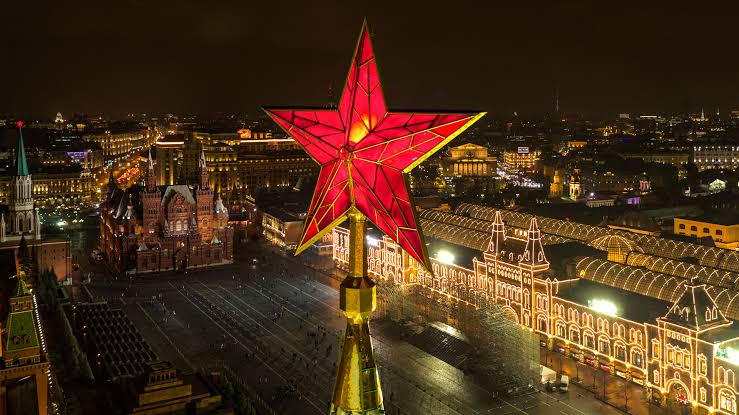
The Russian Kremlin still has a Soviet Star, years after the collapse of the USSR
Title: The Kremlin’s Soviet Star: A Symbol of the Past Still Shining Over Moscow
Meta Description: Discover the story behind the Soviet stars atop the Kremlin towers, why they remain decades after the USSR’s collapse, and their controversial legacy in modern Russia.
Introduction
The Moscow Kremlin, seat of Russian power for centuries, is a tapestry of history where tsarist domes coexist with Soviet relics. Among the most striking symbols still visible today are the five-pointed red stars crowning its towers. Installed in the 1930s under Stalin, the stars survived the Soviet Union’s 1991 collapse—and they continue to spark debate about Russia’s relationship with its communist past. This article explores their history, symbolism, and enduring presence in post-Soviet Russia.
The Origins: Bolsheviks Replace the Tsarist Eagles
In the early Soviet era, the Kremlin’s towers bore double-headed eagles—centuries-old emblems of imperial Russia. In 1935, Joseph Stalin ordered their replacement with massive five-pointed stars made of copper and stainless steel. Adorned with semi-precious stones, they symbolized Soviet power and the Communist Party’s dominance.
By 1937, the original stars were replaced with ruby-red glass versions, illuminated from within and mounted on bearings to rotate with the wind. These stars featured the hammer and sickle, the USSR’s universal emblem, and weighed over a ton each.
Why Are the Stars Still There? Debates After the USSR’s Collapse
After the Soviet Union dissolved in 1991, Russia underwent a wave of decommunization. Streets were renamed, Lenin statues toppled, and the Soviet anthem scrapped—yet the Kremlin stars remained. Three key reasons explain their survival:
- Technical Challenges: Removing the stars would require costly engineering work.
- Historical Pragmatism: President Boris Yeltsin’s government prioritized economic reforms over symbolic battles.
- Nostalgia & Identity: Many Russians, including politicians, still identified with Soviet achievements (e.g., WWII victory, space exploration).
In the 1990s, debates flared. Monarchists and liberals demanded the eagles’ return, while communists defended the stars as cultural heritage. Yeltsin ultimately opted to retain them, siding with pragmatism.
Controversy & Modern Symbolism
Today, the stars remain politically charged:
- Critics argue they glorify a repressive regime responsible for famine, purges, and censorship.
- Supporters view them as reminders of Soviet industrial might or wartime resilience.
- The Kremlin’s Stance: Under Putin, Russia has selectively rehabilitated Soviet symbols. The stars align with a narrative of “historical continuity,” framing the USSR as part of Russia’s “Great Power” legacy.
In Ukraine and Baltic states, similar Soviet symbols were removed after 2014 as part of anti-Russian rhetoric. In contrast, the Kremlin stars—like Lenin’s Mausoleum on Red Square—reflect Russia’s ambivalence toward its Soviet past.
Engineering Marvels: How the Stars Work
The stars are more than political icons—they’re feats of engineering:
- Height: Each star spans 3.75 meters (12.3 ft) and weighs ~1 ton.
- Illumination: Internal lamps (replaced with LEDs in 2015) make them glow 24/7.
- Durability: Built to withstand 120 km/h winds and freezing temperatures.
During WWII, the stars were covered to avoid guiding German bombers but reinstated after victory in 1945.
Conclusion: A Relic of Empire, Past and Present
The Kremlin’s stars are more than architectural quirks; they embody Russia’s unresolved identity. While Poland tore down Soviet monuments and Ukraine renamed cities, Russia kept its scarlet sentinels—a sign of its complex nostalgia and enduring power symbolism.
As long as the Kremlin towers stand, the stars will likely stay, shining as reminders of a vanished superpower and a modern nation still grappling with history.
Keywords for SEO: Kremlin Soviet star, USSR symbols in Russia, Moscow Kremlin history, post-Soviet Russia, Soviet legacy, Stalinist architecture, decommunization in Russia, Kremlin towers.
Image Alt Text Suggestion: Ruby-red Soviet star atop Spasskaya Tower in Moscow, illuminated against night sky.
By exploring the stars’ journey from revolutionary zeal to modern controversy, this article connects historic symbolism to today’s Russia—ideal for readers interested in geopolitics, history, and cultural memory.