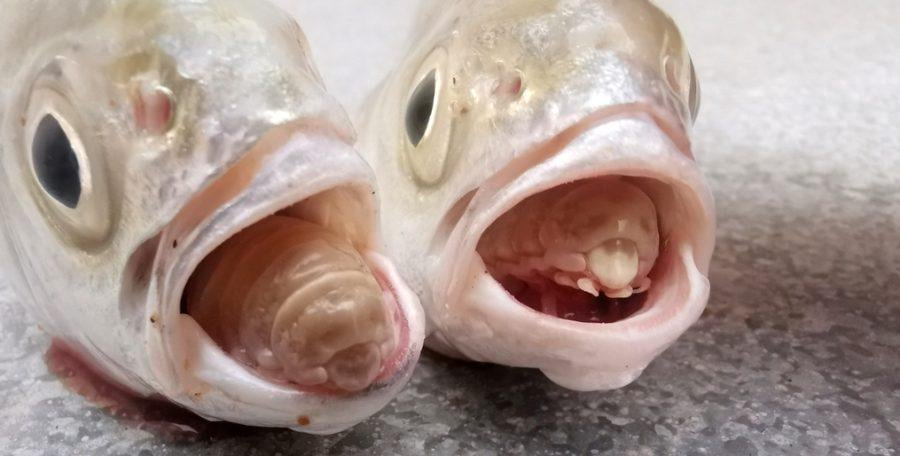
A small parasite swims into a fish, destroys its tongue, then attaches itself and lives as the new tongue while the fish keeps eating like nothing happened.
The Tongue-Eating Parasite: Nature’s Most Bizarre Host Takeover
When it comes to gruesome parasite behavior, Cymothoa exigua—nicknamed the “tongue-eating louse”—takes the crown. This coffee-bean-sized isopod invades fish, devours their tongues, and then replaces the organ, living out its life as a functional prosthetic while the unsuspecting host continues its daily routine. It sounds like science fiction, but this real-life horror story unfolds beneath the ocean’s surface every day.
What Is the Tongue-Eating Parasite?
Cymothoa exigua is a parasitic crustacean belonging to the isopod family (related to pill bugs and woodlice). Found in warm coastal waters, including the Gulf of California and the Atlantic Ocean, this parasite targets fish like snappers, groupers, and grunts. While other parasites drain nutrients or cause disease, Cymothoa exigua goes a step further: it commits organ identity theft.
How the Tongue Heist Unfolds: A Step-by-Step Parasitic Invasion
-
Infiltration
Juvenile Cymothoa exigua enters the fish through its gills, often when the host is young. -
Tongue Destruction
The parasite latches onto the fish’s tongue, severing blood vessels with its claws. It feeds on the tongue’s tissue until the organ withers away. -
The Ultimate Replacement
The parasite attaches itself to the muscles of the tongue stub, becoming a permanent, working replacement. The fish can still eat and swallow—albeit with a hitchhiker in its mouth.
Fishy Survival: Does the Host Suffer?
Surprisingly, the fish survives the ordeal. The parasite’s body mimics the shape and function of the original tongue, allowing the host to chew, crush prey, and eat normally. While the fish may experience minor nutritional competition, studies show infected fish often live as long as uninfected counterparts—just with a very unwelcome roommate.
Key Adaptation: The parasite doesn’t kill its host. A dead fish means a dead tongue, so Cymothoa exigua strikes a balance between exploitation and coexistence.
Global Distribution: Where Does This Nightmare Happen?
- Primary Regions: Coastal waters of California, Mexico, the Caribbean, and parts of the Atlantic.
- Habitat: Shallow, warm marine environments where host fish thrive.
- Human Impact: While harmless to people, infections can reduce the market value of commercial fish catches—especially if the parasite is spotted in a fish’s mouth at a market.
Why This Parasite Is Evolutionary Genius
- Unique Organ Replacement: It’s the only known parasite to fully replace a host’s organ and functionally integrate itself.
- Gender-Specific Roles: Only female Cymothoa become “tongues.” Males stay smaller, live in the gills, and fertilize females.
- Efficient Survival: By avoiding fatal damage, the parasite ensures a long-term food source and breeding ground.
Frequently Asked Questions (FAQ)
Q: Can the tongue-eating parasite harm humans?
A: No. While unsettling, Cymothoa exigua doesn’t infect humans. It’s specific to fish.
Q: How does the fish eat without a real tongue?
A: The parasite’s body acts as a mechanical substitute, allowing the fish to push food down its throat.
Q: Does the fish ever recover its tongue?
A: No. Once destroyed, the tongue doesn’t regrow. The parasite lives in its place until the fish dies.
A Marvel (or Menace) of Nature
The tongue-eating louse exemplifies nature’s brutal creativity. While unsettling, its existence highlights the complex, often parasitic relationships that drive ecosystems. For scientists, Cymothoa exigua offers insights into evolutionary adaptation—and reminds us that truth really is stranger than fiction.
Image Suggestion: Close-up of an infected fish mouth with Cymothoa exigua visible (ideal for social media sharing).
SEO Keywords: Tongue-eating parasite, Cymothoa exigua, fish tongue replacement, parasitic isopod, marine parasites, bizarre ocean creatures.
Discover more bizarre wildlife: “5 Parasites That Control Their Hosts’ Minds.” [Link here]