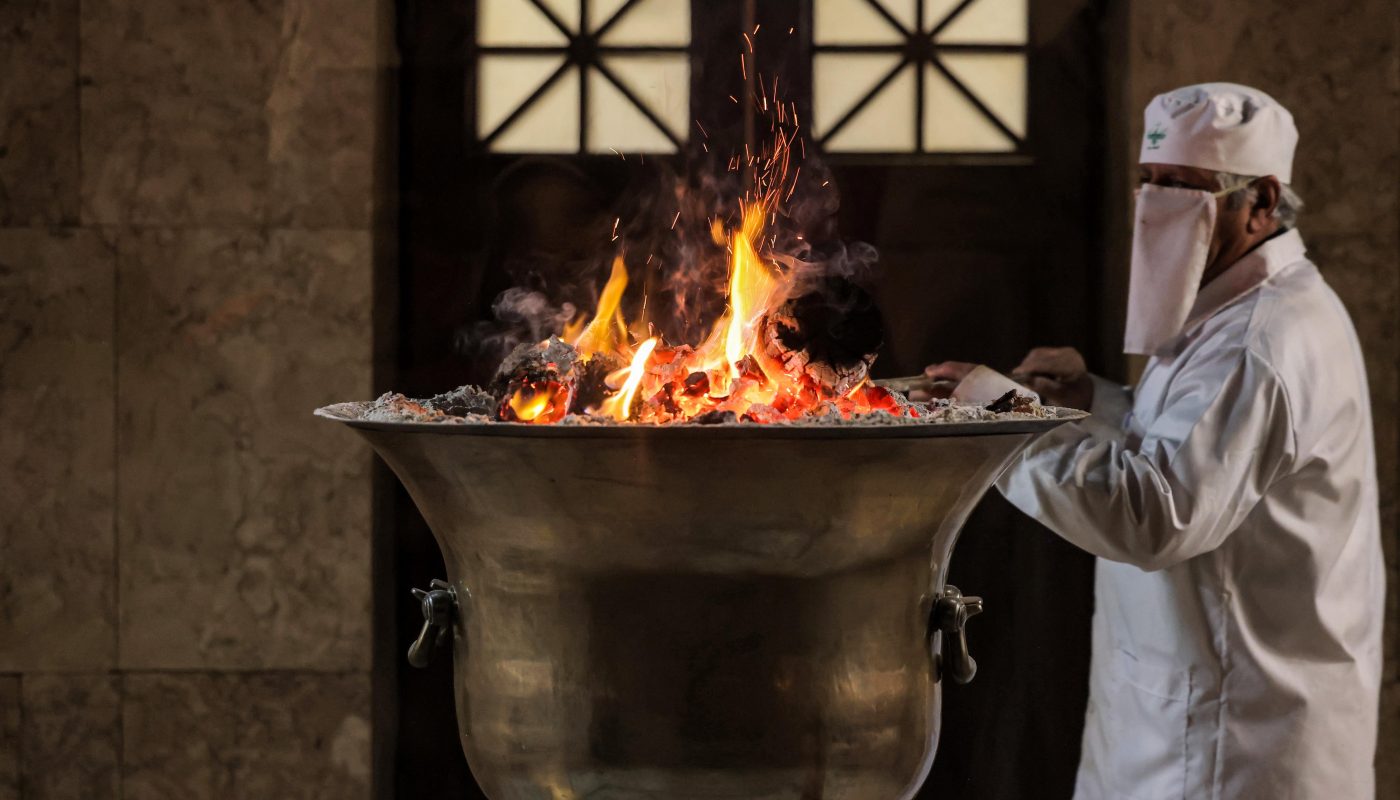
A fire keeper at the Temple of Yazd in Iran tends the world’s longest-burning manmade fire, which has been continuously alight since 470 AD. The fire was kindled by the Persian King Peroz I during the Sassanid Empire, and is regarded as the holiest fire in Zoroastrianism.
Title: The Eternal Flame of Yazd: Tending the World’s Oldest Sacred Fire for 1,500 Years
Meta Description: Discover the ancient Zoroastrian fire temple in Yazd, Iran, where a sacred flame has burned since 470 AD. Explore its history, spiritual significance, and the fire keepers who preserve this living relic.
The Eternal Flame of Yazd: Guardian of a 1,500-Year-Old Sacred Fire
In the heart of Iran’s desert city of Yazd lies one of humanity’s most enduring spiritual relics: a Zoroastrian fire temple housing a flame that has burned continuously since 470 AD. Known as the Atash Behram (“Victorious Fire”), this sacred fire symbolizes purity, wisdom, and the divine presence of Ahura Mazda, the supreme deity of Zoroastrianism. For over 1,500 years, generations of dedicated fire keepers have ensured its survival, defying wars, invasions, and the passage of time.
A Fire Born in the Sassanid Empire
The flame’s origins trace back to the reign of King Peroz I (459–484 AD), a ruler of the Sassanid Empire, which championed Zoroastrianism as its state religion. Peroz I ordered the fire to be kindled in the ancient city of Kariyan, located in modern-day Fars Province. Over centuries, it was moved for protection—first to the remote Ardakan region, then to Yazd—to shield it from destruction during the Islamic conquest of Persia and later Mongol invasions.
Today, the flame resides in Yazd’s Atash Behram Temple, a modest brick structure adorned with the Faravahar (a Zoroastrian symbol of divine guidance). Encased behind a glass chamber to protect it from contaminants, the fire burns atop a bronze cauldron fed only with desert almond and apricot wood—a tradition preserved since antiquity.
The Fire Keepers: Guardians of Divine Light
Zoroastrians revere fire as a symbol of truth and cosmic order. At Yazd, a select group of hirbod (priests) maintain the flame in rotating shifts, following rituals unchanged for centuries:
- Daily Maintenance: The fire keeper cleans ash from the chamber, adds wood, and ensures no breath or impurity extinguishes the flame.
- Prayer and Rituals: Each shift begins with prayers in Avestan (Zoroastrian liturgical language) and the tying of a white cloth mask—padan—to avoid polluting the fire with breath.
- Perpetual Vigilance: Even during natural disasters, the fire is watched 24/7, with backup wood reserves kept to last decades.
“This fire is not ours—it belongs to all humanity,” explains Ardeshir, a current fire keeper. “Our duty is to honor the past and protect it for the future.”
Why This Fire Matters: Zoroastrianism’s Holiest Flame
For Persia’s pre-Islamic religion, fire temples were centers of spiritual life. Yazd’s Atash Behram holds the highest grade of sacred fire, requiring:
- 1,128 Ritual Purifications to consecrate it.
- 16 Different Fire Sources, including lightning strikes and hearths of kings.
- The Endorsement of Mobeds (high priests).
Beyond its religious role, the flame also symbolizes Iran’s syncretic history. Yazd—now a UNESCO World Heritage site—remains a sanctuary for Zoroastrians, whose population dwindled to under 25,000 in Iran after the Arab conquest.
Challenges of Preservation
Maintaining a flame for 1,500 years isn’t easy:
- Political Turmoil: The fire survived the 7th-century Islamic conquest by relocating to remote mountains.
- Environmental Threats: Modern air pollution and humidity risks prompted its move behind glass in 1940.
- Cultural Erosion: Iran’s Zoroastrian community works to pass traditions to younger generations.
“We believe the fire’s endurance gives hope,” says historian Dr. Katayoun Sartipi. “It reminds us that light persists, even in darkness.”
Visiting Yazd’s Fire Temple
Tourists to Yazd can view the flame from an antechamber, absorbing the temple’s serene ambiance. Key details:
- Location: Yazd, central Iran (near the Towers of Silence).
- Best Time to Visit: Autumn or spring, avoiding summer’s 40°C (104°F) heat.
- Etiquette: Cover your head, remove shoes, and speak softly.
Conclusion: A Beacon Across Millennia
Yazd’s eternal flame is a testament to resilience—a flickering thread connecting modern Iran to its ancient past. As climate change and globalization threaten heritage sites worldwide, the fire keepers of Yazd embody a sacred oath: to tend the light, no matter the cost.
“The fire is alive. It breathes with history,” says Ardeshir. “As long as it burns, so does our bond with the divine.”
Keywords for SEO:
Zoroastrian fire temple Yazd, Atash Behram flame, oldest manmade fire, Sassanid Empire fire, King Peroz I, Zoroastrianism sacred fire, Yazd Iran tourism, eternal flame history, fire keeper rituals, UNESCO World Heritage Yazd.
Call to Action:
Share this story to spread awareness of cultural preservation! Support Yazd’s heritage through responsible tourism.