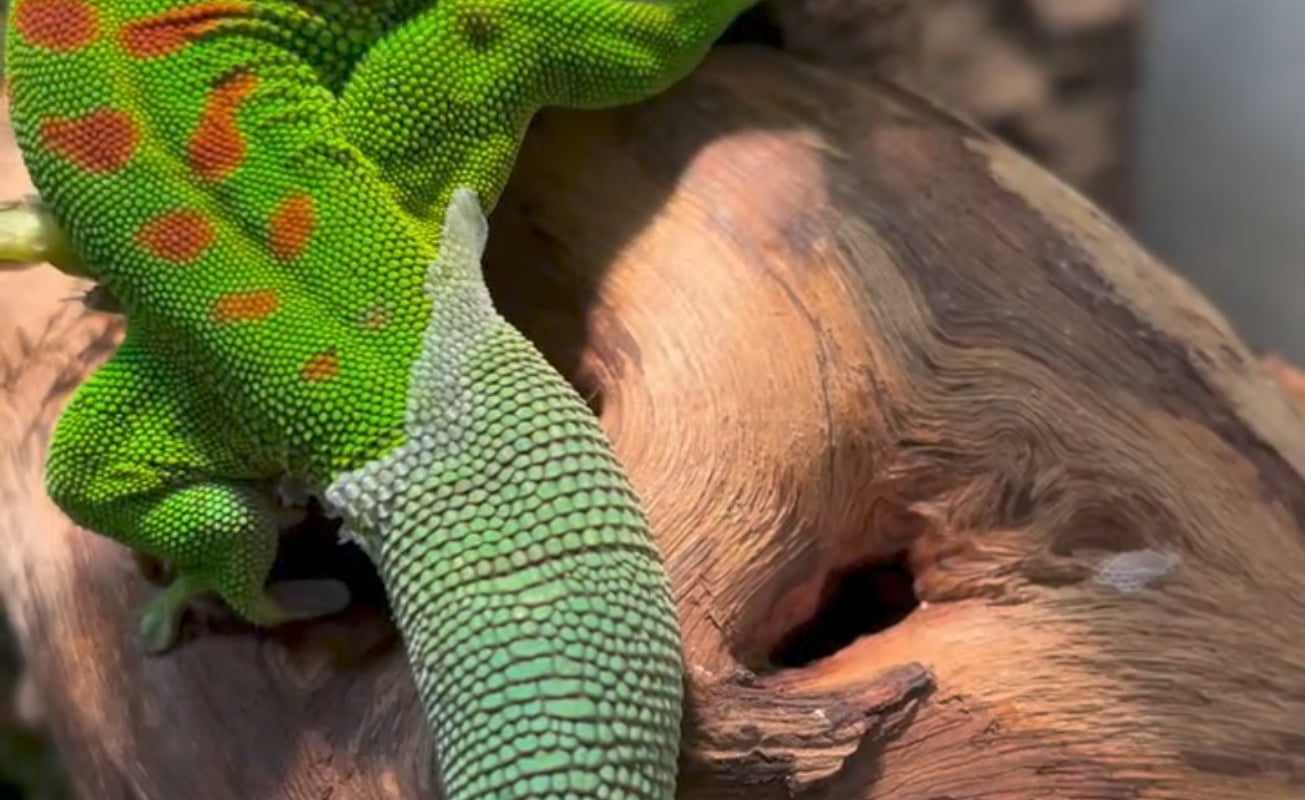
A Madagascar day gecko removing its sock(shedding)
Meta Title: Madagascar Day Gecko Shedding: A Guide to the “Sock Removal” Phenomenon
Meta Description: Discover how the Madagascar day gecko sheds its skin—affectionately called “removing its sock.” Learn about its unique process, why it happens, and how to support captive geckos.
Madagascar Day Gecko Shedding: Nature’s “Sock Removal” Ritual
Madagascar day geckos (Phelsuma madagascariensis) are dazzling reptiles known for their vibrant green scales, fiery red markings, and charismatic personalities. Among their most fascinating behaviors is shedding their skin, a natural process enthusiasts often liken to the gecko “removing its sock.” This quirky analogy perfectly captures the peeling of their old skin, which often starts around the toes and resembles a tiny reptile slipping out of a sock.
In this article, we dive deep into the science, spectacle, and care of Madagascar day gecko shedding—plus how pet owners can help ensure a smooth “sock removal” for their scaly friends.
Why Do Madagascar Day Geckos Shed?
Shedding (or ecdysis) is essential for all reptiles. For Madagascar day geckos, shedding allows them to:
- Grow: Young geckos shed frequently (every 2–4 weeks) to accommodate rapid growth. Adults shed less often (every 4–8 weeks) but still regularly.
- Repair Damage: Shedding removes parasites, bacteria, and dead skin, keeping their trademark colors bright.
- Regenerate: The process stimulates new cell growth to maintain healthy, flexible skin.
The “Sock Removal” Process: A Step-by-Step Breakdown
Madagascar day geckos shed in pieces rather than one full layer. Here’s how the “sock removal” unfolds:
1. Pre-Shedding Signs
- Dull Skin: Colors appear muted 1–2 days before shedding.
- Cloudy Eyes: A milky-blue “eye cap” forms as fluid separates the old skin.
- Restlessness: Geckos may rub against branches or décor to loosen skin.
2. Peeling the “Sock”
Shedding begins at the toes, where skin splits and rolls backward—like peeling off a sock. The gecko then uses its mouth and feet to tug the skin away from its body.
3. Full Shedding
The process continues across the body, including the head and tail. Madagascar day geckos often eat their shed skin to reclaim nutrients like calcium!
Common Shedding Challenges (and Solutions)
While shedding is natural, complications can arise—especially in captivity:
- Retained Shed (Dysecdysis): Stuck skin, particularly on toes or eyes, can restrict blood flow or vision.
- Fix: Increase humidity with misting or a shedding box. Gently assist using a damp cotton swab.
- Stress: Poor habitat conditions can interrupt shedding.
- Fix: Ensure proper humidity (60–80%), climbing branches, and hiding spots.
How to Support Your Gecko During Shedding
Pet owners can create an ideal environment for smooth sock removal:
- Boost Humidity: Mist the enclosure twice daily before and during shedding.
- Offer Rough Surfaces: Cork bark or stone helps geckos rub off stubborn skin.
- Avoid Handling: Minimize stress during shedding days.
- Check for Retained Skin: Post-shed, inspect toes, vents, and eye areas.
Fun Fact: Shedding in the Wild vs. Captivity
Wild Madagascar day geckos shed effortlessly thanks to rainforest humidity and textured surfaces like tree bark. In captivity, owners must replicate these conditions—underscoring the importance of research before adopting one!
FAQs About Madagascar Day Gecko Shedding
Q: Does shedding hurt the gecko?
A: No! It’s painless if done correctly. Stuck skin, however, requires intervention.
Q: How long does the process take?
A: From start to finish, shedding lasts 24–48 hours.
Q: Why do they eat their shed skin?
A: It’s packed with protein and minerals—a natural recycling system!
Final Thoughts
Watching a Madagascar day gecko shed its skin is a mesmerizing reminder of nature’s ingenuity. By understanding their “sock removal” ritual, reptile lovers can better appreciate these radiant creatures and ensure they thrive in captivity. Whether you’re a seasoned keeper or a curious observer, this process highlights the delicate balance of beauty and biology in one of Madagascar’s most iconic geckos.
Optimized Keywords:
Madagascar day gecko shedding, gecko removing sock, reptile shedding process, Phelsuma shedding care, shedding day gecko, gecko ecdysis, dysecdysis in geckos
Images/Visuals Suggestions (for SEO):
- Close-up of a gecko mid-shed, focusing on toes.
- Time-lapse of shedding stages.
- Comparison of gecko skin pre- and post-shed.
By covering biology, care tips, and fascinating details, this article aims to rank for niche reptile-shedding queries while engaging readers with playful analogies like the gecko’s “sock removal” habit. 🌿🦎