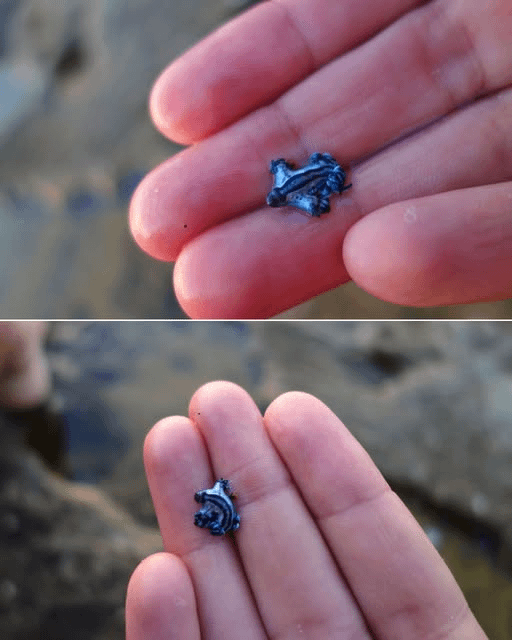
A photo of the tiny Blue Dragon Sea Slug which feeds on the Portuguese Man o’ War and collecting its venom in order to make itself extremely venomous. Source for the information located in the comment section.
Meet the Blue Dragon Sea Slug: The Tiny Ocean Predator That Weaponizes Venom
The ocean is home to some of Earth’s most extraordinary creatures, but few are as mesmerizing—or as deadly—as the Blue Dragon Sea Slug (Glaucus atlanticus). This tiny, ethereal creature, no larger than a paperclip, harbors a shocking superpower: it steals venom from one of the ocean’s most fearsome predators, the Portuguese Man o’ War, and uses it to become even more venomous itself. In this article, we dive into the biology, behavior, and astonishing adaptations of this miniature marvel.
The Blue Dragon’s Stunning Appearance
At first glance, the Blue Dragon Sea Slug looks like a mythical creature from a fantasy novel. Its vibrant blue and silver body camouflages it against the ocean’s surface, while its wing-like appendages (called cerata) ripple like delicate feathers. But don’t be fooled by its beauty—this slug is a master of survival, armed with a secret weapon it didn’t produce on its own.
Diet of Danger: Feeding on the Portuguese Man o’ War
The Blue Dragon’s survival hinges on its ability to prey on the Portuguese Man o’ War (Physalia physalis), a gelatinous predator infamous for its excruciatingly painful sting. Here’s how this delicate slug conquers its dangerous meal:
- Immune to Venom: The Blue Dragon is immune to the Man o’ War’s venom, allowing it to feast on the creature’s tentacles without harm.
- Venom Storage: The slug doesn’t just digest the venom—it collects and concentrates the Man o’ War’s nematocysts (stinging cells) in its own cerata.
- Weaponized Defense: Once stored, these stinging cells become the Blue Dragon’s primary weapon against predators. Its sting is far more potent than the Man o’ War’s, delivering a concentrated dose of venom that can cause intense pain, nausea, or even hospitalization in humans.
A Floater, Not a Swimmer
Unlike most sea slugs, the Blue Dragon spends its life drifting upside-down on the ocean’s surface. Its silvery underside blends with the sunlight above, while its blue top disguises it from seabirds below. This adaptation, combined with its venomous arsenal, makes it a formidable survivor in the open ocean.
Life Cycle and Reproduction
The Blue Dragon is hermaphroditic, meaning each individual has both male and female reproductive organs. After mating, they produce string-like egg clusters that float freely in the water. The larvae hatch fully equipped with the ability to hunt and store venom, continuing this extraordinary cycle of adaptation.
Why the Blue Dragon Matters
This tiny slug plays a critical ecological role:
- Population Control: By preying on Portuguese Man o’ War, it helps regulate their numbers.
- Biodiversity Indicator: Its presence signals a healthy, balanced ecosystem.
- Bio-Inspiration: Scientists study its venom storage mechanism for potential medical applications, such as targeted drug delivery.
A Warning to Humans
While the Blue Dragon’s beauty tempts beachgoers to touch stranded specimens (especially during mass “blue tide” wash-ups), its sting is extremely dangerous. Always admire from a distance—this slug proves that looks can be deceiving in nature’s deadliest forms.
Conclusion: Nature’s Ultimate Alchemist
The Blue Dragon Sea Slug is a testament to evolution’s ingenuity. By repurposing its prey’s venom into its own defense, it embodies survival of the craftiest. As climate change and pollution threaten ocean ecosystems, understanding and protecting creatures like the Blue Dragon becomes more vital than ever.
Meta Title: Blue Dragon Sea Slug: The Venom-Stealing Wonder of the Ocean
Meta Description: Discover how the tiny Blue Dragon Sea Slug preys on the Portuguese Man o’ War, steals its venom, and becomes one of the ocean’s deadliest creatures. Dive into its shocking adaptations!
(Sources linked below in the comments)
![[OC] the way this snow fits inside this button](https://www.smartplusmedia.com/wp-content/uploads/2026/02/OC-the-way-this-snow-fits-inside-this-button-445x265.jpeg)