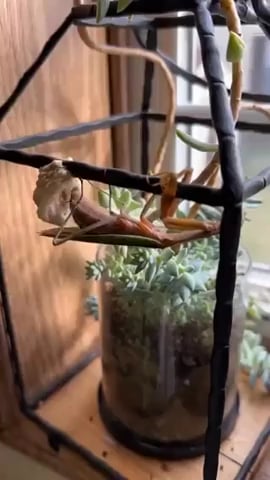
A praying mantis building an ootheca nest
Title: The Amazing Ootheca: How a Praying Mantis Builds Its Egg Nest
Meta Description: Discover how the praying mantis builds its ootheca—nature’s ingenious egg case. Learn why this foamy fortress protects future mantids and benefits gardens.
The Secret Construction of a Praying Mantis Ootheca: Nature’s Foam Fortress
The praying mantis is one of the garden’s most fascinating predators, known for its sharp claws, rotating head, and stealthy hunting skills. But one of its most extraordinary feats happens after mating season: the creation of the ootheca, a unique egg case that safeguards the next generation. In this article, we’ll explore how a praying mantis builds this marvel of nature and why it’s crucial for survival.
What Is an Ootheca?
The word “ootheca” (pronounced oh-uh-THEE-kuh) comes from Greek roots meaning “egg case.” It’s a protective structure produced by female praying mantises (and some other insects, like cockroaches) to house hundreds of eggs. The mantis ootheca is distinguishable by its:
- Foam-like texture: Starts as a liquid secretion that hardens.
- Elongated shape: Resembles a loofah or ridged capsule.
- Camouflaged coloration: Ranges from tan to dark brown, blending with twigs or bark.
How a Praying Mantis Builds Its Ootheca: Step by Step
The female mantis begins constructing her ootheca in late fall, often on a sturdy branch, fence, or plant stem. Here’s how the process unfolds:
-
Secretion Production:
After mating, the female secretes a frothy liquid protein from her abdomen. This substance resembles whipped egg whites and is initially soft and sticky. -
Laying and Shaping:
As the foam emerges, the mantis uses her abdomen to sculpt it into the ootheca’s distinctive shape. She works meticulously, creating ridges and chambers to separate the eggs and prevent mold or predators from wiping out the entire brood. -
Egg Placement:
Inside the foam, she deposits 100–400 eggs (varies by species). The eggs are arranged in parallel rows, cushioned by the hardening foam. -
Hardening:
Within hours, the ootheca’s outer layer dries and toughens into a durable shell, resistant to weather, parasites, and even frost. The interior remains slightly spongy to insulate the eggs.
The entire process takes 3–5 hours, after which the female abandons the ootheca. Her role in her offspring’s survival ends here—mantises provide no parental care.
Why the Ootheca Is a Masterpiece of Survival
The ootheca isn’t just a nest—it’s an evolutionary marvel designed to ensure the next generation thrives:
- Predator Protection: Its tough, camouflaged exterior deters birds, rodents, and wasps.
- Weatherproofing: The foam insulates eggs through winter, even in freezing temperatures.
- Controlled Hatching: Eggs lie dormant until spring or early summer, when warm temperatures trigger nymphs to emerge.
Fun Fact: Only 10–20% of mantis nymphs survive to adulthood due to predators and environmental challenges—making the ootheca’s protection critical.
Where to Find a Praying Mantis Ootheca
If you’re exploring a garden, meadow, or woodland edge in fall or winter, look for oothecae attached to:
- Tree branches or shrubs
- Tall grass stems
- Fences, walls, or garden trellises
Some species, like the Chinese mantis, build larger oothecae (up to 3 inches long), while Carolina mantises create smaller, grape-sized cases.
Note: If you spot one, don’t disturb it! Mantises are beneficial insects that control pests like aphids, mosquitoes, and moths. Relocating an ootheca risks damaging the eggs inside.
Praying Mantis Oothecae: A Gardener’s Ally
For eco-friendly gardeners, spotting an ootheca is cause for celebration:
- Natural Pest Control: A single ootheca can release hundreds of nymphs that voraciously hunt garden pests.
- Biodiversity Boost: Mantises support a balanced ecosystem by serving as both predators and prey (for birds or bats).
Many gardeners even purchase oothecae online to release mantises organically.
Frequently Asked Questions
Q: How long does it take for eggs to hatch?
A: Hatching occurs in 3–10 weeks, depending on species and climate.
Q: Can I move an ootheca to protect it?
A: Avoid moving it—rough handling can kill embryos. If it’s in a hazardous location (e.g., on a tool), gently transfer it to a nearby sheltered spot.
Q: Do all mantises build oothecae?
A: Yes! All mantis species create oothecae, though their shapes vary.
Conclusion
The praying mantis ootheca is a testament to nature’s ingenuity—a foam fortress that shields fragile eggs through harsh winters and hungry predators. By understanding and preserving these structures, gardeners and nature lovers can support one of the insect world’s most captivating hunters.
So next time you see a strange, spongy mass clinging to a branch, take a closer look: you might be witnessing the cradle of future mantis warriors!
Helpful Tip: To attract mantises to your yard, plant native shrubs and limit pesticide use. They’ll reward you with free pest control—and maybe an ootheca or two.
Target Keywords: Praying mantis ootheca, mantis egg nest, what is an ootheca, mantis egg case, praying mantis life cycle